LET’S GET YOUR SECURITY GUARDS BOOKED
Get the security explorer you need at a low price. We’re open 24/7. Call now for a quote!



Hospitals and healthcare facilities face security risks unlike any other industry. The concern is so great that in 2016, the American Hospital Association created the Hospital Against Violence (HAV) initiative to improve hospital security, reduce violence, and make medical centers a safer place to work.
Some of the more unusual threats to hospitals include drug thefts, cybersecurity attacks, workplace violence, and even infant abductions. It’s more important than ever that hospitals take proactive steps to prevent these security breaches before they occur.
Hospital owners and managers can implement a variety of security measures to ensure their facility is a safe place for patients, staff, and visitors alike.
Here’s how to make your hospital as secure as possible.
Get the security explorer you need at a low price. We’re open 24/7. Call now for a quote!
While all businesses face security risks, healthcare facilities must take greater precautions than most to ensure the health and safety of their employees, patients, and visitors.
Hospitals are not only high-traffic facilities, they’re also hectic and fast paced. Patients arrive at all hours of the day and night while visitors come and go.
Because of the constant influx of people, the hospital’s security operations must be top-notch and its staff members must stay vigilant. Otherwise, there may be an increased risk for:
Every business property carries a risk for trespassing and vandalism. As United States laws concerning reproductive rights change across different states, it’s expected that some medical facilities could see an increase in protests as well as an increased risk for violent threats.
Theft is another concern. Inside their facilities, hospitals carry a risk of theft of everything from equipment and prescription medications to patient’s personal property and infants in the maternity ward. In hospital parking lots and parking garages, there’s always the potential for automobile thefts or vandalism.
Cybersecurity threats to health data can jeopardize patient privacy. Unauthorized medical staff, patients, or visitors could gain inappropriate access to computer systems from anywhere within the building.
There’s also the potential for violence against staff or patients. This could arise from visitors, staff, other patients, or criminals who view hospitals as soft targets.
Given these common risks to hospital security, medical facilities should take steps to enforce rigorous security programs that ensure the safety of the building and its occupants. We outline these steps below.
You Might Like: The Pros and Cons of Hiring an Unarmed vs. Armed Security Guard

Hospitals and medical centers of all sizes require multiple levels of access control. That means having full awareness and control over who enters the facility, as well as where people are authorized to go once they’re inside. Facilities must establish several access points throughout the property. Each one should be connected to an alarm system that will trigger in the event of a security breach.
Here are four ways to control access into and within a hospital facility.
Every medical center should have a visitor management system. These are limited entry points with security desks where patients and visitors can check in. Visitor management systems also include full-time hospital security officers who can grant or deny access.
Guards at security desks should first identify the purpose of the person’s visit, such as receiving medical care or visiting a patient. They should then check the visitor’s identification and provide them with a visitor pass that identifies them as non-personnel.
Often, this basic security measure is all it takes to deter undesirable visitors. Most people will not produce photo identification if they are planning to do something wrong. They’re also less likely to do harm if they see a healthcare security officer on the premises.
A strong visitor management system can also include screening devices, such as metal detectors with bag scanning technology that can identify firearms and other weapons.
Hospitals should supply their staff with access cards that they must swipe to enter a restricted door. Biometric security methods, such as fingerprint or facial recognition locks, can provide an even tighter level of security.
Keep in mind that the key cards given to employees should not unlock every single door in the facility. Not everyone who works in the hospital needs or should have access to every area.
Some of the areas where you should restrict staff members from entering include:
Patients can sometimes pose a threat to themselves or others. For healthcare professionals and security staff monitoring psychiatric patients, this can be a huge concern, especially if a patient tries to leave their room to wander to a different floor.
For high-risk patients, consider supplying patient monitoring technology, such as bracelets. These will alert staff if the patient attempts to open a door or access an elevator.
Your facility’s access control system should include a lockdown capability to limit access to specific sectors of the hospital. Should security or staff identify an active threat, they can prevent suspects from breaching other areas of the facility by remotely disabling the doors that lead in and out of the area.
Read About: Everything You Need to Know About Glass Break Sensors
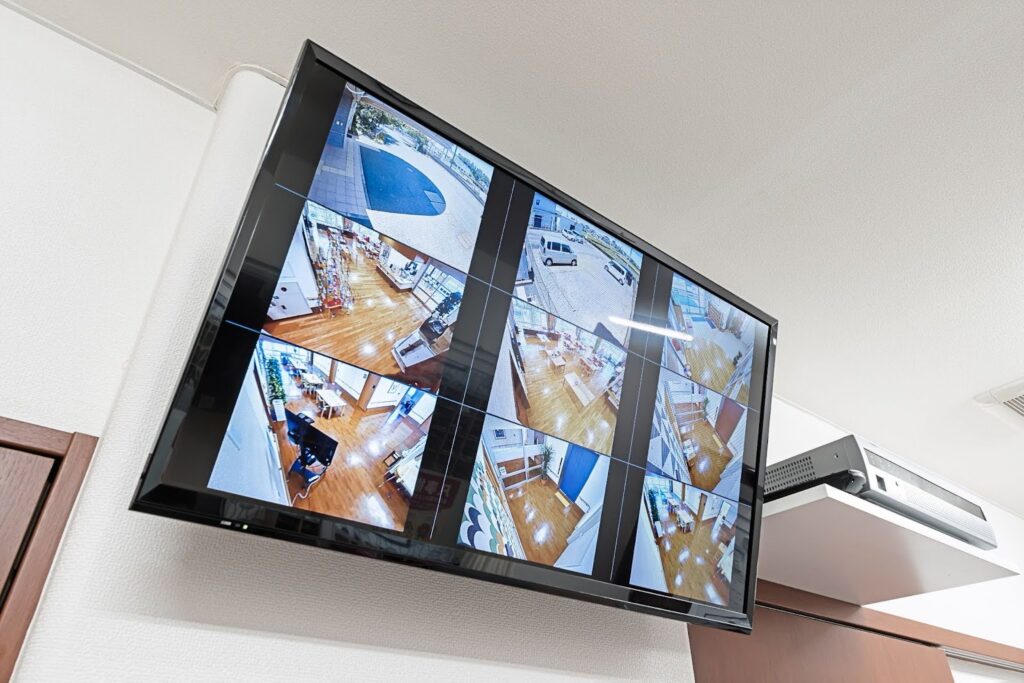
Install and Monitor Security Cameras
Video surveillance systems are a must for hospitals. Not only are they one of the most efficient ways to prevent and detect criminal activity, they’re also essential to solving any crimes that have already happened.
Depending on the facility’s size, you may need dozens or even hundreds of cameras to survey the entire property. At a minimum, place video cameras throughout the hospital in the following key locations:
When installing new cameras around the hospital exterior, consider thermal cameras. Thermal cameras make it easier to detect motion in dark or low-light areas.
Make it a priority to schedule regular maintenance and updates to your security cameras and CCTV systems. Security cameras are only useful when they’re in optimal working condition.
Panic buttons are a quick and effective way to alert on-site security professionals, local police officers, and other law enforcement agencies that you need immediate emergency help.
Many hospitals have panic buttons installed at ER entrances, hospital pharmacies, and reception desks. Some medical centers take this a step further and provide wearable panic buttons to their employees.
Most hospital campuses consist of several buildings spread over a large property. These buildings include separate inpatient and outpatient medical facilities, diagnostic testing centers, and administrative offices.
The bigger the facility, the more vital the need for a central communications hub or security department. It’s best to have a single group of trained personnel who can constantly monitor all activity throughout the campus. It also allows security personnel to communicate data breaches and enact response plans in real time.
A hospital’s central communications hub should include security consoles where personnel can monitor video surveillance cameras 24/7.
Cybersecurity is an ever-present risk to infrastructure, and hospitals must take all precautions to protect their data. That requires you to have up-to-date cybersecurity measures in place.
The protection of patient privacy, especially medical records, is a constant source of worry for medical facilities. Hospitals must also safeguard their proprietary and financial data, as well as protect against cyber attacks that could disrupt the facility’s infrastructure or attempt to extort money.
Some criminals deploy cyberattacks to shut down a hospital’s electrical power or computer systems. This can put patients in immediate harm. Communities rely on hospitals to function without interruption, which means that a successful cyberattack is a fast way to damage the trust that a community puts in their local hospital.
All hospitals should make excellent cybersecurity protections their priority.
Healthcare workers do life-saving work and deserve to work in a secure environment. Likewise, patients should feel they’re being cared for in a safe and comfortable environment. The best way to foster a safe environment is to hire a private security company.
Private security teams offer a wide range of security solutions that go well beyond what most medical facilities are capable of handling on their own.
When you hire a private security company, the first thing they’ll do is send security experts to visit your site for a full risk assessment. This is how they identify any and all weak security points within the property.
They’ll map the entire campus and determine where security efforts are already solid, where they’re missing, and where they need enhancements.
A private security firm will develop an effective emergency response plan for your hospital to follow in the event of a security breach.
After developing the plan, they’ll train hospital staff members about proper response procedures. This includes how to respond to specific threats like active shooters or infant abductions.
One of the best ways to create a safe and secure hospital environment is to position hospital security guards throughout the facility. Visible, uniformed guards are an excellent crime deterrent.
Professional security guards undergo training in de-escalation techniques and know how to diffuse a threat before it becomes out of control. When you hire a private security company to staff your facility, you can rest assured that you have more than one set of eyes keeping watch.
Different security guards may have training in different skills and roles, such as front desk security, exterior security, and monitoring video surveillance systems. The key is to have experts on hand at all times who know how to handle a variety of security posts and situations.
From time to time, private security companies will conduct penetration tests. Penetration tests analyze the security protocols and systems in place to ensure that everything is secured as intended and that no new weak spots have surfaced.
If weak points or vulnerable areas are detected, they’ll put new measures in place to avoid security breaches and better protect those areas of the facility.
Given the risk of everything from pharmaceutical drug thefts to cybersecurity data breaches, hospital security is not something to take for granted.
A private security company can identify, prevent, and manage the risks. That means your hospital becomes a safer and more secure place for medical professionals, visitors, and all members of your hospital staff.
To find a professional security company to protect your hospital, visit Security Explorer now.
Up Next: 43 Shocking U.S. Burglary Statistics
Read More
There are now more than 70 million CCTV cameras in the United States.
Video surveillance has become central to everyday operations — and for good reason.
CCTV monitoring can’t stop all criminal activity, but it’s among the best tools for deterring and investigating crime. Installing a proper CCTV camera system should be at the top of your priority list if you’re not already using them to protect your business or private property.
Read our full guide to CCTV security monitoring before you buy a system and attempt to install it yourself. This guide looks into the key reasons why you need one, as well as how to choose and properly install the best system.
Article Contents:
All businesses worry about crimes like theft, vandalism, and trespassing. But they tend to worry less once they’ve installed a functional CCTV monitoring system that can give them an eagle-eye view of their entire property.
Closed circuit television systems have been in use for more than fifty years. In recent years, the technology behind them has undergone rapid and significant improvements.
The latest CCTV surveillance systems now use internet protocol cameras, also known as IP cameras. IP cameras stream live footage and make it possible for you or your security team to remotely monitor the footage from anywhere in the world.
That’s not all they do. In addition to streaming and recording images captured through video surveillance, IP cameras use motion detection sensors that send alerts whenever there is movement. This makes it more difficult to miss a threat.
Like alarm systems that draw instant attention to a particular door or window, like in secured hospital environments, motion detector sensors make it easy to determine the precise location of the source of the threat.
Modern CCTV systems also allow for remote positioning. You can angle or move the cameras as needed to capture different views. This allows you to monitor potential threats from different points of view and have visibility from different angles if a dangerous situation occurs.
Many CCTV systems also include thermal cameras, which pick up on changes in temperature. This allows you to see images in dark or dimly lit areas.
A small investment in a modern CCTV system can also save businesses money in the long run. They make your facility safer for workers and customers, as well as protect valuable assets such as inventory, equipment, cash, and data.
You Might Like: How to Remove an Old Home Security System
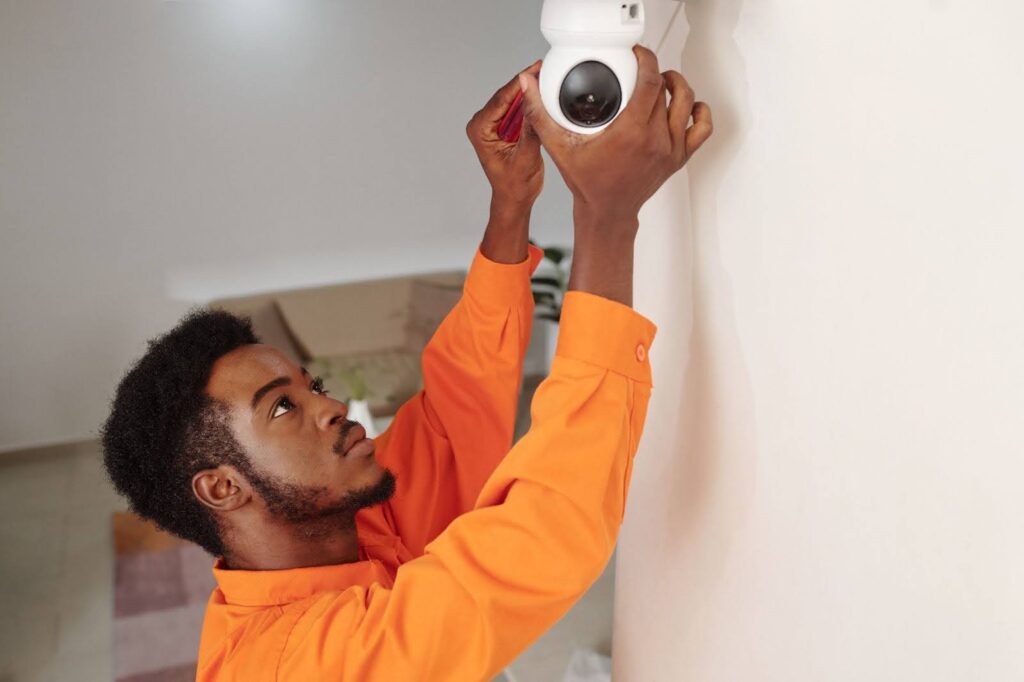
Traditional CCTV systems are hardwired to your electrical panel and via cables to an on-site control room. You can still choose this traditional method, but many businesses prefer remote live monitoring solutions that connect via the internet.
No matter what type of surveillance system you choose, it’s best to hire a professional installer who can set up the camera system on your behalf. The installation process involves many steps.
Professional installers will do a site survey to determine where video cameras are needed and how many you’ll need to provide the greatest security. Once you select the type of cameras you want and agree on where to place them, the installation will begin.
Wireless cameras are a popular choice for residential properties because they don’t require rewiring and are, therefore, the easiest to install. Most commercial facilities and businesses, however, prefer to hardwire their cameras to a central power source.
During installation, the installer will run all the wires needed to make the necessary electrical connections. Sometimes that requires opening up walls or removing ceiling panels. Once the wiring is in place, they’ll mount your cameras at the proper heights and position them in a way that captures as wide an area as possible.
The next step in the process is to install the video recording system so that you can store and save your CCTV footage. This can be a network video recorder (NVR) or a digital video recorder (DVR), depending on the type of CCTV system you choose.
IP cameras, which connect via the internet, use NVRs to record digital videos. Analog cameras require DVRs, which convert analog footage into a digital format. A DVR system requires connection with coaxial cables, so running wiring in ceiling panels or behind walls may be necessary here as well.
Once the recording system is in place, a professional installer will connect the cameras to your monitoring center or control room. With modern systems, this is done via the internet, while traditional systems with on-site control rooms require cables for connection.
The final step is to test the system and verify that the surveillance images are available for monitoring in real time. Professional installation companies will ensure that your system is working at optimum levels, and that operators are seeing the highest-quality images possible.
Check Out: The Pros and Cons of Hiring an Unarmed vs. Armed Security Guard

It’s up to you to decide who you want to monitor your security system and where you want them to monitor it from.
On-site monitoring requires that you have someone on the premises to watch the surveillance video footage. For large businesses with multiple cameras that need constant surveillance, that could require hiring an entire internal security staff.
Remote monitoring allows you to outsource to a third-party monitoring center to provide 24/7 surveillance. You may also choose to hire a private security firm, which may staff your location with security guards to work in your control room or to watch your cameras from their own management system.
Where and who you rely upon for CCTV monitoring often depends on how many cameras you have. It also depends on how much you need to keep an eye on your business or facility. The key is to make sure that you have enough CCTV operators in place to watch the system in the appropriate manner.
Here are some tips to help you decide who should monitor your CCTV system and from where.
Many businesses find it beneficial to hire a professional security company to put security guards in charge of CCTV monitoring. With professional, trained guards watching your CCTV system, you can have peace of mind knowing that if they detect a threat, they can immediately respond and take the appropriate action.
The combination of CCTV monitoring and physical guards on site is ideal. Video surveillance cameras and visible security guards are both excellent crime deterrents. Use them together to significantly reduce threats and prevent crimes.
Another benefit of having an on-site monitoring station is that there will be less eyes on your footage. You can set protocols so that only the guards in your control center and designated employees or officers of the company can see the footage. With a remote video monitoring service, you can never be 100% sure who’s watching your footage.
Remote video monitoring can give you around-the-clock peace of mind, but there is one drawback:
It won’t stop an immediate threat.
Monitoring video surveillance cameras from a distance is an excellent way to detect suspicious activity. Yet without a physical guard on site to protect you in the moment, you’ll still be at risk. The best that remote monitoring centers can do is contact law enforcement or other emergency services if a security breach or safety threat arises.
The biggest benefit of using remote monitoring is the lower cost.
Hiring monitoring services that employ operators is more cost-effective than hiring trained security guards to watch your CCTV cameras. Security guards go through extensive training to learn specific skills, such as de-escalation and emergency response techniques.
For this reason, their cost per hour is higher than CCTV operators who aren’t trained to confront or handle physical threats.
Keep in mind that the added cost of hiring physical security guards is well worth it. Guards offer an added layer of protection that can make both your employees and customers feel safer in your place of business.
Deciding whether to monitor your CCTV cameras onsite versus a remote location may be a simple matter of logistics.
If you need to observe several cameras, or if you require several people to monitor them, you’ll need to have the space to do so. It’s not always possible to designate a control room. If you lack the space to set up your control room in the proper manner, remote monitoring may be your best option.
Not sure what’s required in a CCTV control room or how to set one up?
This article dives into what equipment you’ll need, how to position screens and operator workstations, and the type of lighting and ventilation required. It’s more complicated than you may think.
There is no right or wrong answer to the question of how many people are needed to monitor your CCTV video feeds. It depends on several factors, including how many cameras you have and whether the locations under surveillance are high-traffic areas.
In low-traffic areas where activity is infrequent, a single operator may be able to monitor several screens at a time. In high-traffic areas or high-risk areas, you may need more than one guard per screen to keep track of everyone coming, going, or loitering.
If you’re looking to maximize the number of cameras that one person can monitor at a time, you can use “blank screen monitors.” Working as a CCTV operator means staring at screens for hours at a time, but blank screen monitoring can make it easier on the eyes. The monitors only display images when there is movement or activity. With this approach, operators have less images to focus on at a single time.
Whether you own or operate a small retail store, a bank, a hospital, an office building, or a manufacturing plant, every type of business and industry can benefit from CCTV monitoring. But it’s best to rely on professionals to get it set up.
A professional security company can help you determine what the right system is. They’ll also install that system, set up your monitoring process, and make sure that it’s working to its full capacity. It’s a complex process that most people cannot and should not handle themselves.
If you plan to increase or upgrade security at your place of business, don’t delay. To find a professional security team that can make your business safe inside and out, visit Security Explorer now.
Up Next: Manufacturing Plant Security
Read More
Manufacturing plants face unique security challenges. Security measures that work for special events or movie sets, for example, are not necessarily adequate to protect a plant.
Threats to manufacturing facilities can range from trespassing and vandalism to cybersecurity attacks. That’s why every manufacturing facility should not only install a robust security system, but also a plan of action that can guarantee the most efficient — and timely — response.
If you manage a plant, security is already top of mind. This should be the case whether you operate a small-scale plant or a larger facility that generates millions of products every year.
Keep reading to learn how you can protect your plant and manufacturing operations against the most common security risks. We’ll also share some tips that can make it easier to set up a proper system that meets your plant’s security needs.
Contents:
Manufacturing Plant Security: Understanding the Risks
Plant Security Requires Layered Security Measures
Put Procedural Security Measures in Place
Protect Against Cybersecurity Threats
4 Reasons to Hire a Private Service for Manufacturing Security
Manufacturing facilities contain critical infrastructure. If so much as a single security threat goes unaddressed, the impact to the company, the plant’s employees, and even the global supply chain could be enormous.
Staff could also be exposed to a variety of health and safety risks. For example, the harm that may come from using heavy machinery or working with combustible materials.
There are also physical risks to property, such as theft. Physical security measures are necessary to prevent the theft of machinery, equipment, tools, and raw materials.
Industrial plants should take measures to prevent the theft of information and intellectual property, as well. A security breach could give criminals unauthorized access to employee and customer information, company financial records, trade secrets, or proprietary product information.
Fortunately, there are tried and true safety measures that can minimize the security risks to your plant. By rolling out the right security solutions, plant managers can keep their facilities safe while increasing its productivity.
The Cybersecurity and Infrastructure Security Agency (CISA) is an operational component of the Department of Homeland Security. Their guidelines state that for security systems to be effective, they must be able to detect, respond to, and delay threats. (You can read the entire 50-page publication here.)
At the core of these guidelines is the need to layer security measures. In other words, stacking physical security measures with procedural measures and operational practices.
Layered security systems are complex. They can include anything from video surveillance to physical security guards that can act as crime deterrents.
Let’s take a deeper look at how you can establish a layered security strategy for your plant.
The first step in every manufacturing plant security plan should be to prevent unauthorized access.
Just like you lock your doors and windows at home, you must take steps to prevent unwanted visitors (or criminals) from accessing the facility.
To control access, you should:
Keep in mind that only authorized personnel should have access. Some employees may not need to access specific sectors of the plant, and should only be given access to limited areas.
Read About: Everything You Need to Know About Glass Break Sensors
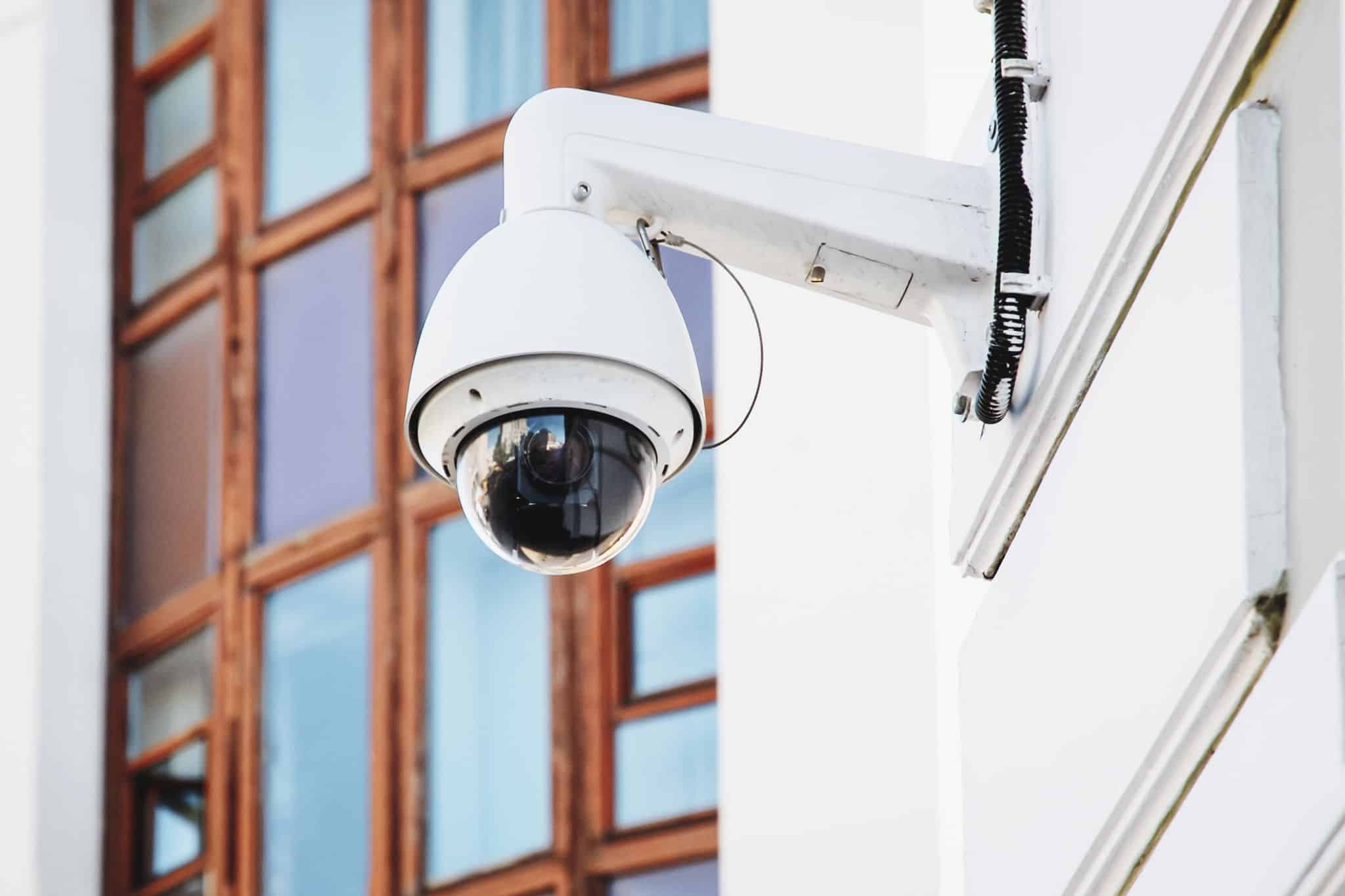
Visible security cameras are excellent deterrents against trespassing, vandalism, and theft.
But cameras can do more than protect your plant from external threats to its security. They’re also one of the best ways to monitor employee activity.
No matter how much you vet your employees or think you know your staff, there is always a chance that an employee could become a security threat within your plant.
For security cameras to be effective, they must be placed in the right positions. They also require effective monitoring. Here’s how to do it:
Every entry and exit point should be under video surveillance.
Position them at every door, window, and other point of entry to the plant. You should also install cameras at entrance points to the perimeter gates.
Place cameras inside the facility to monitor for suspicious activity. If a security threat manages to slip past the outdoor cameras and security checkpoints, internal cameras can still capture footage of them once inside.
Suspicious activity may include criminal activity from employees who have authorized access or entered an area in which they are unauthorized to be.
Any space inside or outside the plant, where access is limited or restricted, needs surveillance cameras. This includes loading zones, rooftops, and high-voltage areas.
Connect your access control system with video surveillance technology to maximize the quality of your security system as a whole.
Connecting door and fire alarm sensors to your video surveillance system makes it easier to identify the source of a threat. This can improve response times while making it possible to contain a threat in one place.
Set up surveillance cameras that can be watched via a remote monitoring system. With a 24/7 monitoring center keeping an eye on your manufacturing plant, your security team can assess situations in real time and prevent problems before they occur.
A remote monitoring system allows you to take a proactive, rather than reactive approach. Reviewing surveillance footage after a security breach can help you identify who is responsible for the breach, but real-time monitoring makes it easier to prevent in the first place.
Thermal cameras (also known as infrared cameras) are a great way to monitor the plant at night.
In low-light areas, it can be difficult to see clear images. Thermal cameras use infrared wavelengths and measure thermal signatures, providing clearer images, even when the area under surveillance is dark.
To keep the security of your facility strong, establish best practices for how manufacturing processes are performed.
Security and safety go hand in hand, so it’s important to adhere to OSHA safety standards at all times. Provide employees with the proper training to keep them, and the plant, as safe as possible.
No matter how secure you think your facility is, there is always the potential for a cybersecurity attack. Cyber criminals can remotely hack alarm systems, open smart doors with digital locks, and interfere with surveillance systems, so it’s vital to stay several steps ahead of them.
Cyber theft is a key security concern for many manufacturing plants and industrial facilities, and it cannot be ignored. The IBM Security X-Force Threat Intelligence Index 2023 goes into greater detail about the significance of this threat.
You Might Like: The Pros and Cons of Hiring an Unarmed vs. Armed Security Guard

While some companies in the manufacturing sector have security officers on their full-time staff, there are many reasons why it’s better to hire a private, external security service instead.
Here are the key reasons why so many plants hire private security professionals — and why you should, too.
When you hire a private security company, the first thing they will do is conduct a complete risk assessment. The purpose of the risk assessment is to identify any and all potential risks and vulnerabilities.
They will map the entire plant from inside to out, creating a comprehensive security plan that will safeguard your facility.
Your facility may have external doors that need better alarm systems, vulnerable points of entry, or sectors that are hidden from the watchful eye of security cameras. The security company will take the necessary steps to improve security where it’s needed most.
Security teams are also skilled at creating emergency response plans. Once they create the plan, they’ll train employees on how to follow through.
Training your employees in emergency response should be a requirement, not an option. Everyone on site must know the plan in order to improve the response time to potential threats.
A private security company will also run periodic penetration tests. This is the best way to ensure that the safety measures are working as they should. If a penetration test identifies a weakness in your security plan, your security personnel will make the necessary improvements.
Security companies do more than provide internal and external security solutions. They also staff your facility with the visible presence of guards.
Physical guards are some of the best crime deterrents you can have. Most criminals look for opportunities, which means that manufacturing plants without guards are the most vulnerable to opportunistic crimes.
A layered security system is essential to protect your manufacturing plant from potential threats. Hiring a professional security company is the best way to do so.
From perimeter gates and internal doors to data stored on your servers, every aspect of your plant deserves protection. To learn more about manufacturing plant security or to hire a private security team in California, contact Security Explorer now.
Up Next: The Beginner’s Guide to Hiring a Security Guard to Keep You Safe
Read More
Working as a professional security officer can be a great career opportunity. Security officers are always in demand — after all, they play a pivotal role in maintaining public safety.
But if you live in California, you can’t just toss on a uniform and get to work. You’ll need to take a few important steps first.
Security guards in the state of California must apply for a professional license to work in the security services industry, also known as a guard card.
Interested in working as a security officer in the Golden State?
Our step-by-step guide will show you how to get your California guard card and kickstart your career as a certified security guard.
Contents:
How to Get Your California Security Guard Card
How Long Does it Take to Train for a Guard Card?
How to Renew Your Security Guard License
Whether you want to work as an unarmed or armed security officer in California, the state has strict requirements you’ll need to follow.
Applicants can begin the certification process by signing up for a guard card training course. You must be at least 18 years old to enroll in the course.
Here’s what you’ll need to do once you’ve enrolled:
Before you can apply for a guard card, you must complete an eight-hour “power to arrest” training class.
This is a foundational guard card course that covers all the basics you need to know to become a guard, including:
California state law requires all prospective guards to complete power-to-arrest training. No exceptions.
Fortunately, there are a variety of security guard training centers throughout the state. You can visit these centers to sign up for courses to become an unarmed guard. Many will even allow you to complete your coursework online.
If you plan to work as an armed guard, however, you will be required to attend additional in-person training sessions.
Once you’ve completed the first eight hours of training, you must pass a written exam. The purpose of passing the written exam is to demonstrate that you understand the key concepts of power to arrest.
Your guard training company will administer the test, which you can complete online.
Check Out: The Beginner’s Guide to Hiring a Security Guard to Keep You Safe
 Step 3: Pass a Fingerprint and Background Check
Next, you must agree to be fingerprinted and pass a background check via Live Scan.
Since fingerprinting is something that can only be done in person, you will have to visit a nearby location that processes Live Scan forms. Live Scan locations can be found throughout the state.
The Live Scan service conducts checks with both the California Department of Justice and the Federal Bureau of Investigation (FBI). You will not pass the background check if you have any felony or misdemeanor charges on your record.
If you have been convicted of a felony or served time for a misdemeanor crime of violence, the only way to pass a background check is to obtain a Certificate of Rehabilitation. California will consider the circumstances of non-violent misdemeanor convictions on a case-by-case basis.
Once you’ve passed your background check, you can submit an application to the Bureau of Security and Investigative Service (BSIS). The application requires you to provide proof you’ve completed the first eight hours of training and passed the written exam. You must also pay the following applicable fees:
Applicants may submit online applications, as well as mail paper applications, directly to the BSIS.
Application processing times can be as brief as 15-20 days, but can take as long as 4-6 weeks. You can visit the BSIS website to confirm whether your certificate of completion has been approved. (Note that most employers will not interview you for an officer position until you’re able to show proof of a valid certification.)
Processing times may be longer if there is a lag in processing DOJ and FBI background checks. Once your licensing application has been approved, you may need to wait another two weeks before you receive your physical guard card in the mail.
There are a few issues that can delay or preclude you from getting your license. These include:
If any of these circumstances apply to you, it’s best to enter a repayment arrangement before you apply for your card.
The initial power to arrest course is not the only course you’ll need to complete. Once you’ve passed your power to arrest exam, you must follow through and complete another 32 hours of training to fulfill the state’s continuing education requirement for first-year officers.
BSIS will certify you as a security guard once you’ve successfully completed the first eight hours of training. However, because of the state’s continuing education requirement, most California employers will be more likely to hire you if they know you’ve already completed the 40-hour training program.
Some people prefer to apply for their guard card as soon as they’ve completed the initial eight-hour course. Others wait until they’ve completed the full 40-hour program before they register and apply for their card online. How you want to proceed is up to you.
Beginning on the day that you officially complete your first course, you have 30 days to complete the next 16 hours of continuing education. BSIS permits an additional six months for you to complete the final 16 hours.
Again, employers can still hire you once you’ve fulfilled the minimum eight hours of required training. It is the responsibility of the employer, not BSIS, to verify that you completed the full 40 hours.
BSIS’s continuing education for first-year guards includes coursework on the subjects of:
Unarmed security guards may undergo online training for all coursework. In-person classes are not necessary when applying for an unarmed guard registration card.
By contrast, BSIS requires armed security guards to attend additional instruction in the form of practical, in-person training.
Read About: 7 Essential Reasons to Hire a Bank Security Guard

Security guard certification is not a permanent, one-time process.
You will have to renew your guard registration every two years if you want to maintain your license.
There is a $40 fee for the renewal application. To renew, you must pay the fee and submit the application during the two-year period while your registration is valid.
If you allow your license to lapse, you can still renew it for a $65 fee if you submit everything within 60 days of the date of expiration. If more than 60 days have passed since your guard card expired, BSIS requires you to complete the entire training process from scratch.
For that reason, it’s best to pay the fee and submit the renewal application at least two or three months before the expiration date of your current license. This will prevent the costly and time-consuming process of undergoing training a second time.
A California guard card makes it possible to work in a variety of security guard roles throughout the state.
Having a guard card does not make you a law enforcement officer. That’s because security companies are not considered law enforcement agencies.
Unlike public law enforcement agencies such as the police or FBI, security guards are most often hired by private entities to protect:
Keep in mind that the California guard card comes with certain limitations. A guard card is not a license to carry a firearm. In order to work as an armed security guard and carry a firearm, you must also obtain a BSIS firearms permit.
The training requirements for a firearms permit do not replace the mandatory 40 hours of coursework that BSIS requires for all first-year security guards. Firearms training is supplemental only, so you must still complete the power-to-arrest course and 32 hours of continuing education.
Firearms training includes in-person coursework in a classroom environment. You will be required to undergo range training from a Bureau-certified firearms training instructor at a Bureau-certified training facility.
In addition to carrying a firearm, any guard who wishes to carry tear gas or a baton must take additional courses and acquire additional permits, such as a baton permit.
Learn more about obtaining your BSIS firearms permit here.
Security guard licensing is state-specific. You cannot use an out-of-state certification in the state of California, and you cannot use a California BSIS license in any other state.
Certification requirements vary from state to state, and requirements are subject to change. California has stricter standards than most states. In fact, some states don’t require security guards to be licensed or complete any training at all.
If you are planning to move to California or work in California from a neighboring state, you can start the online certification process at any time and from any state.
The Employment Development Department of the State of California projects that security companies will hire 11,000 additional guards between now and 2028.
Security jobs exist throughout the state. Once you complete the required training and secure a license, you can work as a professional security officer anywhere in the state of California.
To learn more about the security business and security guard job opportunities in California, visit Security Explorer today.
Up Next: The Pros and Cons of Hiring an Unarmed vs. Armed Security Guard
Read More
When it comes to open windows, there’s no contest. Everyone loves a little fresh air.
And it certainly doesn’t hurt when that cool, extra airflow can replace your air conditioning and lower your energy bills.
Open windows come with plenty of perks, but might not always be the safest solution when you need a soft breeze or some ambient noise to lull you to sleep.
Before you fling open your window tonight, there are a few things you should know — including the danger in which you could be putting yourself.
If you’re a sleep-with-the-window-open kind of person, keep reading to learn everything you need to know about open window security.
Contents:
Leaving Windows Open at Night: Is It Safe?
Three Ways to Secure Your Windows When They’re Open
So, is it safe to keep your windows open at night?
We know you’re probably hoping for a cut-and-dry answer, but that’s not an option here.
The answer to this question can vary. It all depends on which windows you leave open, how much you open them, and whether you take extra measures to secure them from the inside.
To protect against break-ins and other criminal activity, it’s safest to lock all windows before you go to bed. Burglars and other would-be criminals look for crimes of opportunity, and an open window is a huge opportunity!
Here’s a closer look at the risks involved when leaving different types of windows open at night.
According to ADT, 23% of burglars use a first-floor window to gain entry to a home.
Only 2% of criminals attempt to enter through a second-story window. If you’re wondering if you should leave a first-floor window open at night, the answer is NO.
Never leave windows open if they are accessible from outside. Basement windows and ground floor windows should be locked at night, whenever you’re sleeping, or whenever you’re not at home.
Though we’re talking about windows today, it’s worth pointing out that 34% of burglars use an unlocked front door to gain entry into a home. So whether you choose to leave your windows open or not, always make sure your doors are locked and secured.
Keep in mind that the most common times for break-ins are in daylight, between 10 a.m. and 3 p.m. While some thieves prefer the cover of darkness, most prefer to break in during the day when they don’t think anyone is home. Whether it’s daytime or nighttime, always keep ground-floor windows closed and locked when you’re not at home.
If you choose to leave your second or third-story windows open while you’re sleeping, make sure that they are not accessible from outside. That includes any window that could be accessed by climbing a tree, a drainpipe, or a trellis, among other things.
It’s also important not to leave any items outside that a burglar could use to climb and reach an open window, such as a ladder.
Perhaps you’ve decided that you’re comfortable leaving your second or third-story windows open at night.
Even so, it’s still highly recommended that you never leave your windows unlocked or open them all the way. The bigger the opening, the easier it is for someone to gain entry.
Unlocking a window and cracking it open — even an inch — creates a vulnerability that is all too easy for a burglar to exploit.
If anything, a cracked window gives a burglar the perfect opportunity to open it further and slip inside.
Here are three different ways that you can improve the safety and security of your home’s open windows.
One of the best ways to protect yourself is to add extra window locks, stops, or latches, also known as window restrictors, on the inside of your window frame. These will prevent your windows from being opened all the way.
There are many types of window restrictors available online. You can also find them at home improvement stores. The type you choose will depend on the type of windows you have.
For example, if you have sliding sash windows, install sash stops that only allow your window to open a few inches. Now, you can enjoy ventilation while making it impossible for someone to enter.
If you have double-hung windows, you can install flip stops. Similar to sash stops, flip stops allow you to open the window a few inches for ventilation without worrying that someone could fit through the opening. Many newer windows come with built-in flip locks to provide that extra level of security.
Interior security locks and restrictors exist for almost every type of window, including bow, bay, and casement windows. Before you install them, make sure you have the right type for your home windows.
Another option is to add a security gate or grille with security bars. Window bars should be spaced close together, about 4” to 6” so that the open space is much too small for a person to fit through. There are many decorative window gates and grilles on the market, so it’s easy to find ones that complement your style and home décor.
For those who want to leave their sliding door partly open, you can purchase a patio door security bar with an anti-lift lock. The adjustable bars are usually made from stainless steel and can be locked at any width. This feature makes them ideal for those times when you want to take advantage of your patio’s screen door.
While a full home alarm system with 24/7 monitoring may be the best safety precaution you can take, motion sensors are a reliable (and less expensive) alternative.
You can install motion sensors on windows — whether you have a full alarm system in your home or not — that will sound an alarm if someone attempts to pass through.
Motion sensors won’t prevent someone from breaking in, but the loud alarm can scare off a burglar. It can also give you enough time to get to a safe place and call 911 for help from local law enforcement.
Read About: How to Remove an Old Home Security System
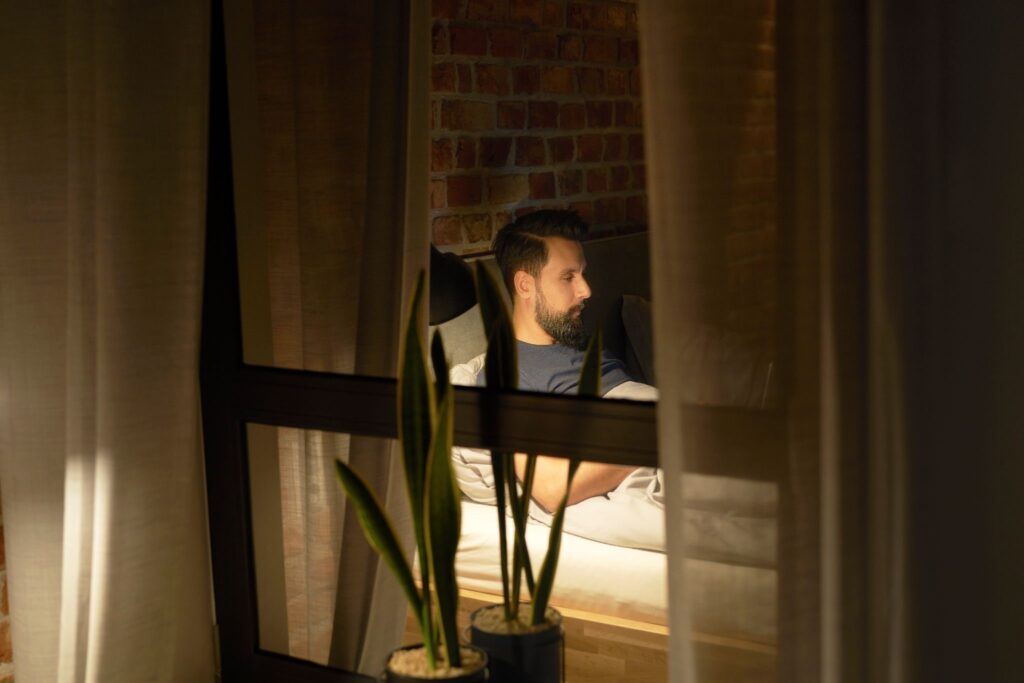
If you insist on leaving your windows open at night, consider taking additional security measures to make your home more secure and less prone to break-ins.
Want total peace of mind? Install a full home security system with 24/7 monitoring.
Full security systems can monitor all doors and windows and alert you to other hazards, like the presence of smoke, fire, and carbon monoxide.
Mounting a few security cameras outside your home is an excellent crime deterrent, but you have to make them visible. Criminals don’t want to get caught, and visible cameras are sometimes all it takes to scare a burglar off.
While most homeowners install cameras around doors, you might also want to consider mounting them around certain windows, especially large ones that could become potential entry points for unwanted thieves.
Maybe you don’t want to go to the trouble of mounting and maintaining surveillance cameras outside your windows.
Here’s a great alternative: add motion detector lights instead. Motion detectors can trigger a bright light as soon as they sense movement, which may be enough to scare an intruder off your property.
Keep in mind that motion sensor lights detect all kinds of movement, including movement from animals, so they can go on over and over again, even when there’s no immediate threat outside.
Unless you live in a gated community with 24/7 guards that patrol the property, you might want to consider hiring a residential security guard. Like video surveillance and alarm systems, the presence of a physical guard is an excellent crime deterrent.
Depending on your zip code and the type of guard you hire, homeowners can pay anywhere from as little as $20 per hour to upwards of $100 per hour to protect their home at night. If the cost is more than you can shoulder alone, consider partnering with other neighbors to share the expense and hire a guard to protect not just your home, but the entire block or neighboring streets.
To find a residential security guard in your area, use our directory of recommended security services in California.
You Might Like: Securing Your Dog Door: Keeping Unwanted Intruders Out

Even with windows closed and locked, some criminals will still find a way to sneak inside.
Professional burglars and thieves are often equipped with tools that make it possible to get even the most brilliant security measures. Below, we describe a few more steps you can take to make your windows safer — whether they’re open or closed.
Were Phillips head screws used during the installation of your windows?
If so, consider replacing them with tamper-proof security screws. Thieves often carry common screwdrivers, but they’re much less likely to have the tools required to remove tamper-proof screws.
Some burglars are brazen and won’t think twice about smashing a window to gain entry to your home.
Regardless of whether you sleep with open windows, glass break sensors are a surefire way to combat thieves who have no problem smashing their way inside.
Glass break sensors can be attached to both windows and glass doors. When the glass shatters, they emit a loud alarm. Like other types of home security alerts, they’re an effective way to scare a criminal and send them fleeing your property.
By design, hurricane-proof windows are stronger and much more difficult to smash or break.
If you live in a hurricane-prone area, they’re a must. If you don’t, they’re still a savvy investment because they offer maximum security against all types of impacts and breakage. The harder the window is to break, the harder it is to break in.
The safest and smartest option is to close and lock all windows before you go to bed.
But if you insist on leaving one or more of your windows open at night, there are several other safety measures you can put in place to protect you from a home break-in.
No matter where you live, the safety of you and your family comes first. Home security systems, cameras, exterior lights, and interior window locks are just a few of the many wise investments you can make in your family’s safety, security, and future.
Up Next: 43 Shocking U.S. Burglary Statistics
Read More
Whether you’re looking for a short-term rental or planning to purchase your dream home, deciding where to live is a big decision.
For some people, that decision is all about price. For others, it’s about location. Some folks even prioritize the size or style of the home.
But one thing that almost everyone can agree on is that no matter where they live, they want to feel safe. And that’s why so many people want to live in a gated community.
If you’re preparing to move and safety and security are your top concerns, a gated community might be the best decision you’ll ever make. Read on to learn why.
Contents:
Five Reasons Why Gated Communities Are Safer
How To Make Your Home and Community Safer
Don’t Let a Gated Community Provide a False Sense of Security
The Crime and Justice Research Alliance reports that homes in non-gated communities are burglarized 33% more than homes in gated communities.
In addition to fewer burglaries, gates also reduce other types of property crime that make neighborhoods less safe, such as vandalism and auto theft.
While gated neighborhoods do add an extra layer of security, gates alone are not enough to prevent 100% of crimes in your neighborhood.
Why?
Because even within a gated community, it’s still possible for someone who lives there to commit a criminal act. Yes, even someone’s next door neighbor could be that guy (although it’s still unlikely).
However, gates still keep out enough criminals — especially those who commit crimes of opportunity — to significantly decrease the overall rate of crime.
According to the Crime and Justice Research Alliance report cited above, gated communities are safer.
Here’s a look at the top five reasons why.
Gated neighborhoods usually have security systems that monitor the entry and exit of everyone that passes through the gates. Those systems often include video surveillance cameras placed in obvious and visible areas so that it’s no surprise to anyone that their comings and goings are being monitored and recorded.
In addition to video surveillance, most gated communities also have 24/7 guards that monitor the entrance points and/or patrol the grounds.
Burglars and other would-be criminals often look for crimes of opportunity and few commit crimes intending to get caught. Locked gates, video cameras, security guards, and the need for security passwords and access codes are usually enough to deter and prevent the average criminal from passing through the gates.
Less vehicle traffic makes the streets safer for everyone, including pedestrians, cyclists, other drivers, and children playing outside.
Even though auto accidents can happen anywhere, at any time and for any number of reasons, less vehicle traffic can reduce the number of accidents that occur on your streets.
Along with reducing vehicle traffic, gates also limit foot traffic.
Only residents and their wanted, invited guests are allowed “behind the gates.” Non-residents and unwanted guests, including potential criminals and harmless (but sometimes annoying) solicitors, are prohibited from entering.
By limiting access to your home and neighborhood, you increase your level of privacy.
The limited access provided by gates also makes it more likely that if someone does break into the community, they’ll be spotted and identified as someone who shouldn’t be there.
This is good news for homeowners living behind secured gates, as most criminals know this and will choose to move onto an easier target.
Less traffic and limited access lead to less visibility, which increases your level of security overall. Fewer people will be able to even discover your home, which means they won’t be able to identify your family or your residence as a potential future target.
You don’t have to be best friends with your neighbor to want to keep an eye out for their property, or to trust them to do the same for yours.
Gated communities tend to make it easier to meet and connect with your neighbors. Join one and you’ll notice a strong “sense of community,” often supported by community activities and neighbor-only events. This increases the desire for neighbors to look out for one another (and each other’s homes).
Neighbors in gated communities share an invested interest in keeping their neighborhood safe. Safe streets with low crime rates also contribute to higher property values, and every homeowner cares about that!
Even if you don’t want to get to know your neighbors (or know them and don’t like them), it’s to everyone’s benefit to keep an eye out for each other’s homes, cars, and property.
Check Out: Securing Your Dog Door: Keeping Unwanted Intruders Out

If you don’t live in a gated neighborhood, there are some things you can do on your own to improve the safety and security of your home and surroundings.
The more homes in the neighborhood that put these security measures in place, the safer the community. So, consider sharing these ideas with your neighbors, too.
It only takes a few minutes to install or replace security cameras. Provide yourself with added protection by installing and making them visible on your own home.
Increase security further by talking with other neighbors and nearby business owners about adding surveillance cameras throughout your neighborhood.
A full security system with 24/7 monitoring is best, but even a closed security system that you monitor yourself can be beneficial.
Along with security cameras, there are several other measures you can take to improve the safety of your home. We cover these below.
Glass break sensors are small sensors that attach to doors and windows and alert with an alarm when the glass breaks.
If a criminal shatters a door or window to gain entry to your home, the sound of the alarm is often enough to scare them off.
Motion detectors sound an alarm every time someone passes in front of the sensor. Most people disable them when they’re at home, but when you’re away, they can be an invaluable tool and yet another way to scare a criminal away.
Doorbell cameras, as well as doorbell cameras with motion sensor lights, have revolutionized home safety. Install them on every door and you can monitor them 24/7 if you’re connected to the system’s app.
Depending on your level of concern, consider hiring a residential security company to patrol your neighborhood or protect your block.
Of course, it’s recommended that you speak to your neighbors about this first. Some neighbors may be willing to contribute to the cost of hiring a security team.
At the same time, you should expect that some local residents may not be willing or able to share the added expense.
If you can’t gather together enough neighbors to pay for a security team — or don’t want to pay for it on your own — your next best option is to organize a neighborhood watch.
The idea of a neighborhood watch is not new. For decades, concerned citizens and members of communities around the country have been keeping an eye on their own neighborhoods.
The more neighbors you can get on board with a community watch program, the easier it will be to create a patrol schedule for protecting your streets and home.
Looking to hire a residential security guard in California? View our top recommended residential security services here.
Yes, some criminals commit their crimes in broad daylight.
But many more prefer to do their bad deeds beneath the cover of darkness. If you want to make your community safer, ensure that it’s well lit.
Add more lights on your own property, and install bright street lights throughout the neighborhood.
Outside your home, install motion sensor lights near garages, driveways, sliding glass doors, deck doors, back doors, and any ground-level windows that a criminal might target as an easy entry point for a break-in.
You can also put your indoor lights on timers so that they turn on or off according to a pre-set schedule. Or, install lights that can be remotely controlled via an app or home automation system.
Most criminals won’t damage your property or attempt a break-in if they think you’re on the premises. Just turn on a few lights and they’re more likely to give up and move on.
It goes without saying that you should always lock your windows and doors, especially at night when you’re asleep or when you’re not at home. But that won’t do you much good if you keep a spare key outside.
That plastic-looking fake rock nestled outside your door isn’t going to fool anyone. If anything, it’s one of the first vulnerabilities for which burglars look.
Instead of hiding a spare key in an unsecured place, consider installing a digital lock or smart lock on your doors so that you don’t have to leave a spare key outside.
If you like the idea of keeping a spare key within easy reach, secure it inside of a durable lock box instead of less-secure solutions like inside a false rock or underneath a door mat.
Living in a gated community offers peace of mind, but never assume that your home or residential community are immune to crime.
No matter where you live or how “nice” your neighborhood may be, you must stay vigilant about the security of your own home.
Here are some best practices for bolstering the security of your private property, whether you live behind gates or not:
Read About: 43 Shocking U.S. Burglary Statistics
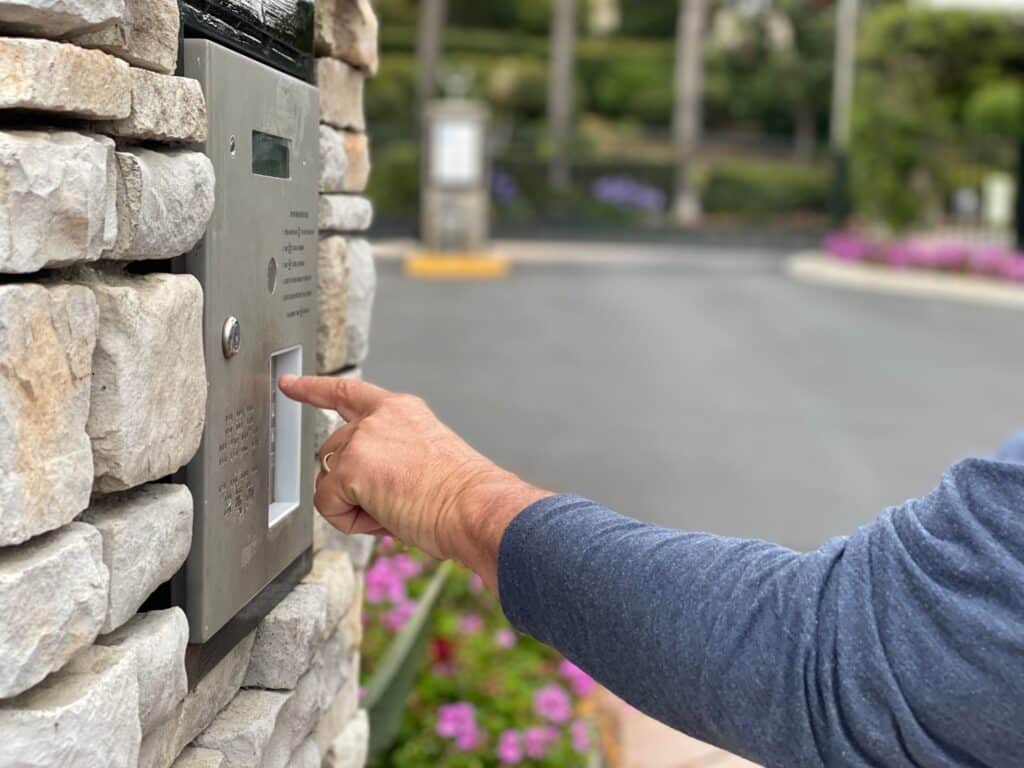
A gated community is any neighborhood or group of residential homes surrounded by locked gates or walls, with designated entry points. It can contain groups of individual homes, townhouses, or condominiums.
Gates control access to and from the homes inside, whether someone is driving, walking, or riding a bike. Access requires the use of a security code, key card, key fob, or permitted entry from a security guard.
Gated communities often include a variety of amenities, such as private parks, common areas, and security staffing. Some communities offer a wide variety of luxury amenities, including swimming pools, tennis courts, golf courses, state-of-the-art gyms, and clubhouses.
Gated communities have HOAs, and homeowners associations charge fees for community maintenance and the amenities provided. HOAs also require that residents live and abide by a specific set of regulations and rules. HOA fees and regulations vary quite a bit amongst different communities around the country.
A lot of people associate the idea of “gated communities” with celebrity enclaves, like Calabasas in Los Angeles County or Star Island in Miami Beach. But gated communities exist all across the country in different forms, and you don’t have to have extreme amounts of wealth to enjoy what they have to offer.
If you’re ready to rent in a new location or buy a home to live in for decades to come, keep gated communities in mind on your real estate search. Not only are they safer, but they offer far more benefits than you may think.
Up Next: The Pros and Cons of Hiring an Unarmed vs. Armed Security Guard
Read More
Is your home actually safe when you’re not around? According to recent statistics, it may not be as safe as you think.
If you’ve been fortunate enough to never experience a burglary, then you might not be familiar with how often they happen.
For those who have been less fortunate, you may already be asking yourself, “What are the odds that I could be burgled again?”

Everyone deserves to feel safe at home. Many people rely on the technology of home alarm systems and security monitors to provide that peace of mind.
Thankfully, home security monitoring is improving all the time.
One of the newest features that home security companies offer are glass break sensors. These small but powerful devices can instantly detect if someone has broken a window in your home.
You can use glass break sensors to monitor and protect your property around the clock — whether you’re asleep in bed in the middle of the night or traveling far from home.
Ready to learn more about how glass break sensors can protect you, your home, and your loved ones?
Here’s everything you need to know about glass break sensors, including what they do, how they work, and how to install them as part of your current home security setup.
Contents:
How Do Glass Break Sensors Work?
Where to Place Glass Break Sensors
While the number of residential burglaries has declined in recent years, home and business break-ins happen several times a day throughout the country. And when they do, they are often the result of burglars smashing a glass window or door to gain entry.
Glass break sensors can disrupt a burglar before they make it any further.
Small enough to fit in the palm of your hand, these sensors are also easy to install on your doors and windows. They emit a loud alarm if someone (or something) breaks or tampers with the glass.
The noisy alert is usually enough to scare the thief away. It quickly deters criminals from entering and burglarizing your home, threatening the lives of you and your loved ones.
Unlike window and door motion sensor detectors, which most people disarm when they’re at home to prevent false alarms, glass break sensors can stay on at all times. This offers an extra level of protection if someone breaks into your home while you’re on the premises.
Glass break sensors are an important safety measure that you can add to your current home security system. Many of the top home security companies offer them as an added layer of security.
There are two main categories of glass break sensors. The difference is in the type of sensor they use to detect shattered glass.
Both will produce an alarm if the glass suddenly breaks, but one is triggered by shock waves (vibrations) and the other is triggered by acoustic waves (sound).
Shock sensors react to vibrations. Each one contains a tiny electrical wire that attaches directly to the glass. As the glass moves, it transmits vibrations to the sensor and sets off the alarm.
Shock sensors are effective at detecting shattering or breaking glass, but they do have a downside. Because they monitor vibrations, they can sometimes prompt a false alarm even when something as innocent as a slamming door, the loud bark of a dog, thunderstorms, or another high-vibration disturbance causes the glass to tremble.
Also called frequency sensors or audio sensors, acoustic sensors have tiny built-in microphones that monitor the acoustic frequencies of sound. Shattering glass has a high-pitched sound, and these sensors alert when they detect that specific frequency.
Like shock sensors, acoustic sensors are also susceptible to false alarms. If you’re standing near the sensor and drop a plate or a wine glass, for example, it may set off the alarm by accident.
Here are seven tips for preventing false alarms in your home security system.
Acoustic sensors are considered more reliable and less likely to set off false alarms. They also have sensitivity levels that adjust specifically to detect the sound of shattering glass and prevent sounds at lower frequencies from triggering the alarm.
Keep in mind that glass break sensors are not motion detectors. They will not let you know if a door or window is opened. They only alert when the glass vibrates or shatters.
You Might Like: How to Remove an Old Home Security System

Where you place your glass break sensors depends on the type of sensors you buy. Before you decide whether shock sensors or sound sensors are better for your needs, consider how and where you will attach them.
Vibration sensors attach directly to the glass. That means you must place one directly on each door or window that you want to alarm. You can use them on windows of any size, but window contact sensors are best when used on large windows and doors, including sliding glass doors.
Acoustic glass break sensors are typically placed away from the wall that has the window or door, with the sensor’s microphone positioned to face the glass.
All glass break detectors have a limited sensor range. Sometimes one is enough to cover several windows or an entire room. For others, you may need to install one sensor per window.
The number of sensors you need will depend on the size of your windows, the square footage range of the detector, and the type of sensor you choose.
For acoustic sensors in particular, it’s best to measure the exact distances that your sensors will need to cover, such as the range between the glass and the opposite wall. Check the manufacturer’s specs to confirm that the sensor has enough range.
Keep in mind that if you place an acoustic glassbreak sensor near a television set or speaker system, watching a loud movie or television show with shattering glass scenes could set off the security alarm by accident. To minimize false alarms near televisions and stereos, consider adjusting the contact sensor’s sensitivity level so that it’s less likely to respond to everyday noises.
Most sensors are small and wireless. Wireless glass break detectors work by connecting to your wifi, and are easy to install.
Many have sticky adhesive backings, so that all you need to do is remove the adhesive cover from the back and press it against your wall, door, or window. Others have small screw-in mounts where you attach the base of the sensor directly to a ceiling or wall.
Depending on the type of home security system and detectors you use, you can install them yourself or have a security professional install them for you.
Glass break sensors have built-in features and offer added benefits to create an even safer environment for your home or business. Here are some of the additional ways that they can improve the safety and security of your property:
You can set your glass break sensors to send alerts or notifications to your phone every time they sound an alarm. Whether you’re at work, running errands, or away on vacation, real-time phone notifications allow you to quickly respond to threats.
Some glass break sensors can also trigger your security cameras to start recording. If you have interior or exterior cameras focused on the door or window, the glass break alert will trigger the cameras to record, making it easier to see the person or persons attempting to break in.
You can also configure your glass break sensors to alert your security monitoring service as soon as they sound an alarm. Your professional monitoring center can then contact emergency services or ask law enforcement to respond, ensuring that help is on the way whether or not you are on the premises.
Check Out: Securing Your Dog Door: Keeping Unwanted Intruders Out

Ready to protect your home or business with glass break sensors?
Here are some tips on what to look for before adding this new technology to your security system.
If you already have a home security system, buy compatible sensors that will readily integrate with your current alarm system. Homeowners and business owners who use a system with a professional monitoring center, such as ADT or Brinks, will need to purchase compatible window sensors. Otherwise, the sensors may not work with your current alarm system.
Don’t have a home security system yet?
When comparing plans and systems, narrow your options to alarm companies that offer glass break sensors. Many of the top companies offer them, but some do not.
Pay attention to the type of sensors the company offers as well. Be sure to ask if the sensors are shock sensors or acoustic sensors.
The bigger your home, the more windows and doors you have — and the more important it is to install glass break sensors.
Not only will they play a pivotal role in protecting your home, but they’ll also protect you if you’re upstairs or in another room when someone tries to break in on the ground floor.
Most people install glass break sensors on the ground floor, as well as on upper floors that can be easily accessed from the outside. For example, upstairs windows or balconies that are close to trees or other climbable objects.
Unless there is easy outside access to second, third, and upper stories, you don’t need to install one on every window in your home.
And if you rent a small home or apartment, you might not need them at all.
As a tenant, you might not have a say in what security system (if any) is used to monitor your space. Your landlord will typically make that decision. But there is an alternative way to use glass break alarms to protect your home:
Smart home devices.
For example, the Alexa Guard feature on Amazon Echo includes built-in detectors for certain sounds, including the sound of glass shattering.
While Alexa has a limited range, one device is usually enough to cover one floor up to about 1,000 square feet of space.
Place yours in the room that has the most vulnerable windows. You can enjoy the protection of glass break sensors without obtaining your landlord’s permission or attaching anything to your windows or walls.
Residential security is a growing concern for many homeowners, and glass break sensors offer an additional layer of protection that motion detectors and security cameras do not. They’re perfect for anyone who lives alone, occupies a large space, travels often, or wants to take all possible measures to protect their family.
No matter your living situation or location, glass break sensors are an easy and effective security measure that safeguards against break-ins and offers invaluable peace of mind.
If this added measure of security isn’t enough, consider hiring a residential security guard. Contact Security Explorer to find professional, residential security guards in your area now.
Up Next: 43 Shocking US Burglary Statistics
Read More
From vandalism to burglaries to homicides, crime is a reality of life.
Every home, every business, and every event is susceptible to criminal activity. That’s why so many businesses are choosing to hire security guards to protect their assets, as well as to oversee the protection of their employees and guests.
According to the FBI, pre-COVID data from 2019 shows that a violent crime was committed every 26.3 seconds, while property crimes were committed every 4.6 seconds. As of 2022, violent crime rates have dropped to pre-pandemic levels, but some crimes, such as robbery, have increased across the nation.
One of the best preventative measures you can take against crime is to hire a security guard. But first, you’ll have to decide if you need to hire a guard that’s armed or unarmed.
Not sure which type of guard is right for your business?
Here are the pros and cons of hiring armed vs unarmed guards to protect your business or your next event.
Contents:
What Type of Security Guard Do You Need?
What Do Unarmed Security Guards Do?
What Do Armed Security Guards Do?
Unarmed Security Guards: The Pros and Cons
Deciding whether to hire an armed or unarmed guard depends on the type of business you run. It also depends on how much risk is involved. High-risk businesses should consider armed security guard services, while unarmed guards are usually sufficient for businesses that have low-risk security needs.
To decide which type of guard to hire, consider the level of risk that you, your customers, your employees, or your event guests might face.
Examples of businesses that have high security risks include:
Business owners that operate in areas with a high crime rate should consider their businesses at risk, even if the nature of their business wouldn’t be deemed “risky” in an area with a lower crime rate.
For example, high-end retail outlets, jewelry stores, banks, and financial institutions are almost always considered high risk. But in a high-crime area, even convenience stores, gas stations, and restaurants may be susceptible to criminal activity.
Read About: The Ultimate Event Security Checklist
First and foremost, unarmed security officers play a major role in crime prevention. Many would-be criminals will think twice about taking part in criminal activity once they see that there’s a security guard on the premises.
Having said that, security guards do much more than deter vandals and keep thieves at bay. Unarmed guards, in particular, provide a variety of security solutions, such as:
In some situations, unarmed security professionals may also provide one-on-one assistance to customers, guests, and employees. They often escort guests and employees to their cars, provide directions, and staff the reception desk or front door of commercial offices and retail locations.
Armed security guards do everything that unarmed guards do, with one addition:
They carry a firearm.
Armed guards undergo extensive training to prepare them to respond to life-threatening security matters. In fact, many are ex-police and ex-military who have years of experience in handling and discharging weapons. When necessary, they may use deadly force — and they’re permitted and trained to do so.
Like every other business decision you have to make, you’ll want to weigh the pros and cons of hiring an unarmed security professional. Here’s a look at how they can benefit your business, as well as why they may not be the right choice for your needs.
Station an unarmed security pro at your door, and you can instantly provide your employees, customers, and guests with a safer environment. Here’s an in-depth look at why unarmed guards might be the best choice for your business.
The physical presence of security personnel, even when unarmed, is an effective crime deterrent. Many criminals will not commit an unlawful act in a space where security is present, alert, and ready to intervene.
Unarmed guards provide peace of mind. They send the signal to employees, guests, and patrons of your business that someone is on watch to ensure a safe and secure environment at all times. They also send the message that you are a trustworthy business that values the safety of everyone on the premises.
It’s more cost-effective to hire an unarmed guard than an armed guard. Armed guards cost more because they have weapons training and additional skills that unarmed guards do not.
While all guards can provide excellent protection, there is one main drawback to hiring an unarmed pro over an armed guard:
If a significant threat arises, they may not be able to stop it.
Unarmed guards are often equipped with non-lethal weapons, such as pepper spray, tasers, and batons. But depending on the threat, non-lethal weapons may not provide enough protection.
For example, should an armed gunman gain entry into your business or event, your security guard’s only option may be to call for backup from armed law enforcement professionals. An armed guard, on the other hand, may be able to stop the threat in its tracks without having to wait for police officers to arrive on scene.
In a high-risk business, an armed guard may be the only way to provide the level of security your business needs. Here are the pros and cons of adding an armed weapons expert to your security team.
Depending on the nature of your business and its location, an armed guard can be an invaluable asset. Yes, they can add to your payroll expenses — but there are several benefits that more than justify the cost.
Like unarmed guards, armed security experts are a highly effective crime-prevention measure. Many crimes are crimes of opportunity where the criminal strikes because the business appears to be easy to attack. Armed guards make it clear that your business is not an easy target, and most criminals prefer ones that are.
In general, armed guards can make customers, guests, and staff feel more secure. This can improve your clientele’s confidence in your business, as well as their perception of safety. Furthermore, if a dangerous situation arises, these pros have what it takes to eliminate a threat as soon as it presents itself.
Immediate assessment and elimination of a threat is key to maintaining everyone’s safety. Because armed guards have firearms training, they can provide instant protection against a threat without having to wait for law enforcement agencies to arrive on scene.
Before hiring an armed guard, consider the drawbacks of having a firearm visible in your place of business.
Not everyone feels comfortable around firearms. For that reason, having an armed security guard could do more than make potential criminals feel nervous — they could make certain customers feel nervous, too.
In addition to feeling uneasy around guns, some customers, staff, and guests may assume that the presence of an armed guard means that they’re in a dangerous place that needs extreme protection. Even if it is a “dangerous” place, this is not the message that most businesses want to send.
People expect to see armed guards in locations with a high risk of theft, such as banks, courthouses, and luxury retail stores. But placing an armed guard in a restaurant, church, or anywhere that they’re not expected could create anxiety in people who are not comfortable around guns.
Unarmed security guards, who have less training, don’t cost as much as armed guards.
Depending on your budget and the risk level of your business, it may or may not be cost-effective to hire a guard who has a license to carry a firearm.
In addition to firearms training, most armed security professionals undergo other types of training. They learn de-escalation techniques, how to read non-verbal cues and body language, and conflict resolution — all of which can minimize potential dangers and eliminate threats.
When necessary, an armed security officer may use lethal force, which can result in extreme injury or even death. For this reason, you’ll need to purchase additional liability insurance to protect your organization’s assets.
Of course, more liability insurance means higher operating costs for your business.
You Might Like: 7 Reasons to Hire a Bank Security Guard

There are many different types of security companies you can hire. Consider the following factors when interviewing and vetting potential guards.
Always check online reviews and testimonials before hiring a security company.
You can use a security services search directory, such as Security Explorer, to read reviews about the best services in your area. Listening to what other customers and clients have to say about their experiences can help you decide if a particular security company is right for your business.
You can also run background checks and reference checks on security personnel. It’s critical to vet your guards, as you’re putting everyone’s safety and security in their hands.
It goes without saying that you want your security personnel to have experience. What’s more important is that they have the right type of experience.
Some companies are experts in event security, while others specialize in the protection of hospitals, banks, or office buildings.
A guard who has experience working in your particular business or industry will be best prepared for the task at hand. You can trust that they possess an in-depth understanding of the potential threats you could face.
Always compare prices and services to make sure you’re getting a fair deal.
Obtain quotes from two or three different security experts so that you know if you’re paying the right amount for the level and quality of service they offer.
Security guards are experts in situational awareness who can adapt to almost any setting. Still, it’s important that they’re familiar with your geographical region. To fully understand and prepare for the risks that your business may face, they’ll need to be aware of the local demographics, the surrounding businesses, and the neighborhood as a whole.
Security guards offer protection against active threats, and when an active threat isn’t present, they help deter crime and offer peace of mind.
Whether you choose to hire armed or unarmed guards, it’s one of the most effective ways to protect your business while ensuring that your employees, guests, and patrons always feel secure.
Without a guard, your business runs the risk of becoming an easy target that attracts criminals — which can cause significant damage and harm.
Professional security services are available all across the country. If you’re looking to hire a guard in California, connect with Security Explorer now to find experts you can trust and rely on to keep your business safe.
Up Next: 43 Shocking U.S. Burglary Statistics
Read More
As an event planner, you have a lot on your plate.
So many things fall on your shoulders: from reserving the perfect venue to hiring the vendors for catering and entertainment. On top of it all, you still need to decorate the space and plan for where and how your guests will park and check in.
But there’s another crucial element you can’t afford to overlook: security.
Read More