LET’S GET YOUR SECURITY GUARDS BOOKED
Get the security explorer you need at a low price. We’re open 24/7. Call now for a quote!



Hospitals and healthcare facilities face security risks unlike any other industry. The concern is so great that in 2016, the American Hospital Association created the Hospital Against Violence (HAV) initiative to improve hospital security, reduce violence, and make medical centers a safer place to work.
Some of the more unusual threats to hospitals include drug thefts, cybersecurity attacks, workplace violence, and even infant abductions. It’s more important than ever that hospitals take proactive steps to prevent these security breaches before they occur.
Hospital owners and managers can implement a variety of security measures to ensure their facility is a safe place for patients, staff, and visitors alike.
Here’s how to make your hospital as secure as possible.
Get the security explorer you need at a low price. We’re open 24/7. Call now for a quote!
While all businesses face security risks, healthcare facilities must take greater precautions than most to ensure the health and safety of their employees, patients, and visitors.
Hospitals are not only high-traffic facilities, they’re also hectic and fast paced. Patients arrive at all hours of the day and night while visitors come and go.
Because of the constant influx of people, the hospital’s security operations must be top-notch and its staff members must stay vigilant. Otherwise, there may be an increased risk for:
Every business property carries a risk for trespassing and vandalism. As United States laws concerning reproductive rights change across different states, it’s expected that some medical facilities could see an increase in protests as well as an increased risk for violent threats.
Theft is another concern. Inside their facilities, hospitals carry a risk of theft of everything from equipment and prescription medications to patient’s personal property and infants in the maternity ward. In hospital parking lots and parking garages, there’s always the potential for automobile thefts or vandalism.
Cybersecurity threats to health data can jeopardize patient privacy. Unauthorized medical staff, patients, or visitors could gain inappropriate access to computer systems from anywhere within the building.
There’s also the potential for violence against staff or patients. This could arise from visitors, staff, other patients, or criminals who view hospitals as soft targets.
Given these common risks to hospital security, medical facilities should take steps to enforce rigorous security programs that ensure the safety of the building and its occupants. We outline these steps below.
You Might Like: The Pros and Cons of Hiring an Unarmed vs. Armed Security Guard

Hospitals and medical centers of all sizes require multiple levels of access control. That means having full awareness and control over who enters the facility, as well as where people are authorized to go once they’re inside. Facilities must establish several access points throughout the property. Each one should be connected to an alarm system that will trigger in the event of a security breach.
Here are four ways to control access into and within a hospital facility.
Every medical center should have a visitor management system. These are limited entry points with security desks where patients and visitors can check in. Visitor management systems also include full-time hospital security officers who can grant or deny access.
Guards at security desks should first identify the purpose of the person’s visit, such as receiving medical care or visiting a patient. They should then check the visitor’s identification and provide them with a visitor pass that identifies them as non-personnel.
Often, this basic security measure is all it takes to deter undesirable visitors. Most people will not produce photo identification if they are planning to do something wrong. They’re also less likely to do harm if they see a healthcare security officer on the premises.
A strong visitor management system can also include screening devices, such as metal detectors with bag scanning technology that can identify firearms and other weapons.
Hospitals should supply their staff with access cards that they must swipe to enter a restricted door. Biometric security methods, such as fingerprint or facial recognition locks, can provide an even tighter level of security.
Keep in mind that the key cards given to employees should not unlock every single door in the facility. Not everyone who works in the hospital needs or should have access to every area.
Some of the areas where you should restrict staff members from entering include:
Patients can sometimes pose a threat to themselves or others. For healthcare professionals and security staff monitoring psychiatric patients, this can be a huge concern, especially if a patient tries to leave their room to wander to a different floor.
For high-risk patients, consider supplying patient monitoring technology, such as bracelets. These will alert staff if the patient attempts to open a door or access an elevator.
Your facility’s access control system should include a lockdown capability to limit access to specific sectors of the hospital. Should security or staff identify an active threat, they can prevent suspects from breaching other areas of the facility by remotely disabling the doors that lead in and out of the area.
Read About: Everything You Need to Know About Glass Break Sensors
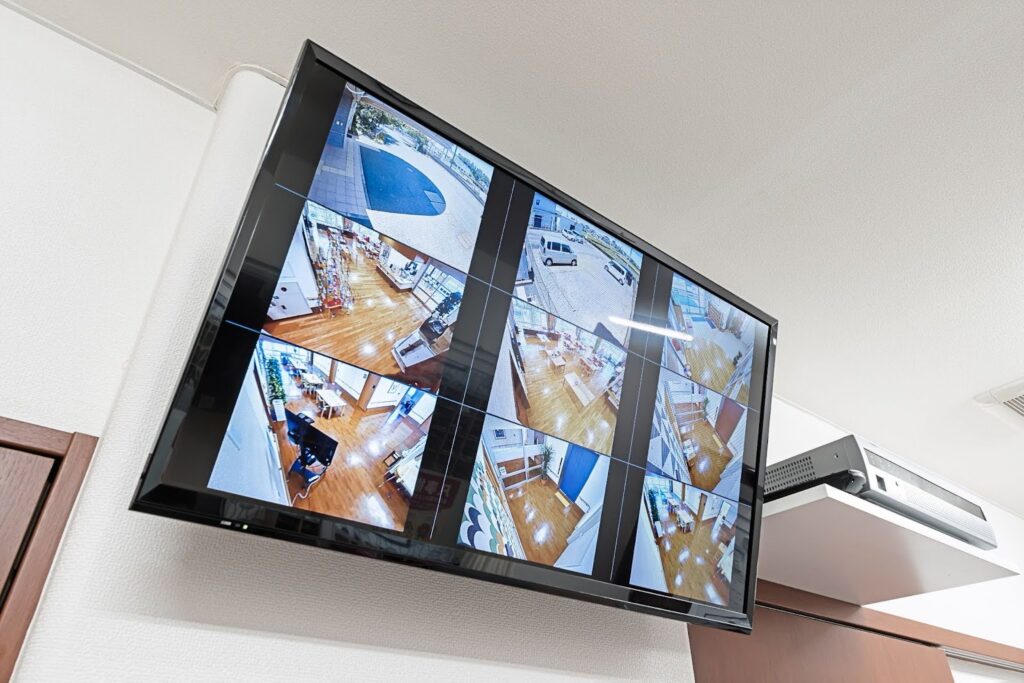
Install and Monitor Security Cameras
Video surveillance systems are a must for hospitals. Not only are they one of the most efficient ways to prevent and detect criminal activity, they’re also essential to solving any crimes that have already happened.
Depending on the facility’s size, you may need dozens or even hundreds of cameras to survey the entire property. At a minimum, place video cameras throughout the hospital in the following key locations:
When installing new cameras around the hospital exterior, consider thermal cameras. Thermal cameras make it easier to detect motion in dark or low-light areas.
Make it a priority to schedule regular maintenance and updates to your security cameras and CCTV systems. Security cameras are only useful when they’re in optimal working condition.
Panic buttons are a quick and effective way to alert on-site security professionals, local police officers, and other law enforcement agencies that you need immediate emergency help.
Many hospitals have panic buttons installed at ER entrances, hospital pharmacies, and reception desks. Some medical centers take this a step further and provide wearable panic buttons to their employees.
Most hospital campuses consist of several buildings spread over a large property. These buildings include separate inpatient and outpatient medical facilities, diagnostic testing centers, and administrative offices.
The bigger the facility, the more vital the need for a central communications hub or security department. It’s best to have a single group of trained personnel who can constantly monitor all activity throughout the campus. It also allows security personnel to communicate data breaches and enact response plans in real time.
A hospital’s central communications hub should include security consoles where personnel can monitor video surveillance cameras 24/7.
Cybersecurity is an ever-present risk to infrastructure, and hospitals must take all precautions to protect their data. That requires you to have up-to-date cybersecurity measures in place.
The protection of patient privacy, especially medical records, is a constant source of worry for medical facilities. Hospitals must also safeguard their proprietary and financial data, as well as protect against cyber attacks that could disrupt the facility’s infrastructure or attempt to extort money.
Some criminals deploy cyberattacks to shut down a hospital’s electrical power or computer systems. This can put patients in immediate harm. Communities rely on hospitals to function without interruption, which means that a successful cyberattack is a fast way to damage the trust that a community puts in their local hospital.
All hospitals should make excellent cybersecurity protections their priority.
Healthcare workers do life-saving work and deserve to work in a secure environment. Likewise, patients should feel they’re being cared for in a safe and comfortable environment. The best way to foster a safe environment is to hire a private security company.
Private security teams offer a wide range of security solutions that go well beyond what most medical facilities are capable of handling on their own.
When you hire a private security company, the first thing they’ll do is send security experts to visit your site for a full risk assessment. This is how they identify any and all weak security points within the property.
They’ll map the entire campus and determine where security efforts are already solid, where they’re missing, and where they need enhancements.
A private security firm will develop an effective emergency response plan for your hospital to follow in the event of a security breach.
After developing the plan, they’ll train hospital staff members about proper response procedures. This includes how to respond to specific threats like active shooters or infant abductions.
One of the best ways to create a safe and secure hospital environment is to position hospital security guards throughout the facility. Visible, uniformed guards are an excellent crime deterrent.
Professional security guards undergo training in de-escalation techniques and know how to diffuse a threat before it becomes out of control. When you hire a private security company to staff your facility, you can rest assured that you have more than one set of eyes keeping watch.
Different security guards may have training in different skills and roles, such as front desk security, exterior security, and monitoring video surveillance systems. The key is to have experts on hand at all times who know how to handle a variety of security posts and situations.
From time to time, private security companies will conduct penetration tests. Penetration tests analyze the security protocols and systems in place to ensure that everything is secured as intended and that no new weak spots have surfaced.
If weak points or vulnerable areas are detected, they’ll put new measures in place to avoid security breaches and better protect those areas of the facility.
Given the risk of everything from pharmaceutical drug thefts to cybersecurity data breaches, hospital security is not something to take for granted.
A private security company can identify, prevent, and manage the risks. That means your hospital becomes a safer and more secure place for medical professionals, visitors, and all members of your hospital staff.
To find a professional security company to protect your hospital, visit Security Explorer now.
Up Next: 43 Shocking U.S. Burglary Statistics
Read More
There are now more than 70 million CCTV cameras in the United States.
Video surveillance has become central to everyday operations — and for good reason.
CCTV monitoring can’t stop all criminal activity, but it’s among the best tools for deterring and investigating crime. Installing a proper CCTV camera system should be at the top of your priority list if you’re not already using them to protect your business or private property.
Read our full guide to CCTV security monitoring before you buy a system and attempt to install it yourself. This guide looks into the key reasons why you need one, as well as how to choose and properly install the best system.
Article Contents:
All businesses worry about crimes like theft, vandalism, and trespassing. But they tend to worry less once they’ve installed a functional CCTV monitoring system that can give them an eagle-eye view of their entire property.
Closed circuit television systems have been in use for more than fifty years. In recent years, the technology behind them has undergone rapid and significant improvements.
The latest CCTV surveillance systems now use internet protocol cameras, also known as IP cameras. IP cameras stream live footage and make it possible for you or your security team to remotely monitor the footage from anywhere in the world.
That’s not all they do. In addition to streaming and recording images captured through video surveillance, IP cameras use motion detection sensors that send alerts whenever there is movement. This makes it more difficult to miss a threat.
Like alarm systems that draw instant attention to a particular door or window, like in secured hospital environments, motion detector sensors make it easy to determine the precise location of the source of the threat.
Modern CCTV systems also allow for remote positioning. You can angle or move the cameras as needed to capture different views. This allows you to monitor potential threats from different points of view and have visibility from different angles if a dangerous situation occurs.
Many CCTV systems also include thermal cameras, which pick up on changes in temperature. This allows you to see images in dark or dimly lit areas.
A small investment in a modern CCTV system can also save businesses money in the long run. They make your facility safer for workers and customers, as well as protect valuable assets such as inventory, equipment, cash, and data.
You Might Like: How to Remove an Old Home Security System
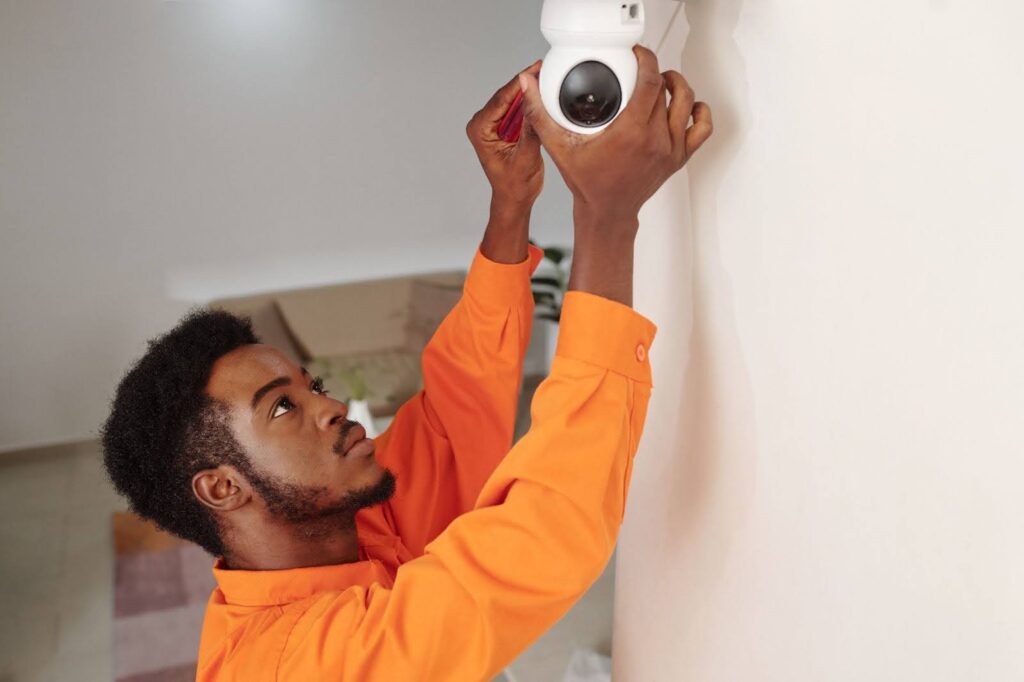
Traditional CCTV systems are hardwired to your electrical panel and via cables to an on-site control room. You can still choose this traditional method, but many businesses prefer remote live monitoring solutions that connect via the internet.
No matter what type of surveillance system you choose, it’s best to hire a professional installer who can set up the camera system on your behalf. The installation process involves many steps.
Professional installers will do a site survey to determine where video cameras are needed and how many you’ll need to provide the greatest security. Once you select the type of cameras you want and agree on where to place them, the installation will begin.
Wireless cameras are a popular choice for residential properties because they don’t require rewiring and are, therefore, the easiest to install. Most commercial facilities and businesses, however, prefer to hardwire their cameras to a central power source.
During installation, the installer will run all the wires needed to make the necessary electrical connections. Sometimes that requires opening up walls or removing ceiling panels. Once the wiring is in place, they’ll mount your cameras at the proper heights and position them in a way that captures as wide an area as possible.
The next step in the process is to install the video recording system so that you can store and save your CCTV footage. This can be a network video recorder (NVR) or a digital video recorder (DVR), depending on the type of CCTV system you choose.
IP cameras, which connect via the internet, use NVRs to record digital videos. Analog cameras require DVRs, which convert analog footage into a digital format. A DVR system requires connection with coaxial cables, so running wiring in ceiling panels or behind walls may be necessary here as well.
Once the recording system is in place, a professional installer will connect the cameras to your monitoring center or control room. With modern systems, this is done via the internet, while traditional systems with on-site control rooms require cables for connection.
The final step is to test the system and verify that the surveillance images are available for monitoring in real time. Professional installation companies will ensure that your system is working at optimum levels, and that operators are seeing the highest-quality images possible.
Check Out: The Pros and Cons of Hiring an Unarmed vs. Armed Security Guard

It’s up to you to decide who you want to monitor your security system and where you want them to monitor it from.
On-site monitoring requires that you have someone on the premises to watch the surveillance video footage. For large businesses with multiple cameras that need constant surveillance, that could require hiring an entire internal security staff.
Remote monitoring allows you to outsource to a third-party monitoring center to provide 24/7 surveillance. You may also choose to hire a private security firm, which may staff your location with security guards to work in your control room or to watch your cameras from their own management system.
Where and who you rely upon for CCTV monitoring often depends on how many cameras you have. It also depends on how much you need to keep an eye on your business or facility. The key is to make sure that you have enough CCTV operators in place to watch the system in the appropriate manner.
Here are some tips to help you decide who should monitor your CCTV system and from where.
Many businesses find it beneficial to hire a professional security company to put security guards in charge of CCTV monitoring. With professional, trained guards watching your CCTV system, you can have peace of mind knowing that if they detect a threat, they can immediately respond and take the appropriate action.
The combination of CCTV monitoring and physical guards on site is ideal. Video surveillance cameras and visible security guards are both excellent crime deterrents. Use them together to significantly reduce threats and prevent crimes.
Another benefit of having an on-site monitoring station is that there will be less eyes on your footage. You can set protocols so that only the guards in your control center and designated employees or officers of the company can see the footage. With a remote video monitoring service, you can never be 100% sure who’s watching your footage.
Remote video monitoring can give you around-the-clock peace of mind, but there is one drawback:
It won’t stop an immediate threat.
Monitoring video surveillance cameras from a distance is an excellent way to detect suspicious activity. Yet without a physical guard on site to protect you in the moment, you’ll still be at risk. The best that remote monitoring centers can do is contact law enforcement or other emergency services if a security breach or safety threat arises.
The biggest benefit of using remote monitoring is the lower cost.
Hiring monitoring services that employ operators is more cost-effective than hiring trained security guards to watch your CCTV cameras. Security guards go through extensive training to learn specific skills, such as de-escalation and emergency response techniques.
For this reason, their cost per hour is higher than CCTV operators who aren’t trained to confront or handle physical threats.
Keep in mind that the added cost of hiring physical security guards is well worth it. Guards offer an added layer of protection that can make both your employees and customers feel safer in your place of business.
Deciding whether to monitor your CCTV cameras onsite versus a remote location may be a simple matter of logistics.
If you need to observe several cameras, or if you require several people to monitor them, you’ll need to have the space to do so. It’s not always possible to designate a control room. If you lack the space to set up your control room in the proper manner, remote monitoring may be your best option.
Not sure what’s required in a CCTV control room or how to set one up?
This article dives into what equipment you’ll need, how to position screens and operator workstations, and the type of lighting and ventilation required. It’s more complicated than you may think.
There is no right or wrong answer to the question of how many people are needed to monitor your CCTV video feeds. It depends on several factors, including how many cameras you have and whether the locations under surveillance are high-traffic areas.
In low-traffic areas where activity is infrequent, a single operator may be able to monitor several screens at a time. In high-traffic areas or high-risk areas, you may need more than one guard per screen to keep track of everyone coming, going, or loitering.
If you’re looking to maximize the number of cameras that one person can monitor at a time, you can use “blank screen monitors.” Working as a CCTV operator means staring at screens for hours at a time, but blank screen monitoring can make it easier on the eyes. The monitors only display images when there is movement or activity. With this approach, operators have less images to focus on at a single time.
Whether you own or operate a small retail store, a bank, a hospital, an office building, or a manufacturing plant, every type of business and industry can benefit from CCTV monitoring. But it’s best to rely on professionals to get it set up.
A professional security company can help you determine what the right system is. They’ll also install that system, set up your monitoring process, and make sure that it’s working to its full capacity. It’s a complex process that most people cannot and should not handle themselves.
If you plan to increase or upgrade security at your place of business, don’t delay. To find a professional security team that can make your business safe inside and out, visit Security Explorer now.
Up Next: Manufacturing Plant Security
Read More
Manufacturing plants face unique security challenges. Security measures that work for special events or movie sets, for example, are not necessarily adequate to protect a plant.
Threats to manufacturing facilities can range from trespassing and vandalism to cybersecurity attacks. That’s why every manufacturing facility should not only install a robust security system, but also a plan of action that can guarantee the most efficient — and timely — response.
If you manage a plant, security is already top of mind. This should be the case whether you operate a small-scale plant or a larger facility that generates millions of products every year.
Keep reading to learn how you can protect your plant and manufacturing operations against the most common security risks. We’ll also share some tips that can make it easier to set up a proper system that meets your plant’s security needs.
Contents:
Manufacturing Plant Security: Understanding the Risks
Plant Security Requires Layered Security Measures
Put Procedural Security Measures in Place
Protect Against Cybersecurity Threats
4 Reasons to Hire a Private Service for Manufacturing Security
Manufacturing facilities contain critical infrastructure. If so much as a single security threat goes unaddressed, the impact to the company, the plant’s employees, and even the global supply chain could be enormous.
Staff could also be exposed to a variety of health and safety risks. For example, the harm that may come from using heavy machinery or working with combustible materials.
There are also physical risks to property, such as theft. Physical security measures are necessary to prevent the theft of machinery, equipment, tools, and raw materials.
Industrial plants should take measures to prevent the theft of information and intellectual property, as well. A security breach could give criminals unauthorized access to employee and customer information, company financial records, trade secrets, or proprietary product information.
Fortunately, there are tried and true safety measures that can minimize the security risks to your plant. By rolling out the right security solutions, plant managers can keep their facilities safe while increasing its productivity.
The Cybersecurity and Infrastructure Security Agency (CISA) is an operational component of the Department of Homeland Security. Their guidelines state that for security systems to be effective, they must be able to detect, respond to, and delay threats. (You can read the entire 50-page publication here.)
At the core of these guidelines is the need to layer security measures. In other words, stacking physical security measures with procedural measures and operational practices.
Layered security systems are complex. They can include anything from video surveillance to physical security guards that can act as crime deterrents.
Let’s take a deeper look at how you can establish a layered security strategy for your plant.
The first step in every manufacturing plant security plan should be to prevent unauthorized access.
Just like you lock your doors and windows at home, you must take steps to prevent unwanted visitors (or criminals) from accessing the facility.
To control access, you should:
Keep in mind that only authorized personnel should have access. Some employees may not need to access specific sectors of the plant, and should only be given access to limited areas.
Read About: Everything You Need to Know About Glass Break Sensors
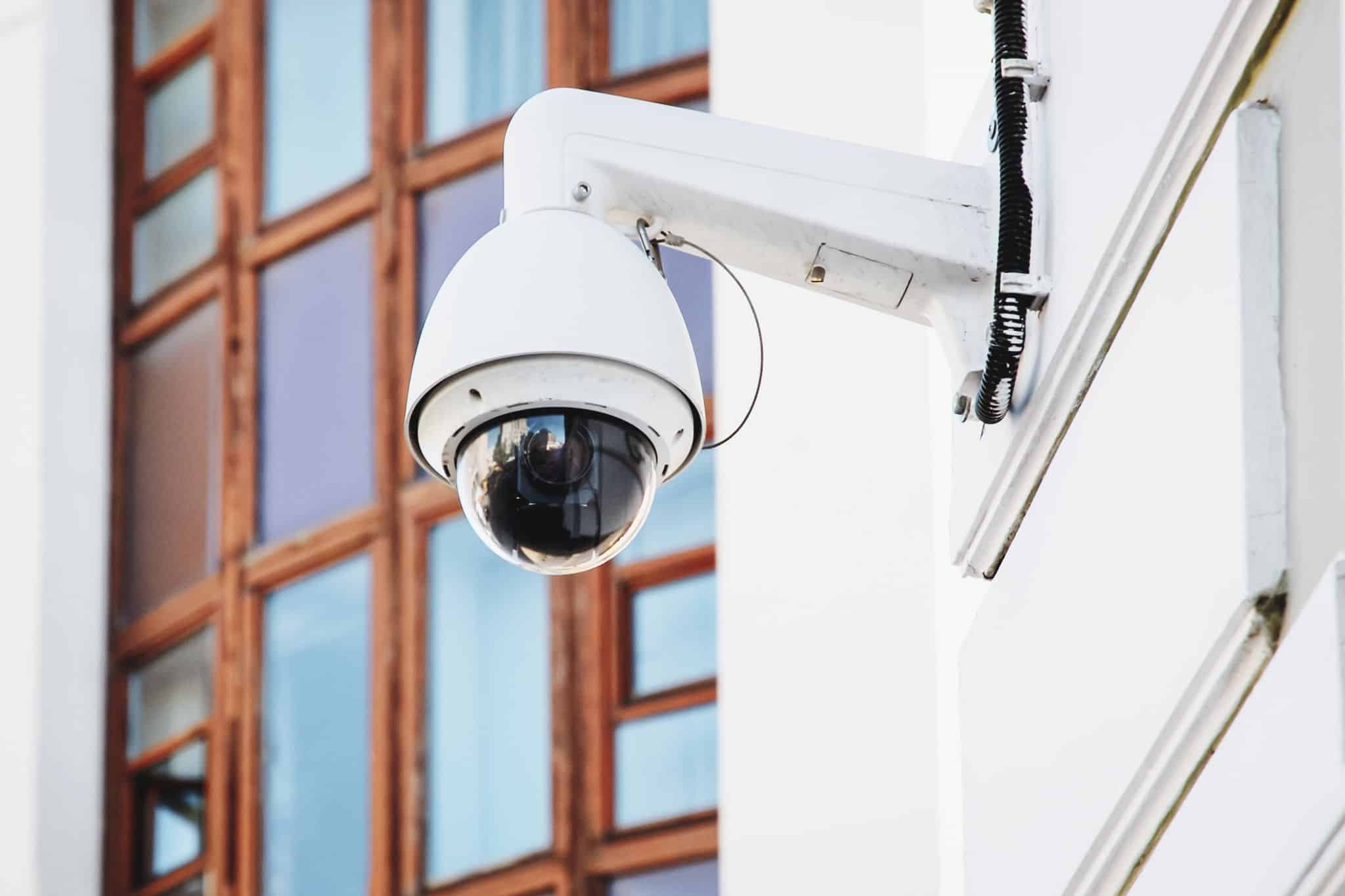
Visible security cameras are excellent deterrents against trespassing, vandalism, and theft.
But cameras can do more than protect your plant from external threats to its security. They’re also one of the best ways to monitor employee activity.
No matter how much you vet your employees or think you know your staff, there is always a chance that an employee could become a security threat within your plant.
For security cameras to be effective, they must be placed in the right positions. They also require effective monitoring. Here’s how to do it:
Every entry and exit point should be under video surveillance.
Position them at every door, window, and other point of entry to the plant. You should also install cameras at entrance points to the perimeter gates.
Place cameras inside the facility to monitor for suspicious activity. If a security threat manages to slip past the outdoor cameras and security checkpoints, internal cameras can still capture footage of them once inside.
Suspicious activity may include criminal activity from employees who have authorized access or entered an area in which they are unauthorized to be.
Any space inside or outside the plant, where access is limited or restricted, needs surveillance cameras. This includes loading zones, rooftops, and high-voltage areas.
Connect your access control system with video surveillance technology to maximize the quality of your security system as a whole.
Connecting door and fire alarm sensors to your video surveillance system makes it easier to identify the source of a threat. This can improve response times while making it possible to contain a threat in one place.
Set up surveillance cameras that can be watched via a remote monitoring system. With a 24/7 monitoring center keeping an eye on your manufacturing plant, your security team can assess situations in real time and prevent problems before they occur.
A remote monitoring system allows you to take a proactive, rather than reactive approach. Reviewing surveillance footage after a security breach can help you identify who is responsible for the breach, but real-time monitoring makes it easier to prevent in the first place.
Thermal cameras (also known as infrared cameras) are a great way to monitor the plant at night.
In low-light areas, it can be difficult to see clear images. Thermal cameras use infrared wavelengths and measure thermal signatures, providing clearer images, even when the area under surveillance is dark.
To keep the security of your facility strong, establish best practices for how manufacturing processes are performed.
Security and safety go hand in hand, so it’s important to adhere to OSHA safety standards at all times. Provide employees with the proper training to keep them, and the plant, as safe as possible.
No matter how secure you think your facility is, there is always the potential for a cybersecurity attack. Cyber criminals can remotely hack alarm systems, open smart doors with digital locks, and interfere with surveillance systems, so it’s vital to stay several steps ahead of them.
Cyber theft is a key security concern for many manufacturing plants and industrial facilities, and it cannot be ignored. The IBM Security X-Force Threat Intelligence Index 2023 goes into greater detail about the significance of this threat.
You Might Like: The Pros and Cons of Hiring an Unarmed vs. Armed Security Guard

While some companies in the manufacturing sector have security officers on their full-time staff, there are many reasons why it’s better to hire a private, external security service instead.
Here are the key reasons why so many plants hire private security professionals — and why you should, too.
When you hire a private security company, the first thing they will do is conduct a complete risk assessment. The purpose of the risk assessment is to identify any and all potential risks and vulnerabilities.
They will map the entire plant from inside to out, creating a comprehensive security plan that will safeguard your facility.
Your facility may have external doors that need better alarm systems, vulnerable points of entry, or sectors that are hidden from the watchful eye of security cameras. The security company will take the necessary steps to improve security where it’s needed most.
Security teams are also skilled at creating emergency response plans. Once they create the plan, they’ll train employees on how to follow through.
Training your employees in emergency response should be a requirement, not an option. Everyone on site must know the plan in order to improve the response time to potential threats.
A private security company will also run periodic penetration tests. This is the best way to ensure that the safety measures are working as they should. If a penetration test identifies a weakness in your security plan, your security personnel will make the necessary improvements.
Security companies do more than provide internal and external security solutions. They also staff your facility with the visible presence of guards.
Physical guards are some of the best crime deterrents you can have. Most criminals look for opportunities, which means that manufacturing plants without guards are the most vulnerable to opportunistic crimes.
A layered security system is essential to protect your manufacturing plant from potential threats. Hiring a professional security company is the best way to do so.
From perimeter gates and internal doors to data stored on your servers, every aspect of your plant deserves protection. To learn more about manufacturing plant security or to hire a private security team in California, contact Security Explorer now.
Up Next: The Beginner’s Guide to Hiring a Security Guard to Keep You Safe
Read More
Working as a professional security officer can be a great career opportunity. Security officers are always in demand — after all, they play a pivotal role in maintaining public safety.
But if you live in California, you can’t just toss on a uniform and get to work. You’ll need to take a few important steps first.
Security guards in the state of California must apply for a professional license to work in the security services industry, also known as a guard card.
Interested in working as a security officer in the Golden State?
Our step-by-step guide will show you how to get your California guard card and kickstart your career as a certified security guard.
Contents:
How to Get Your California Security Guard Card
How Long Does it Take to Train for a Guard Card?
How to Renew Your Security Guard License
Whether you want to work as an unarmed or armed security officer in California, the state has strict requirements you’ll need to follow.
Applicants can begin the certification process by signing up for a guard card training course. You must be at least 18 years old to enroll in the course.
Here’s what you’ll need to do once you’ve enrolled:
Before you can apply for a guard card, you must complete an eight-hour “power to arrest” training class.
This is a foundational guard card course that covers all the basics you need to know to become a guard, including:
California state law requires all prospective guards to complete power-to-arrest training. No exceptions.
Fortunately, there are a variety of security guard training centers throughout the state. You can visit these centers to sign up for courses to become an unarmed guard. Many will even allow you to complete your coursework online.
If you plan to work as an armed guard, however, you will be required to attend additional in-person training sessions.
Once you’ve completed the first eight hours of training, you must pass a written exam. The purpose of passing the written exam is to demonstrate that you understand the key concepts of power to arrest.
Your guard training company will administer the test, which you can complete online.
Check Out: The Beginner’s Guide to Hiring a Security Guard to Keep You Safe
 Step 3: Pass a Fingerprint and Background Check
Next, you must agree to be fingerprinted and pass a background check via Live Scan.
Since fingerprinting is something that can only be done in person, you will have to visit a nearby location that processes Live Scan forms. Live Scan locations can be found throughout the state.
The Live Scan service conducts checks with both the California Department of Justice and the Federal Bureau of Investigation (FBI). You will not pass the background check if you have any felony or misdemeanor charges on your record.
If you have been convicted of a felony or served time for a misdemeanor crime of violence, the only way to pass a background check is to obtain a Certificate of Rehabilitation. California will consider the circumstances of non-violent misdemeanor convictions on a case-by-case basis.
Once you’ve passed your background check, you can submit an application to the Bureau of Security and Investigative Service (BSIS). The application requires you to provide proof you’ve completed the first eight hours of training and passed the written exam. You must also pay the following applicable fees:
Applicants may submit online applications, as well as mail paper applications, directly to the BSIS.
Application processing times can be as brief as 15-20 days, but can take as long as 4-6 weeks. You can visit the BSIS website to confirm whether your certificate of completion has been approved. (Note that most employers will not interview you for an officer position until you’re able to show proof of a valid certification.)
Processing times may be longer if there is a lag in processing DOJ and FBI background checks. Once your licensing application has been approved, you may need to wait another two weeks before you receive your physical guard card in the mail.
There are a few issues that can delay or preclude you from getting your license. These include:
If any of these circumstances apply to you, it’s best to enter a repayment arrangement before you apply for your card.
The initial power to arrest course is not the only course you’ll need to complete. Once you’ve passed your power to arrest exam, you must follow through and complete another 32 hours of training to fulfill the state’s continuing education requirement for first-year officers.
BSIS will certify you as a security guard once you’ve successfully completed the first eight hours of training. However, because of the state’s continuing education requirement, most California employers will be more likely to hire you if they know you’ve already completed the 40-hour training program.
Some people prefer to apply for their guard card as soon as they’ve completed the initial eight-hour course. Others wait until they’ve completed the full 40-hour program before they register and apply for their card online. How you want to proceed is up to you.
Beginning on the day that you officially complete your first course, you have 30 days to complete the next 16 hours of continuing education. BSIS permits an additional six months for you to complete the final 16 hours.
Again, employers can still hire you once you’ve fulfilled the minimum eight hours of required training. It is the responsibility of the employer, not BSIS, to verify that you completed the full 40 hours.
BSIS’s continuing education for first-year guards includes coursework on the subjects of:
Unarmed security guards may undergo online training for all coursework. In-person classes are not necessary when applying for an unarmed guard registration card.
By contrast, BSIS requires armed security guards to attend additional instruction in the form of practical, in-person training.
Read About: 7 Essential Reasons to Hire a Bank Security Guard

Security guard certification is not a permanent, one-time process.
You will have to renew your guard registration every two years if you want to maintain your license.
There is a $40 fee for the renewal application. To renew, you must pay the fee and submit the application during the two-year period while your registration is valid.
If you allow your license to lapse, you can still renew it for a $65 fee if you submit everything within 60 days of the date of expiration. If more than 60 days have passed since your guard card expired, BSIS requires you to complete the entire training process from scratch.
For that reason, it’s best to pay the fee and submit the renewal application at least two or three months before the expiration date of your current license. This will prevent the costly and time-consuming process of undergoing training a second time.
A California guard card makes it possible to work in a variety of security guard roles throughout the state.
Having a guard card does not make you a law enforcement officer. That’s because security companies are not considered law enforcement agencies.
Unlike public law enforcement agencies such as the police or FBI, security guards are most often hired by private entities to protect:
Keep in mind that the California guard card comes with certain limitations. A guard card is not a license to carry a firearm. In order to work as an armed security guard and carry a firearm, you must also obtain a BSIS firearms permit.
The training requirements for a firearms permit do not replace the mandatory 40 hours of coursework that BSIS requires for all first-year security guards. Firearms training is supplemental only, so you must still complete the power-to-arrest course and 32 hours of continuing education.
Firearms training includes in-person coursework in a classroom environment. You will be required to undergo range training from a Bureau-certified firearms training instructor at a Bureau-certified training facility.
In addition to carrying a firearm, any guard who wishes to carry tear gas or a baton must take additional courses and acquire additional permits, such as a baton permit.
Learn more about obtaining your BSIS firearms permit here.
Security guard licensing is state-specific. You cannot use an out-of-state certification in the state of California, and you cannot use a California BSIS license in any other state.
Certification requirements vary from state to state, and requirements are subject to change. California has stricter standards than most states. In fact, some states don’t require security guards to be licensed or complete any training at all.
If you are planning to move to California or work in California from a neighboring state, you can start the online certification process at any time and from any state.
The Employment Development Department of the State of California projects that security companies will hire 11,000 additional guards between now and 2028.
Security jobs exist throughout the state. Once you complete the required training and secure a license, you can work as a professional security officer anywhere in the state of California.
To learn more about the security business and security guard job opportunities in California, visit Security Explorer today.
Up Next: The Pros and Cons of Hiring an Unarmed vs. Armed Security Guard
Read More
Whether you’re looking for a short-term rental or planning to purchase your dream home, deciding where to live is a big decision.
For some people, that decision is all about price. For others, it’s about location. Some folks even prioritize the size or style of the home.
But one thing that almost everyone can agree on is that no matter where they live, they want to feel safe. And that’s why so many people want to live in a gated community.
If you’re preparing to move and safety and security are your top concerns, a gated community might be the best decision you’ll ever make. Read on to learn why.
Contents:
Five Reasons Why Gated Communities Are Safer
How To Make Your Home and Community Safer
Don’t Let a Gated Community Provide a False Sense of Security
The Crime and Justice Research Alliance reports that homes in non-gated communities are burglarized 33% more than homes in gated communities.
In addition to fewer burglaries, gates also reduce other types of property crime that make neighborhoods less safe, such as vandalism and auto theft.
While gated neighborhoods do add an extra layer of security, gates alone are not enough to prevent 100% of crimes in your neighborhood.
Why?
Because even within a gated community, it’s still possible for someone who lives there to commit a criminal act. Yes, even someone’s next door neighbor could be that guy (although it’s still unlikely).
However, gates still keep out enough criminals — especially those who commit crimes of opportunity — to significantly decrease the overall rate of crime.
According to the Crime and Justice Research Alliance report cited above, gated communities are safer.
Here’s a look at the top five reasons why.
Gated neighborhoods usually have security systems that monitor the entry and exit of everyone that passes through the gates. Those systems often include video surveillance cameras placed in obvious and visible areas so that it’s no surprise to anyone that their comings and goings are being monitored and recorded.
In addition to video surveillance, most gated communities also have 24/7 guards that monitor the entrance points and/or patrol the grounds.
Burglars and other would-be criminals often look for crimes of opportunity and few commit crimes intending to get caught. Locked gates, video cameras, security guards, and the need for security passwords and access codes are usually enough to deter and prevent the average criminal from passing through the gates.
Less vehicle traffic makes the streets safer for everyone, including pedestrians, cyclists, other drivers, and children playing outside.
Even though auto accidents can happen anywhere, at any time and for any number of reasons, less vehicle traffic can reduce the number of accidents that occur on your streets.
Along with reducing vehicle traffic, gates also limit foot traffic.
Only residents and their wanted, invited guests are allowed “behind the gates.” Non-residents and unwanted guests, including potential criminals and harmless (but sometimes annoying) solicitors, are prohibited from entering.
By limiting access to your home and neighborhood, you increase your level of privacy.
The limited access provided by gates also makes it more likely that if someone does break into the community, they’ll be spotted and identified as someone who shouldn’t be there.
This is good news for homeowners living behind secured gates, as most criminals know this and will choose to move onto an easier target.
Less traffic and limited access lead to less visibility, which increases your level of security overall. Fewer people will be able to even discover your home, which means they won’t be able to identify your family or your residence as a potential future target.
You don’t have to be best friends with your neighbor to want to keep an eye out for their property, or to trust them to do the same for yours.
Gated communities tend to make it easier to meet and connect with your neighbors. Join one and you’ll notice a strong “sense of community,” often supported by community activities and neighbor-only events. This increases the desire for neighbors to look out for one another (and each other’s homes).
Neighbors in gated communities share an invested interest in keeping their neighborhood safe. Safe streets with low crime rates also contribute to higher property values, and every homeowner cares about that!
Even if you don’t want to get to know your neighbors (or know them and don’t like them), it’s to everyone’s benefit to keep an eye out for each other’s homes, cars, and property.
Check Out: Securing Your Dog Door: Keeping Unwanted Intruders Out

If you don’t live in a gated neighborhood, there are some things you can do on your own to improve the safety and security of your home and surroundings.
The more homes in the neighborhood that put these security measures in place, the safer the community. So, consider sharing these ideas with your neighbors, too.
It only takes a few minutes to install or replace security cameras. Provide yourself with added protection by installing and making them visible on your own home.
Increase security further by talking with other neighbors and nearby business owners about adding surveillance cameras throughout your neighborhood.
A full security system with 24/7 monitoring is best, but even a closed security system that you monitor yourself can be beneficial.
Along with security cameras, there are several other measures you can take to improve the safety of your home. We cover these below.
Glass break sensors are small sensors that attach to doors and windows and alert with an alarm when the glass breaks.
If a criminal shatters a door or window to gain entry to your home, the sound of the alarm is often enough to scare them off.
Motion detectors sound an alarm every time someone passes in front of the sensor. Most people disable them when they’re at home, but when you’re away, they can be an invaluable tool and yet another way to scare a criminal away.
Doorbell cameras, as well as doorbell cameras with motion sensor lights, have revolutionized home safety. Install them on every door and you can monitor them 24/7 if you’re connected to the system’s app.
Depending on your level of concern, consider hiring a residential security company to patrol your neighborhood or protect your block.
Of course, it’s recommended that you speak to your neighbors about this first. Some neighbors may be willing to contribute to the cost of hiring a security team.
At the same time, you should expect that some local residents may not be willing or able to share the added expense.
If you can’t gather together enough neighbors to pay for a security team — or don’t want to pay for it on your own — your next best option is to organize a neighborhood watch.
The idea of a neighborhood watch is not new. For decades, concerned citizens and members of communities around the country have been keeping an eye on their own neighborhoods.
The more neighbors you can get on board with a community watch program, the easier it will be to create a patrol schedule for protecting your streets and home.
Looking to hire a residential security guard in California? View our top recommended residential security services here.
Yes, some criminals commit their crimes in broad daylight.
But many more prefer to do their bad deeds beneath the cover of darkness. If you want to make your community safer, ensure that it’s well lit.
Add more lights on your own property, and install bright street lights throughout the neighborhood.
Outside your home, install motion sensor lights near garages, driveways, sliding glass doors, deck doors, back doors, and any ground-level windows that a criminal might target as an easy entry point for a break-in.
You can also put your indoor lights on timers so that they turn on or off according to a pre-set schedule. Or, install lights that can be remotely controlled via an app or home automation system.
Most criminals won’t damage your property or attempt a break-in if they think you’re on the premises. Just turn on a few lights and they’re more likely to give up and move on.
It goes without saying that you should always lock your windows and doors, especially at night when you’re asleep or when you’re not at home. But that won’t do you much good if you keep a spare key outside.
That plastic-looking fake rock nestled outside your door isn’t going to fool anyone. If anything, it’s one of the first vulnerabilities for which burglars look.
Instead of hiding a spare key in an unsecured place, consider installing a digital lock or smart lock on your doors so that you don’t have to leave a spare key outside.
If you like the idea of keeping a spare key within easy reach, secure it inside of a durable lock box instead of less-secure solutions like inside a false rock or underneath a door mat.
Living in a gated community offers peace of mind, but never assume that your home or residential community are immune to crime.
No matter where you live or how “nice” your neighborhood may be, you must stay vigilant about the security of your own home.
Here are some best practices for bolstering the security of your private property, whether you live behind gates or not:
Read About: 43 Shocking U.S. Burglary Statistics
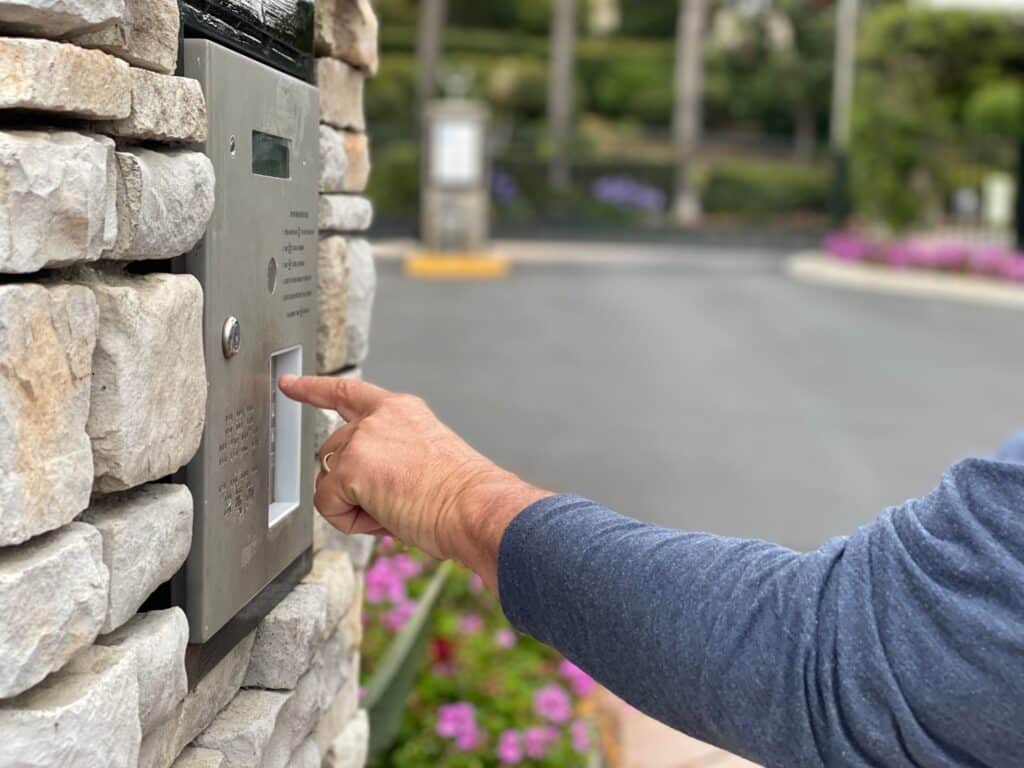
A gated community is any neighborhood or group of residential homes surrounded by locked gates or walls, with designated entry points. It can contain groups of individual homes, townhouses, or condominiums.
Gates control access to and from the homes inside, whether someone is driving, walking, or riding a bike. Access requires the use of a security code, key card, key fob, or permitted entry from a security guard.
Gated communities often include a variety of amenities, such as private parks, common areas, and security staffing. Some communities offer a wide variety of luxury amenities, including swimming pools, tennis courts, golf courses, state-of-the-art gyms, and clubhouses.
Gated communities have HOAs, and homeowners associations charge fees for community maintenance and the amenities provided. HOAs also require that residents live and abide by a specific set of regulations and rules. HOA fees and regulations vary quite a bit amongst different communities around the country.
A lot of people associate the idea of “gated communities” with celebrity enclaves, like Calabasas in Los Angeles County or Star Island in Miami Beach. But gated communities exist all across the country in different forms, and you don’t have to have extreme amounts of wealth to enjoy what they have to offer.
If you’re ready to rent in a new location or buy a home to live in for decades to come, keep gated communities in mind on your real estate search. Not only are they safer, but they offer far more benefits than you may think.
Up Next: The Pros and Cons of Hiring an Unarmed vs. Armed Security Guard
Read More
As an event planner, you have a lot on your plate.
So many things fall on your shoulders: from reserving the perfect venue to hiring the vendors for catering and entertainment. On top of it all, you still need to decorate the space and plan for where and how your guests will park and check in.
But there’s another crucial element you can’t afford to overlook: security.
Read More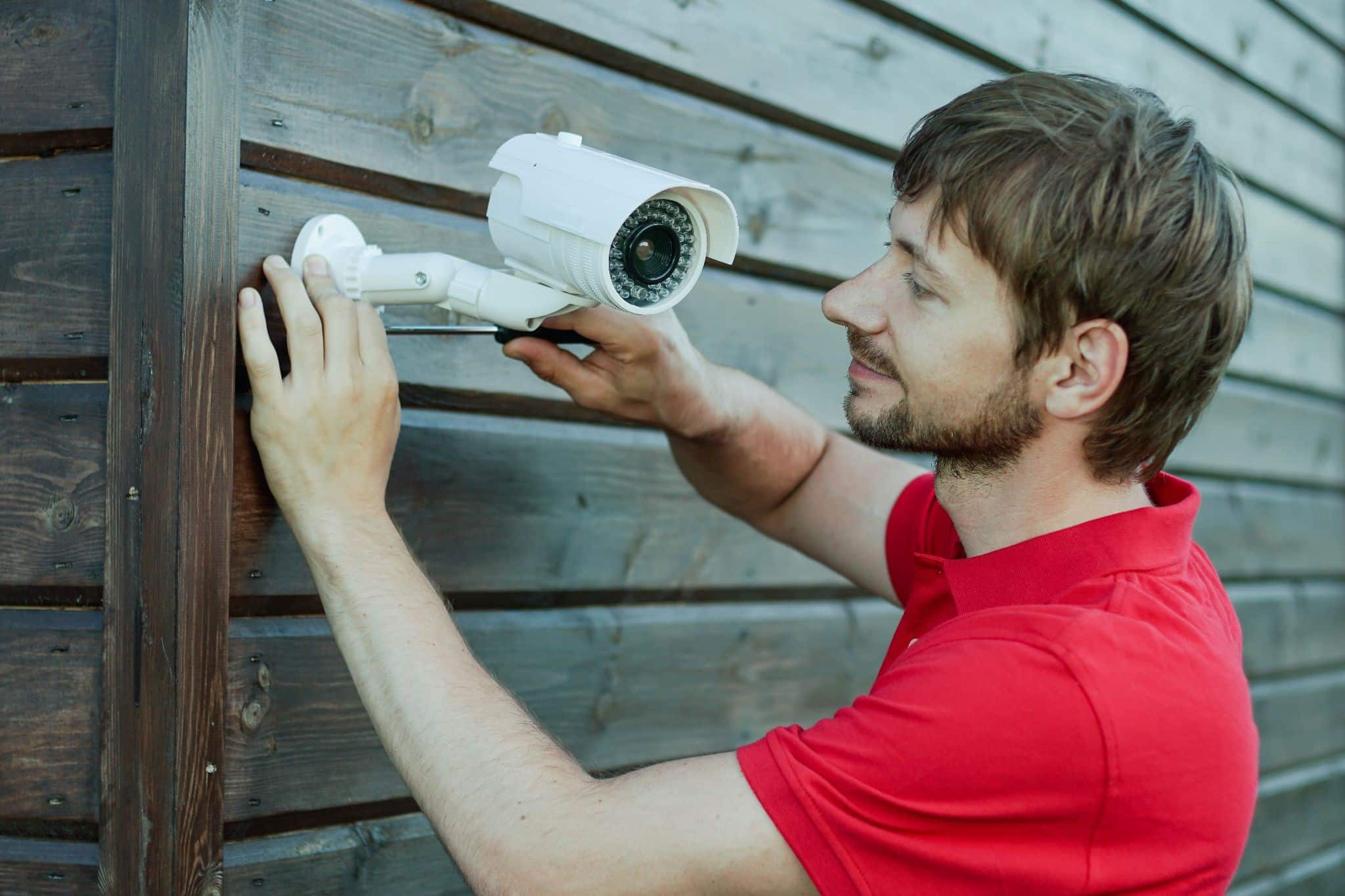
For the hands-on homeowner who loves tackling DIY projects in their new home, upgrading or replacing an outdated security alarm system might be high on your to-do list.
Modern, wireless “smart” security products have become easier than ever to install. But when it comes to removing those old, less intuitive systems, the task can appear daunting.
Thankfully, with the right information and a bit of determination, you can upgrade that antiquated setup to a state-of-the-art security solution.
You can also save on labor costs — and enhance the safety of your home.
Ready to get to work? This guide is for you.
Contents:
Step 1. Identifying Your Old Alarm System’s Type
Step 2. Preparing for the Removal
Step 3. Step-by-Step Uninstallation
Step 4. Sidestep or Troubleshoot Common Issues
Before you can begin the removal process, you’ll first need to identify the type of system you have.
For example, do you have a simple alarm system? Or is it a more feature-rich home security system?
Here’s how to tell the difference (and why these distinctions matter).
Identifying your security system type will help you anticipate the components, connections, and power supply configurations you’ll deal with during removal.
Take note of whether you have a wired alarm system or a wireless security setup.
The removal process and power supply configuration could vary significantly between these two. Wireless security systems, in particular, offer more flexibility in placement and integration.
Your system’s specific make and model can provide critical information about its power connections, component interconnections, and potential challenges during removal.
When in doubt, you can search the manufacturer’s website to find a downloadable copy of the user guide. User guides are a key resource that can also explain how to safely uninstall the device.
Once you’ve identified the make, model, and type of system you have, research it online.
Find out if the system’s model or brand is known for any uninstallation hazards or unusual steps. This is sometimes the case for specific wireless security systems.
Before you start dismantling anything, check if your old system is still under warranty.
If it is, removing it yourself could void that warranty. It’s always a good idea to consult with the provider or manufacturer first.
Depending on your upgrade plans and the integration capabilities of the old system, some parts might not need to be removed.
For example, motion sensors or door/window contacts might be compatible with new systems. Saving those compatible parts can not only save you money and time, but also reduce the risk of making an unnecessary replacement or installation that damages your walls.
The next step is to prepare for the removal, which includes everything from shutting down the power source to gathering your tools.
Let’s walk through the basics of this process.
Before starting, inform your alarm company (whether it’s ADT, Brinks, or another provider) that you’ll be uninstalling the device.
This step is crucial to avoid false alarms and potential complications.
Before touching any component, safety should be your primary concern.
Check the breaker box and turn off the system’s main power source. This can prevent unexpected electrical hiccups or accidents.
Having the right tools at hand can make the removal process smoother.
Some components are hard to remove.
Depending on your future plans and the compatibility of certain parts with new systems, some components might be better left in place. It can simplify the process and reduce potential damage or repairs.
If safety or proper removal becomes a concern at any point, don’t hesitate to seek professional guidance.
If you’re not sure where to find it, search online or check Security Explorer’s directory of security services of vetted security companies to connect with the best security services in your area.
Read About: 43 Shocking U.S. Burglary Statistics
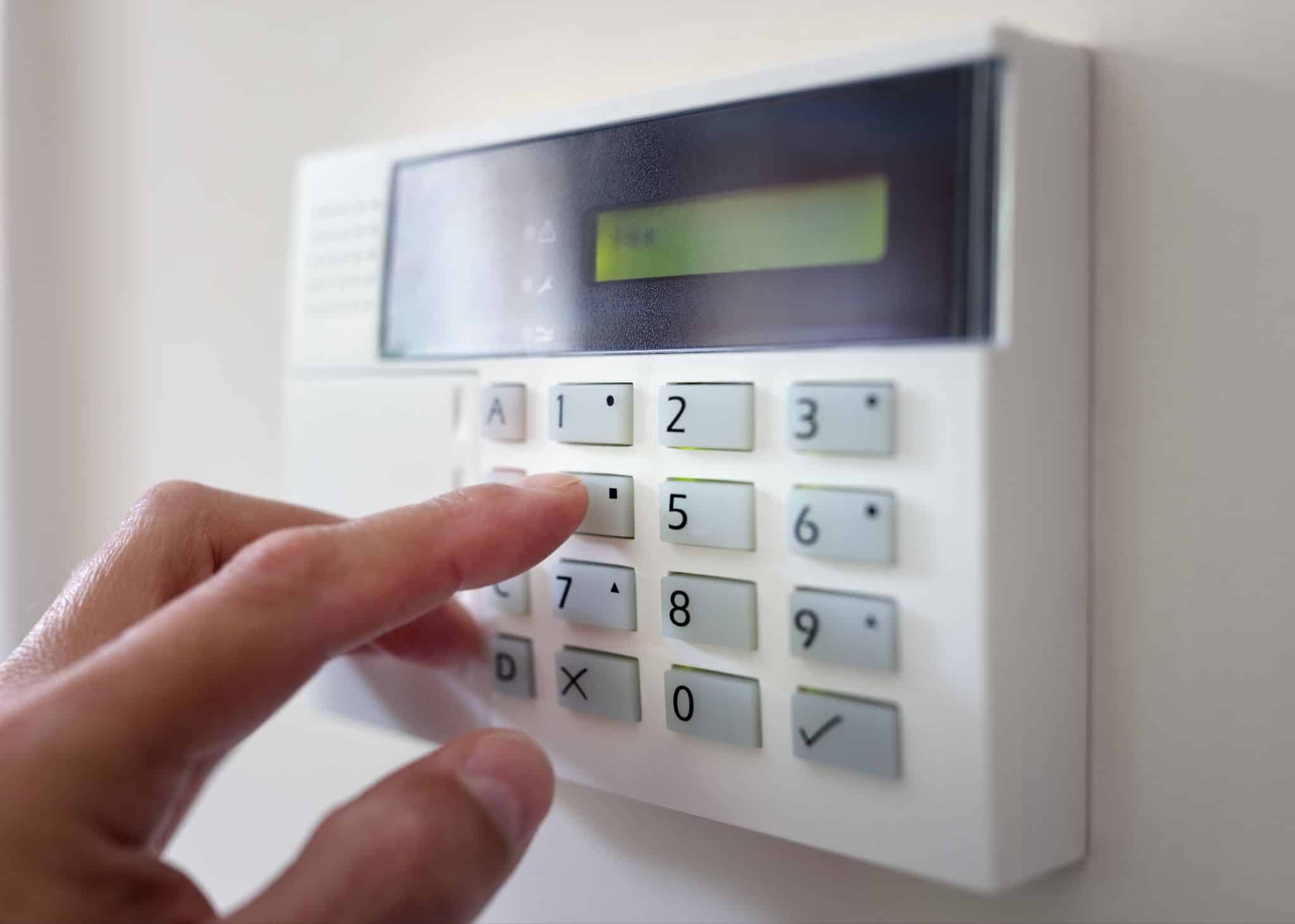
Now you’re ready to begin the actual uninstallation.
We’ve already mentioned this once, but it’s important enough to repeat.
Before beginning any disassembly, ensure that the system’s main power source is turned off.
This prevents any electrical mishaps or unintended activations of the alarm.
Disconnect the system from any Wi-Fi or landline connections. This ensures that the system won’t send any false alarms.
If it’s integrated with one or more smart home devices, unlink the system from those devices. You may need to access each device’s system settings in order to successfully unlink them.
For wired alarm systems, carefully follow and disconnect the wires that are connected to the main control panel.
It’s best to reference your system’s manual during this step. It can tell you which wires to disconnect and in what order.
Note: If you have a DIY system with multiple components that you set up yourself, the removal process might be more straightforward because the components are easier to detach.
Remove all batteries, including those from sensors, cameras, and control panels.
This step makes the components safe for disposal or recycling.
After all connected components are disconnected, proceed to fully remove the old control panel.
No matter how careful you are, several issues can still arise during uninstallation of an old security system.
Next, let’s address the most common issues you could encounter. We’ll include best-practice solutions and approaches to troubleshooting.
Issue: An old alarm system that continuously beeps. This is often a sign of a malfunction or power issue.
Solution: Power down the system before you initiate the removal. If beeping persists, consult the user manual (or online forums specific to your system’s make and model) for troubleshooting advice.
Issue: False alarms are more likely to occur if you don’t inform the alarm company or service provider about the removal. There’s a risk of triggering unintended alarms, which could lead to unnecessary police dispatch or fines.
Solution: Always notify your service provider before starting the removal process to avoid this complication.
Issue: Sometimes, general uninstallation advice doesn’t apply to every security system. This is especially true for prominent security brands like ADT or Brinks, which may have specific removal nuances or built-in safety features.
Solution: Consult the system’s manual or contact the manufacturer’s customer service for guidance. They often have specialized instructions or tips for safe removal.
Issue: The new system isn’t compatible with some of the parts kept from the old security system.
Solution: Before installing a new system, you must ensure it’s compatible with any old components you decide to keep. Research compatibility or consult with the new system’s manufacturer. They can explain how to integrate older components, or let you know if a total replacement may be necessary.
You Might Like: The Beginner’s Guide to Hiring a Security Guard
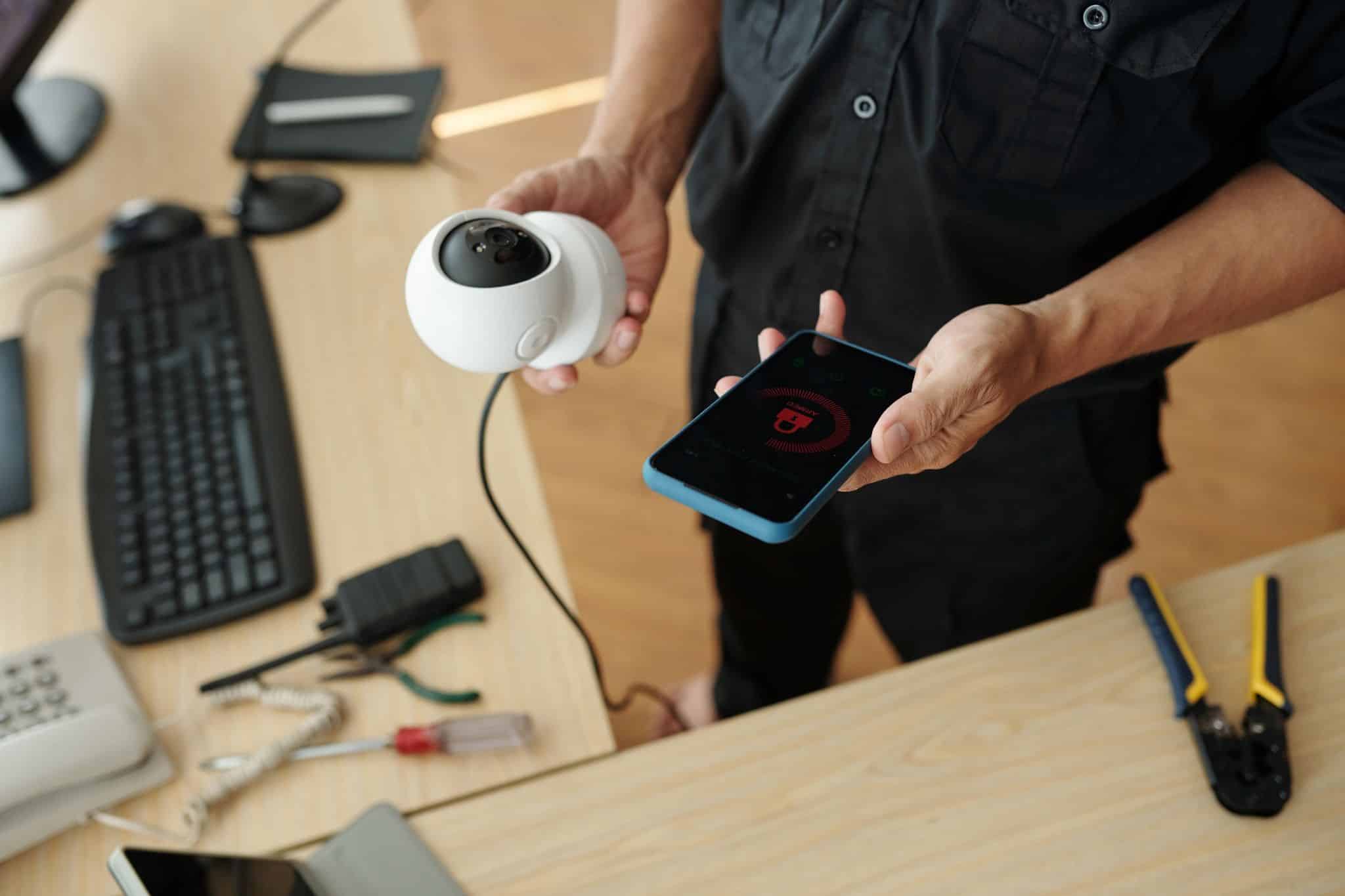
Transitioning to a newer system is more than just a change in equipment. It’s an opportunity to benefit from cutting-edge technology that enhances home security.
Here’s what to keep in mind as you adjust to your new security system.
Newer systems bring a myriad of benefits that the old one might not have offered:
DIY installations are popular among modern security system kits. However, there are a few things to consider before you try your hand at self-installation.
Regardless of how advanced the newer system might be, it’s always a good idea to consult trusted security service providers.
They can offer tailored advice, helping you get the most out of your system and ensuring the old one’s removal doesn’t interfere with the new installation.
Old system components, especially from a hardwired system, can often be recycled.
Some parts might be repurposed for other uses or DIY projects. It’s also a good idea to check with local e-waste recycling centers to dispose of electronic components responsibly.
While many homeowners feel comfortable taking a DIY approach, hiring an electrician or security professional can guarantee a safe and thorough uninstallation.
An electrician may be more necessary for complex systems, or systems that are wired into the home’s separate circuit.
To disable most systems, you’d typically navigate a deactivation process on the control panel or keypad.
However, always refer to the specific user manual for your system to ensure you’re following the correct procedure.
Because ADT is a major brand, their systems may have proprietary components or nuanced installation methods.
It’s recommended that you consult the user guide in order to safely and efficiently remove ADT equipment.
If in doubt, contact ADT’s customer support for specific instructions.
Unplugging the system before running a proper deactivation can trigger malfunctions, false alarms, or even backup battery activations.
Before unplugging any system, verify that it has been deactivated. Notify your monitoring service to prevent unintended responses.
Upgrading an older home security system allows homeowners to benefit from the latest technological advancements, as well as enhanced safety and convenience features.
Regardless of the complexity of the system — be it a basic alarm or a comprehensive security setup — knowledge is power.
By understanding the intricacies of removal and installation, you set the foundation for a more secure home.
Don’t forget: if you’re ready to upgrade your security system but need professional assistance, you can use Security Explorer to connect with a trusted and experienced security professional expert in your local area.

The dimmed lights, the anticipatory hush of the crowd, and the larger-than-life screen—all essential elements that contribute to the magic of a trip to the movie theater.
In the world of cinema, where storytelling comes to life, the safety and security of moviegoers are paramount.
Unfortunately, movie theaters aren’t as safe as they used to be.
Read More
Lights, camera, action!
The world of cinema is a place of glamour, creativity, and untold stories. Yet, behind the scenes, the artistry of filmmaking is complemented by the pressing need for movie set security.
Whether it’s a small indie production or a blockbuster hit, the safety and security of everyone on set, from A-list celebrities to valuable film equipment, are paramount.
In this article, we’ll explore the compelling reasons why movie set security is a necessity for the film industry.
Looking to hire a security company? Skip to: The Beginner’s Guide to Hiring a Security Company
Contents:
Every movie production represents a substantial financial investment.
From cameras and lighting equipment to intricate props and costumes, the value of assets on a movie set can easily reach millions of dollars.
Without proper security measures in place, these assets are vulnerable to theft and damage, potentially resulting in catastrophic financial losses.
Movie set security serves as a shield, safeguarding these investments and ensuring that the production stays within budget.
By deterring theft and vandalism, security personnel and technology help to preserve the integrity of the film’s budget and the overall success of the project.
Related: 43 Shocking U.S. Burglary Stats

Movie sets are bustling hubs of activity, with diverse teams working together to bring a story to life.
The safety and well-being of everyone involved, from actors to directors to the hardworking film crew, are of paramount importance. Security measures provide peace of mind, allowing the creative process to flourish without the distraction of safety concerns.
Security personnel are trained to handle a wide range of situations, from security planning to crowd control to medical emergencies. Their presence on set helps mitigate risks and ensures that everyone can focus on their respective roles, resulting in a safer and more productive working environment.
Hollywood’s allure extends far and wide, attracting not only fans but also curious onlookers and potential trespassers.
Security guards hired for event security or private security ensure only authorized access to cast and crew members at film locations. Movie set security companies play a pivotal role in preventing trespassing, enforcing strict access control measures, and maintaining the integrity of the set.
Advanced technologies like surveillance systems, drones, and biometric access control further fortify these security efforts, making it increasingly difficult for intruders to breach the perimeter.
A-list celebrities are the lifeblood of the film industry, and their safety and privacy are paramount.
Celebrity and executive protection services go beyond protecting assets; they extend to ensuring the well-being and privacy of high-profile individuals.
Customized trailers with advanced security features, designated VIP zones, and paparazzi management are just a few of the tactics employed to safeguard celebrities on set and ensure all security needs are met.
Leave security to the pros and search for the highest-rated security services in California.
Expensive equipment, intricate props, and one-of-a-kind costumes are the lifeblood of any film production. However, they are also tempting targets for thieves looking to make a quick profit.
Without effective security measures, these valuable assets could disappear, leading to not only financial losses but also significant production delays.
Movie set security teams are trained to deter theft, promptly respond to security breaches, and recover stolen items. Their vigilance ensures that valuable equipment remains where it belongs, in the hands of the dedicated professionals who use it to bring stories to life.
In the fast-paced world of filmmaking, sticking to production schedules and meeting deadlines is of paramount importance.
Delays due to security breaches or unforeseen incidents can result in skyrocketing production costs and the potential derailment of an entire project.
Full-time movie set security plays a crucial role in maintaining production schedules by addressing potential disruptions promptly. With effective access control, crowd management, and emergency response plans, security officers help keep the production on track, ensuring that every scene is captured according to the established timeline.

The success of a film often hinges on its unique story, screenplay, and creative elements.
The leakage of scripts or plot details to the public or competitors can be disastrous, resulting in a loss of audience interest and financial consequences.
Movie set security extends to protecting intellectual property, including scripts and confidential production information. By implementing stringent cybersecurity measures and monitoring for any unauthorized access or data breaches, the risk of leaks is minimized, preserving the element of surprise for eager audiences.
For the film industry, reputation is everything.
News of security breaches, accidents on set, or the mishandling of sensitive information can tarnish the reputation of a production company and its affiliated projects.
Negative publicity can have lasting consequences and affect the success of current and future endeavors.
Effective movie set security not only prevents incidents but also contributes to the overall professionalism and integrity of the film industry.
When studios prioritize security, they send a clear message to the public and the entertainment community that they are committed to the well-being of their talent and the success of their projects.
In the dynamic world of filmmaking, where creativity and commerce converge, movie set security stands as a steadfast guardian of success.
It’s the invisible thread that weaves together the various aspects of a production, from protecting assets to ensuring the safety and privacy of celebrities.
Beyond the physical aspects, it safeguards reputations, intellectual property, and the very essence of storytelling that captivates audiences worldwide.
For the television production and film industry, investing in robust movie set security isn’t just a choice; it’s imperative.
It allows filmmakers to focus on their craft, bringing dreams and stories to life without the distractions and uncertainties that come with inadequate security.
As the film industry continues to evolve, Security Explorer continues to connect production teams with the best security services in California, ensuring that the magic of cinema can thrive safely and securely in the years to come.
Whether hosting a special event and in need of short-term security guard services or looking for full-time security for TV production and movie sets, Security Explorer has you covered.
Read More
As the world evolves, so do the security challenges facing banks and financial institutions.
Those challenges include more than just digital threats. Bank managers must also look out for the safety of their customers and assets.
Despite the rise of online banking, in-person bank security guards are as crucial today as they were in years past — for a number of reasons we’ll cover below.
Keep reading to learn why your bank could benefit from hiring a security guard. We’ll also share several best practices for hiring the right security guard or security firm for your bank’s needs.
Contents:
Technically, bank robberies are on the decline in the United States. This is great news, but it doesn’t change the reality that financial institutions are still at risk.
In fact, it’s not the frequency of bank robberies that’s concerning. It’s the severity of what banks could lose if robbed.
Here’s a closer look at some of the statistics.
According to the most recent data from the FBI, there were a total of 1,964 “Violations of the Federal Bank Robbery and Incidental Crimes Statute” between January 1, 2021 and December 31, 2021.
The vast majority of these crimes took place at commercial banks and credit units. About 85% percent were committed at the bank teller’s counter.
Of those 1,964 bank robberies reported to the FBI in 2021, just under half involved the threat of a weapon, such as a firearm or an explosive.
Most of these incidents did not escalate to actual violence. However, they did result in at least 11 injuries, 3 deaths, and 28 people taken hostage.
Furthermore, a security guard was rarely on duty when a robbery occurred — only for 146 of those incidents.
That’s a good sign that it may not be enough to rely on alarm systems or bank security cameras alone.
Note that according to the FBI, not all bank robberies are reported to them. The FBI has stated that their statistics may not be a complete representation of the current state of bank robberies within the US.
As stated above, bank security officers were on duty during fewer than 10% of all bank robberies that occurred in 2021. Less than half of those guards were armed.
It’s well known that every bank uses some form of security, even if they don’t employ security guards. The most common bank security practices include ATM cameras, CCTV surveillance systems, alarm systems, door locks, and emergency response procedures.
Having said that, nearly all recent bank robberies happened at financial institutions that use security cameras and alarm systems. Very few robberies occurred at banks that regularly employ security guards.
Alarm systems and surveillance cameras can go a long way to maintaining the security of your bank. But the intuition of a well-trained and experienced security guard will always take that one step further.
Most criminals don’t want to rob a bank that has active, in-person private security guards on the premises. Although we can’t say for certain, that may be one reason why so many recent bank robberies have occurred at banks without an on-duty guard.
The mere presence of a security guard is often enough to deter or prevent a crime. Security guards are better than alarm and camera systems when it comes to protecting customers, employees, and the banking institution as a whole.
That’s because humans are more attuned to notice red flags and unusual behavior, which busy bank employees may otherwise overlook.
In addition, there’s some really interesting science about how human intuition can help us identify criminals. As it turns out, humans are quite skilled at it.
Case in point: even the most sophisticated technological solutions can be bypassed without proper human oversight.
Statistics show that employee theft and crime are believed to be one of the greatest risks posed to banks and other types of financial firms.
In particular, access control is a major issue for financial institutions.
Insider risks for banks may include, but are not limited to:
Hiring for more bank security guard jobs can play a key preventative role in helping financial institutions to monitor and mitigate risks from disgruntled employees.
That’s because the physical presence of an on-duty bank security guard makes the working environment of a bank feel more monitored and secure.
It also demonstrates the banking institution’s commitment to security and oversight, which can make employees think twice before acting on an impulse.
Use security guard services to deter employees from taking criminal action.
Related: The Beginner’s Guide to Hiring a Security Guard to Keep You Safe
Bank security guards do more than simply deter people from committing crimes. They also have the potential to make customers feel more confident when using your bank.
Studies have shown that when people are in situations that they perceive as unsafe, they feel safer when they see law enforcement and professional security guards patrolling on foot.
In other words, bank customers can feel confident knowing that your financial institution has more than one security measure in place in the event of a sudden robbery or heist. Customers are likely to feel safer using a bank that has security guards on regular patrol than a bank that has no security guards at all.
Visible, full-time bank security guard services can boost customer trust and confidence. It also gives customers peace of mind.
Hopefully, your bank or financial institution will never need to rely on security services in an actual emergency situation.
The good news is that in the unlikely event of criminal activity or another emergency situation, a bank security guard can immediately jump into action and intervene. This applies whether you’re using unarmed or armed security guards.
Having one or more security guards on bank property can reduce emergency response time by several critical minutes or more. Using security guard services can empower your institution to better protect its staff and customers until law enforcement or emergency services have arrived — often saving lives in the process.
This is also why it’s important to hire security specialists who have CPR, first aid, or first responder certifications and training.
There are several bank security needs that overlap with regulatory and compliance requirements.
At some financial institutions, security guards are responsible for more than just physically monitoring the property. They’re also expected to design the security systems, strategies, and procedures that not only protect customers, but also protect customer data. Protecting customer data is a key responsibility of Data Loss Prevention (DLP) solutions, which are necessary to comply with banking laws.
In other words, a sophisticated and well-trained bank security service can play a major role in helping banks comply with security and privacy regulations.
Likewise, security guards can assist with records maintenance and reporting suspicious activities.
Read About: 43 Shocking U.S. Burglary Stats
If you’re like most bank managers, you probably run a cost-benefit analysis before making most of your decisions. So, let’s crunch a few numbers.
An average of $7,500 is stolen in each bank robbery in the United States. The cost of occupational or “insider” thefts can be even greater.
This may sound like a drop in the bucket, but that’s because it doesn’t factor the associated risks to customer and employee safety, data, and privacy.
These risks can be even more costly for your financial institution. Not to mention that if your bank becomes the target of a robbery, the fallout can result in mountains of paperwork and countless hours spent on public relations.
These risks put a great deal of money at stake. They can also deter potential customers from opening a new account with your bank.
The more you invest in your bank’s security and prevention, the more losses you can prevent — financial or otherwise.
Now that you’re more familiar with the benefits of hiring a security guard for your bank, it’s time to hire one.
Below, we provide some basic tips to help you get started. You can find even more tips by reading our guide to hiring security guards.
When hiring a security guard, make sure your job post includes a comprehensive job description of the security role you’re looking to fill.
Specify basic requirements. These may include a high school diploma or GED. It could also include a minimum number of preferred years of experience in fields like security solutions, law enforcement, private investigative work, or the military.
Most financial institutions hire a security firm rather than a single security guard. Use the above qualifications when interviewing potential firms about their own hiring practices. This will also give you a better idea of their security guards’ knowledge, experience, and abilities.
Determine whether you’re looking for part-time or full-time security guards.
You may need a combination of both. For example, save money by hiring part-time guards to supervise your bank’s parking lot or provide special event security. These are also roles that may not require as many years of on-the-job experience.
There are various platforms where you can post jobs for security personnel or browse listings for different security companies. Security Explorer is one of the best and easiest to use, and can help you find the right service for your budget and needs.
Companies like Allied Universal specialize in providing trained security personnel. Their security officer job alert options can notify you when suitable candidates become available.
Different banks and financial institutions will have different needs.
Some may prefer to hire skilled security specialists who have direct experience with handling high-stakes legal and regulatory issues. Other banks may want their security officers to be trained in certain skills, such as first aid or firearms training.
Tailor your job post accordingly. Look for candidates who not only meet the basic requirements, but who also have specialized training or multiple years of experience in the type of security you need.
When you’re ready to make a hiring decision, invite potential candidates to tour your facility. This will give them an opportunity to see your security needs up close and write an accurate estimate. Make sure the estimate is itemized and factors in any labor, supplies, or overhead expenses.
You can also use this time to conduct an informal interview and get a better feel for the firm’s services and professionalism.
Note that several states enforce different training and certification requirements for security officers. Ask the prospective security firm how their guards are meeting those requirements.
Hiring a security guard to protect your financial institution’s customer and property is more essential than ever.
If you are a bank owner or manager, it’s encouraged that you regularly evaluate your current security systems and procedures to ensure they’re still meeting the bank’s needs. Consider hiring a security guard or a professional security firm that can oversee this work on your behalf.
At Security Explorer, financial institutions in California can visit our bank security services page to the best professional security services in your area.
Read More