LET’S GET YOUR SECURITY GUARDS BOOKED
Get the security explorer you need at a low price. We’re open 24/7. Call now for a quote!



Hospitals and healthcare facilities face security risks unlike any other industry. The concern is so great that in 2016, the American Hospital Association created the Hospital Against Violence (HAV) initiative to improve hospital security, reduce violence, and make medical centers a safer place to work.
Some of the more unusual threats to hospitals include drug thefts, cybersecurity attacks, workplace violence, and even infant abductions. It’s more important than ever that hospitals take proactive steps to prevent these security breaches before they occur.
Hospital owners and managers can implement a variety of security measures to ensure their facility is a safe place for patients, staff, and visitors alike.
Here’s how to make your hospital as secure as possible.
Get the security explorer you need at a low price. We’re open 24/7. Call now for a quote!
While all businesses face security risks, healthcare facilities must take greater precautions than most to ensure the health and safety of their employees, patients, and visitors.
Hospitals are not only high-traffic facilities, they’re also hectic and fast paced. Patients arrive at all hours of the day and night while visitors come and go.
Because of the constant influx of people, the hospital’s security operations must be top-notch and its staff members must stay vigilant. Otherwise, there may be an increased risk for:
Every business property carries a risk for trespassing and vandalism. As United States laws concerning reproductive rights change across different states, it’s expected that some medical facilities could see an increase in protests as well as an increased risk for violent threats.
Theft is another concern. Inside their facilities, hospitals carry a risk of theft of everything from equipment and prescription medications to patient’s personal property and infants in the maternity ward. In hospital parking lots and parking garages, there’s always the potential for automobile thefts or vandalism.
Cybersecurity threats to health data can jeopardize patient privacy. Unauthorized medical staff, patients, or visitors could gain inappropriate access to computer systems from anywhere within the building.
There’s also the potential for violence against staff or patients. This could arise from visitors, staff, other patients, or criminals who view hospitals as soft targets.
Given these common risks to hospital security, medical facilities should take steps to enforce rigorous security programs that ensure the safety of the building and its occupants. We outline these steps below.
You Might Like: The Pros and Cons of Hiring an Unarmed vs. Armed Security Guard

Hospitals and medical centers of all sizes require multiple levels of access control. That means having full awareness and control over who enters the facility, as well as where people are authorized to go once they’re inside. Facilities must establish several access points throughout the property. Each one should be connected to an alarm system that will trigger in the event of a security breach.
Here are four ways to control access into and within a hospital facility.
Every medical center should have a visitor management system. These are limited entry points with security desks where patients and visitors can check in. Visitor management systems also include full-time hospital security officers who can grant or deny access.
Guards at security desks should first identify the purpose of the person’s visit, such as receiving medical care or visiting a patient. They should then check the visitor’s identification and provide them with a visitor pass that identifies them as non-personnel.
Often, this basic security measure is all it takes to deter undesirable visitors. Most people will not produce photo identification if they are planning to do something wrong. They’re also less likely to do harm if they see a healthcare security officer on the premises.
A strong visitor management system can also include screening devices, such as metal detectors with bag scanning technology that can identify firearms and other weapons.
Hospitals should supply their staff with access cards that they must swipe to enter a restricted door. Biometric security methods, such as fingerprint or facial recognition locks, can provide an even tighter level of security.
Keep in mind that the key cards given to employees should not unlock every single door in the facility. Not everyone who works in the hospital needs or should have access to every area.
Some of the areas where you should restrict staff members from entering include:
Patients can sometimes pose a threat to themselves or others. For healthcare professionals and security staff monitoring psychiatric patients, this can be a huge concern, especially if a patient tries to leave their room to wander to a different floor.
For high-risk patients, consider supplying patient monitoring technology, such as bracelets. These will alert staff if the patient attempts to open a door or access an elevator.
Your facility’s access control system should include a lockdown capability to limit access to specific sectors of the hospital. Should security or staff identify an active threat, they can prevent suspects from breaching other areas of the facility by remotely disabling the doors that lead in and out of the area.
Read About: Everything You Need to Know About Glass Break Sensors
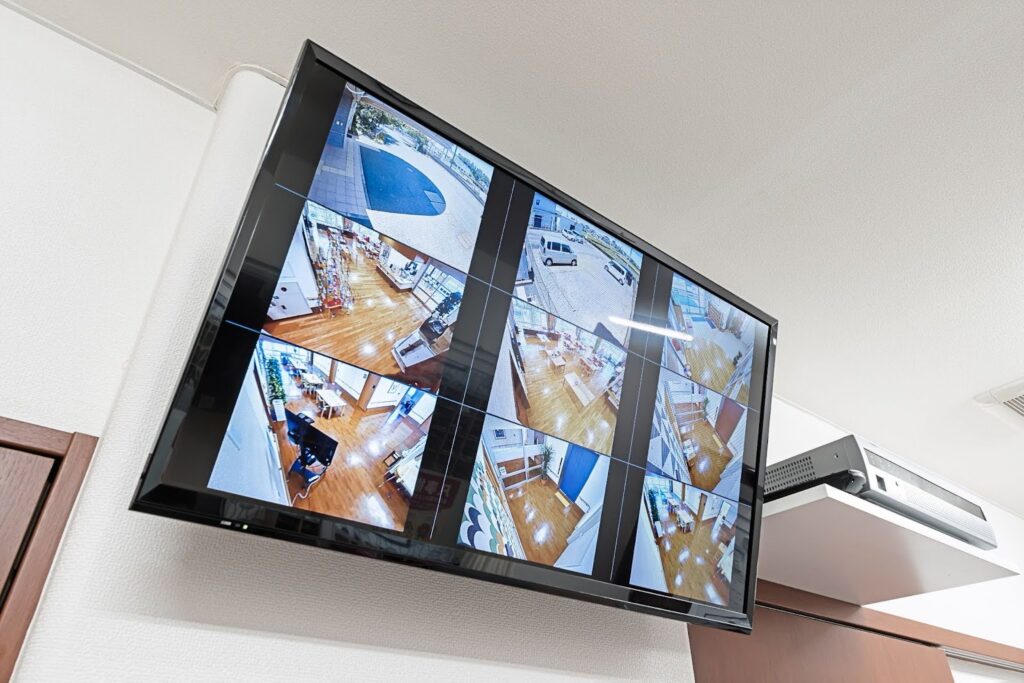
Install and Monitor Security Cameras
Video surveillance systems are a must for hospitals. Not only are they one of the most efficient ways to prevent and detect criminal activity, they’re also essential to solving any crimes that have already happened.
Depending on the facility’s size, you may need dozens or even hundreds of cameras to survey the entire property. At a minimum, place video cameras throughout the hospital in the following key locations:
When installing new cameras around the hospital exterior, consider thermal cameras. Thermal cameras make it easier to detect motion in dark or low-light areas.
Make it a priority to schedule regular maintenance and updates to your security cameras and CCTV systems. Security cameras are only useful when they’re in optimal working condition.
Panic buttons are a quick and effective way to alert on-site security professionals, local police officers, and other law enforcement agencies that you need immediate emergency help.
Many hospitals have panic buttons installed at ER entrances, hospital pharmacies, and reception desks. Some medical centers take this a step further and provide wearable panic buttons to their employees.
Most hospital campuses consist of several buildings spread over a large property. These buildings include separate inpatient and outpatient medical facilities, diagnostic testing centers, and administrative offices.
The bigger the facility, the more vital the need for a central communications hub or security department. It’s best to have a single group of trained personnel who can constantly monitor all activity throughout the campus. It also allows security personnel to communicate data breaches and enact response plans in real time.
A hospital’s central communications hub should include security consoles where personnel can monitor video surveillance cameras 24/7.
Cybersecurity is an ever-present risk to infrastructure, and hospitals must take all precautions to protect their data. That requires you to have up-to-date cybersecurity measures in place.
The protection of patient privacy, especially medical records, is a constant source of worry for medical facilities. Hospitals must also safeguard their proprietary and financial data, as well as protect against cyber attacks that could disrupt the facility’s infrastructure or attempt to extort money.
Some criminals deploy cyberattacks to shut down a hospital’s electrical power or computer systems. This can put patients in immediate harm. Communities rely on hospitals to function without interruption, which means that a successful cyberattack is a fast way to damage the trust that a community puts in their local hospital.
All hospitals should make excellent cybersecurity protections their priority.
Healthcare workers do life-saving work and deserve to work in a secure environment. Likewise, patients should feel they’re being cared for in a safe and comfortable environment. The best way to foster a safe environment is to hire a private security company.
Private security teams offer a wide range of security solutions that go well beyond what most medical facilities are capable of handling on their own.
When you hire a private security company, the first thing they’ll do is send security experts to visit your site for a full risk assessment. This is how they identify any and all weak security points within the property.
They’ll map the entire campus and determine where security efforts are already solid, where they’re missing, and where they need enhancements.
A private security firm will develop an effective emergency response plan for your hospital to follow in the event of a security breach.
After developing the plan, they’ll train hospital staff members about proper response procedures. This includes how to respond to specific threats like active shooters or infant abductions.
One of the best ways to create a safe and secure hospital environment is to position hospital security guards throughout the facility. Visible, uniformed guards are an excellent crime deterrent.
Professional security guards undergo training in de-escalation techniques and know how to diffuse a threat before it becomes out of control. When you hire a private security company to staff your facility, you can rest assured that you have more than one set of eyes keeping watch.
Different security guards may have training in different skills and roles, such as front desk security, exterior security, and monitoring video surveillance systems. The key is to have experts on hand at all times who know how to handle a variety of security posts and situations.
From time to time, private security companies will conduct penetration tests. Penetration tests analyze the security protocols and systems in place to ensure that everything is secured as intended and that no new weak spots have surfaced.
If weak points or vulnerable areas are detected, they’ll put new measures in place to avoid security breaches and better protect those areas of the facility.
Given the risk of everything from pharmaceutical drug thefts to cybersecurity data breaches, hospital security is not something to take for granted.
A private security company can identify, prevent, and manage the risks. That means your hospital becomes a safer and more secure place for medical professionals, visitors, and all members of your hospital staff.
To find a professional security company to protect your hospital, visit Security Explorer now.
Up Next: 43 Shocking U.S. Burglary Statistics
Read More
There are now more than 70 million CCTV cameras in the United States.
Video surveillance has become central to everyday operations — and for good reason.
CCTV monitoring can’t stop all criminal activity, but it’s among the best tools for deterring and investigating crime. Installing a proper CCTV camera system should be at the top of your priority list if you’re not already using them to protect your business or private property.
Read our full guide to CCTV security monitoring before you buy a system and attempt to install it yourself. This guide looks into the key reasons why you need one, as well as how to choose and properly install the best system.
Article Contents:
All businesses worry about crimes like theft, vandalism, and trespassing. But they tend to worry less once they’ve installed a functional CCTV monitoring system that can give them an eagle-eye view of their entire property.
Closed circuit television systems have been in use for more than fifty years. In recent years, the technology behind them has undergone rapid and significant improvements.
The latest CCTV surveillance systems now use internet protocol cameras, also known as IP cameras. IP cameras stream live footage and make it possible for you or your security team to remotely monitor the footage from anywhere in the world.
That’s not all they do. In addition to streaming and recording images captured through video surveillance, IP cameras use motion detection sensors that send alerts whenever there is movement. This makes it more difficult to miss a threat.
Like alarm systems that draw instant attention to a particular door or window, like in secured hospital environments, motion detector sensors make it easy to determine the precise location of the source of the threat.
Modern CCTV systems also allow for remote positioning. You can angle or move the cameras as needed to capture different views. This allows you to monitor potential threats from different points of view and have visibility from different angles if a dangerous situation occurs.
Many CCTV systems also include thermal cameras, which pick up on changes in temperature. This allows you to see images in dark or dimly lit areas.
A small investment in a modern CCTV system can also save businesses money in the long run. They make your facility safer for workers and customers, as well as protect valuable assets such as inventory, equipment, cash, and data.
You Might Like: How to Remove an Old Home Security System
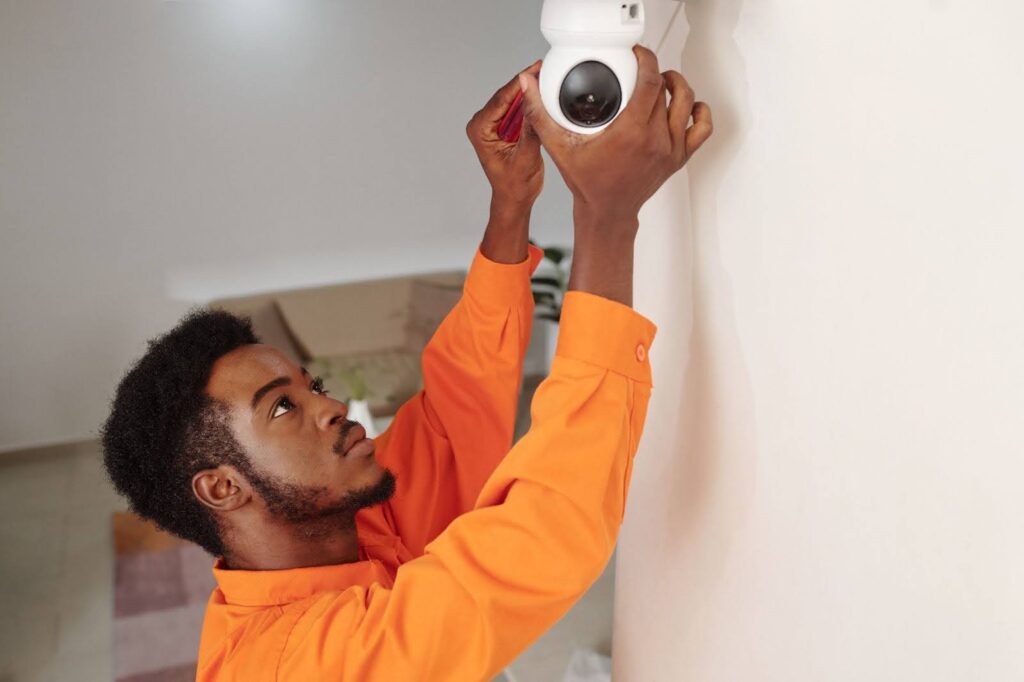
Traditional CCTV systems are hardwired to your electrical panel and via cables to an on-site control room. You can still choose this traditional method, but many businesses prefer remote live monitoring solutions that connect via the internet.
No matter what type of surveillance system you choose, it’s best to hire a professional installer who can set up the camera system on your behalf. The installation process involves many steps.
Professional installers will do a site survey to determine where video cameras are needed and how many you’ll need to provide the greatest security. Once you select the type of cameras you want and agree on where to place them, the installation will begin.
Wireless cameras are a popular choice for residential properties because they don’t require rewiring and are, therefore, the easiest to install. Most commercial facilities and businesses, however, prefer to hardwire their cameras to a central power source.
During installation, the installer will run all the wires needed to make the necessary electrical connections. Sometimes that requires opening up walls or removing ceiling panels. Once the wiring is in place, they’ll mount your cameras at the proper heights and position them in a way that captures as wide an area as possible.
The next step in the process is to install the video recording system so that you can store and save your CCTV footage. This can be a network video recorder (NVR) or a digital video recorder (DVR), depending on the type of CCTV system you choose.
IP cameras, which connect via the internet, use NVRs to record digital videos. Analog cameras require DVRs, which convert analog footage into a digital format. A DVR system requires connection with coaxial cables, so running wiring in ceiling panels or behind walls may be necessary here as well.
Once the recording system is in place, a professional installer will connect the cameras to your monitoring center or control room. With modern systems, this is done via the internet, while traditional systems with on-site control rooms require cables for connection.
The final step is to test the system and verify that the surveillance images are available for monitoring in real time. Professional installation companies will ensure that your system is working at optimum levels, and that operators are seeing the highest-quality images possible.
Check Out: The Pros and Cons of Hiring an Unarmed vs. Armed Security Guard
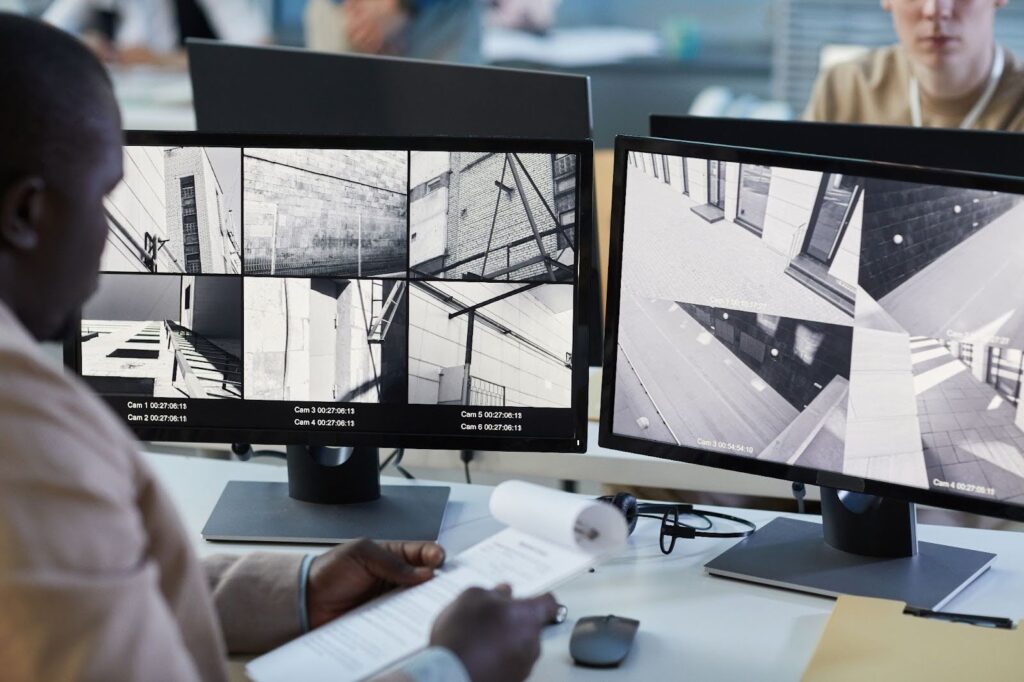
It’s up to you to decide who you want to monitor your security system and where you want them to monitor it from.
On-site monitoring requires that you have someone on the premises to watch the surveillance video footage. For large businesses with multiple cameras that need constant surveillance, that could require hiring an entire internal security staff.
Remote monitoring allows you to outsource to a third-party monitoring center to provide 24/7 surveillance. You may also choose to hire a private security firm, which may staff your location with security guards to work in your control room or to watch your cameras from their own management system.
Where and who you rely upon for CCTV monitoring often depends on how many cameras you have. It also depends on how much you need to keep an eye on your business or facility. The key is to make sure that you have enough CCTV operators in place to watch the system in the appropriate manner.
Here are some tips to help you decide who should monitor your CCTV system and from where.
Many businesses find it beneficial to hire a professional security company to put security guards in charge of CCTV monitoring. With professional, trained guards watching your CCTV system, you can have peace of mind knowing that if they detect a threat, they can immediately respond and take the appropriate action.
The combination of CCTV monitoring and physical guards on site is ideal. Video surveillance cameras and visible security guards are both excellent crime deterrents. Use them together to significantly reduce threats and prevent crimes.
Another benefit of having an on-site monitoring station is that there will be less eyes on your footage. You can set protocols so that only the guards in your control center and designated employees or officers of the company can see the footage. With a remote video monitoring service, you can never be 100% sure who’s watching your footage.
Remote video monitoring can give you around-the-clock peace of mind, but there is one drawback:
It won’t stop an immediate threat.
Monitoring video surveillance cameras from a distance is an excellent way to detect suspicious activity. Yet without a physical guard on site to protect you in the moment, you’ll still be at risk. The best that remote monitoring centers can do is contact law enforcement or other emergency services if a security breach or safety threat arises.
The biggest benefit of using remote monitoring is the lower cost.
Hiring monitoring services that employ operators is more cost-effective than hiring trained security guards to watch your CCTV cameras. Security guards go through extensive training to learn specific skills, such as de-escalation and emergency response techniques.
For this reason, their cost per hour is higher than CCTV operators who aren’t trained to confront or handle physical threats.
Keep in mind that the added cost of hiring physical security guards is well worth it. Guards offer an added layer of protection that can make both your employees and customers feel safer in your place of business.
Deciding whether to monitor your CCTV cameras onsite versus a remote location may be a simple matter of logistics.
If you need to observe several cameras, or if you require several people to monitor them, you’ll need to have the space to do so. It’s not always possible to designate a control room. If you lack the space to set up your control room in the proper manner, remote monitoring may be your best option.
Not sure what’s required in a CCTV control room or how to set one up?
This article dives into what equipment you’ll need, how to position screens and operator workstations, and the type of lighting and ventilation required. It’s more complicated than you may think.
There is no right or wrong answer to the question of how many people are needed to monitor your CCTV video feeds. It depends on several factors, including how many cameras you have and whether the locations under surveillance are high-traffic areas.
In low-traffic areas where activity is infrequent, a single operator may be able to monitor several screens at a time. In high-traffic areas or high-risk areas, you may need more than one guard per screen to keep track of everyone coming, going, or loitering.
If you’re looking to maximize the number of cameras that one person can monitor at a time, you can use “blank screen monitors.” Working as a CCTV operator means staring at screens for hours at a time, but blank screen monitoring can make it easier on the eyes. The monitors only display images when there is movement or activity. With this approach, operators have less images to focus on at a single time.
Whether you own or operate a small retail store, a bank, a hospital, an office building, or a manufacturing plant, every type of business and industry can benefit from CCTV monitoring. But it’s best to rely on professionals to get it set up.
A professional security company can help you determine what the right system is. They’ll also install that system, set up your monitoring process, and make sure that it’s working to its full capacity. It’s a complex process that most people cannot and should not handle themselves.
If you plan to increase or upgrade security at your place of business, don’t delay. To find a professional security team that can make your business safe inside and out, visit Security Explorer now.
Up Next: Manufacturing Plant Security
Read More
Manufacturing plants face unique security challenges. Security measures that work for special events or movie sets, for example, are not necessarily adequate to protect a plant.
Threats to manufacturing facilities can range from trespassing and vandalism to cybersecurity attacks. That’s why every manufacturing facility should not only install a robust security system, but also a plan of action that can guarantee the most efficient — and timely — response.
If you manage a plant, security is already top of mind. This should be the case whether you operate a small-scale plant or a larger facility that generates millions of products every year.
Keep reading to learn how you can protect your plant and manufacturing operations against the most common security risks. We’ll also share some tips that can make it easier to set up a proper system that meets your plant’s security needs.
Contents:
Manufacturing Plant Security: Understanding the Risks
Plant Security Requires Layered Security Measures
Put Procedural Security Measures in Place
Protect Against Cybersecurity Threats
4 Reasons to Hire a Private Service for Manufacturing Security
Manufacturing facilities contain critical infrastructure. If so much as a single security threat goes unaddressed, the impact to the company, the plant’s employees, and even the global supply chain could be enormous.
Staff could also be exposed to a variety of health and safety risks. For example, the harm that may come from using heavy machinery or working with combustible materials.
There are also physical risks to property, such as theft. Physical security measures are necessary to prevent the theft of machinery, equipment, tools, and raw materials.
Industrial plants should take measures to prevent the theft of information and intellectual property, as well. A security breach could give criminals unauthorized access to employee and customer information, company financial records, trade secrets, or proprietary product information.
Fortunately, there are tried and true safety measures that can minimize the security risks to your plant. By rolling out the right security solutions, plant managers can keep their facilities safe while increasing its productivity.
The Cybersecurity and Infrastructure Security Agency (CISA) is an operational component of the Department of Homeland Security. Their guidelines state that for security systems to be effective, they must be able to detect, respond to, and delay threats. (You can read the entire 50-page publication here.)
At the core of these guidelines is the need to layer security measures. In other words, stacking physical security measures with procedural measures and operational practices.
Layered security systems are complex. They can include anything from video surveillance to physical security guards that can act as crime deterrents.
Let’s take a deeper look at how you can establish a layered security strategy for your plant.
The first step in every manufacturing plant security plan should be to prevent unauthorized access.
Just like you lock your doors and windows at home, you must take steps to prevent unwanted visitors (or criminals) from accessing the facility.
To control access, you should:
Keep in mind that only authorized personnel should have access. Some employees may not need to access specific sectors of the plant, and should only be given access to limited areas.
Read About: Everything You Need to Know About Glass Break Sensors
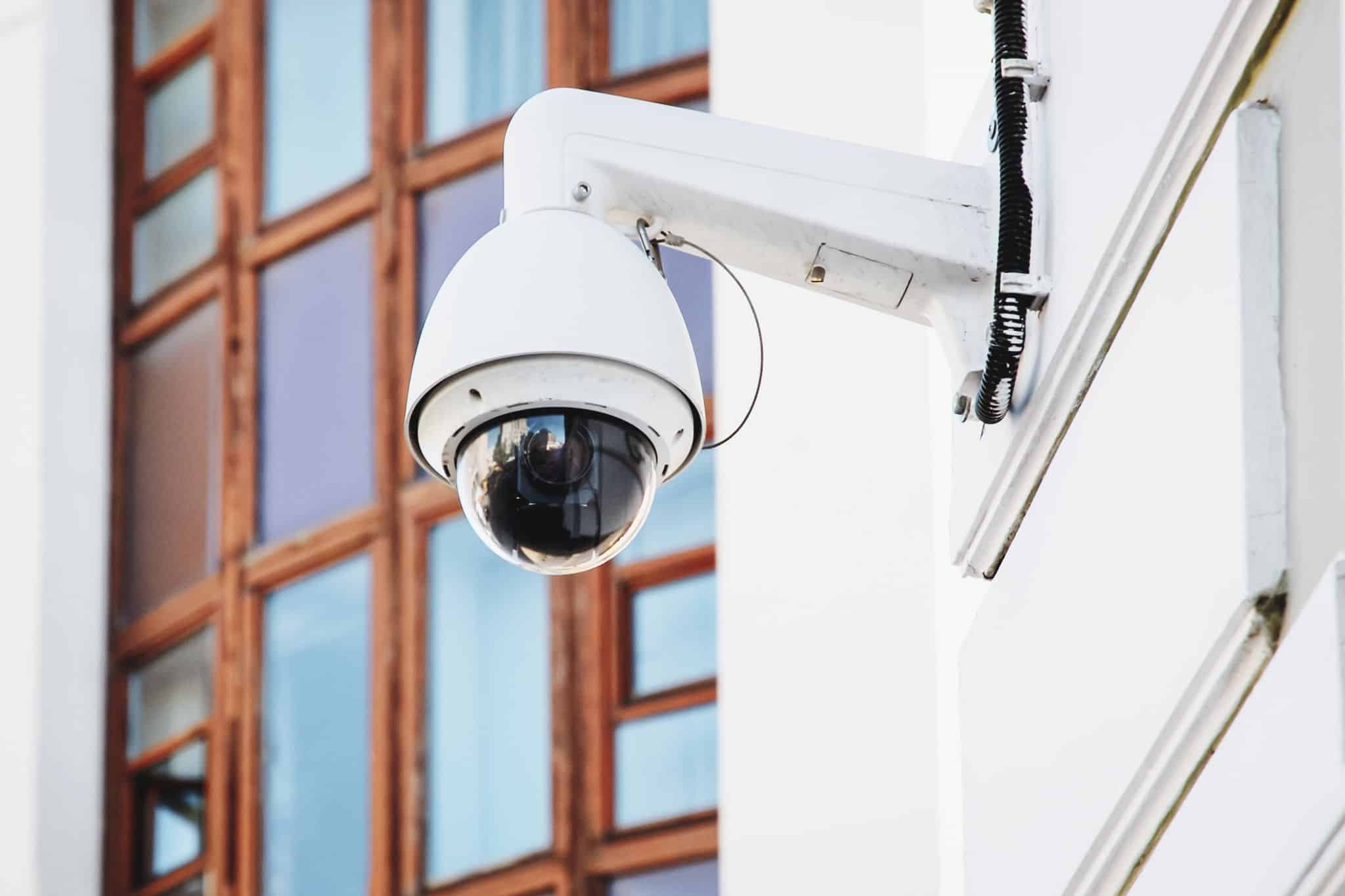
Visible security cameras are excellent deterrents against trespassing, vandalism, and theft.
But cameras can do more than protect your plant from external threats to its security. They’re also one of the best ways to monitor employee activity.
No matter how much you vet your employees or think you know your staff, there is always a chance that an employee could become a security threat within your plant.
For security cameras to be effective, they must be placed in the right positions. They also require effective monitoring. Here’s how to do it:
Every entry and exit point should be under video surveillance.
Position them at every door, window, and other point of entry to the plant. You should also install cameras at entrance points to the perimeter gates.
Place cameras inside the facility to monitor for suspicious activity. If a security threat manages to slip past the outdoor cameras and security checkpoints, internal cameras can still capture footage of them once inside.
Suspicious activity may include criminal activity from employees who have authorized access or entered an area in which they are unauthorized to be.
Any space inside or outside the plant, where access is limited or restricted, needs surveillance cameras. This includes loading zones, rooftops, and high-voltage areas.
Connect your access control system with video surveillance technology to maximize the quality of your security system as a whole.
Connecting door and fire alarm sensors to your video surveillance system makes it easier to identify the source of a threat. This can improve response times while making it possible to contain a threat in one place.
Set up surveillance cameras that can be watched via a remote monitoring system. With a 24/7 monitoring center keeping an eye on your manufacturing plant, your security team can assess situations in real time and prevent problems before they occur.
A remote monitoring system allows you to take a proactive, rather than reactive approach. Reviewing surveillance footage after a security breach can help you identify who is responsible for the breach, but real-time monitoring makes it easier to prevent in the first place.
Thermal cameras (also known as infrared cameras) are a great way to monitor the plant at night.
In low-light areas, it can be difficult to see clear images. Thermal cameras use infrared wavelengths and measure thermal signatures, providing clearer images, even when the area under surveillance is dark.
To keep the security of your facility strong, establish best practices for how manufacturing processes are performed.
Security and safety go hand in hand, so it’s important to adhere to OSHA safety standards at all times. Provide employees with the proper training to keep them, and the plant, as safe as possible.
No matter how secure you think your facility is, there is always the potential for a cybersecurity attack. Cyber criminals can remotely hack alarm systems, open smart doors with digital locks, and interfere with surveillance systems, so it’s vital to stay several steps ahead of them.
Cyber theft is a key security concern for many manufacturing plants and industrial facilities, and it cannot be ignored. The IBM Security X-Force Threat Intelligence Index 2023 goes into greater detail about the significance of this threat.
You Might Like: The Pros and Cons of Hiring an Unarmed vs. Armed Security Guard
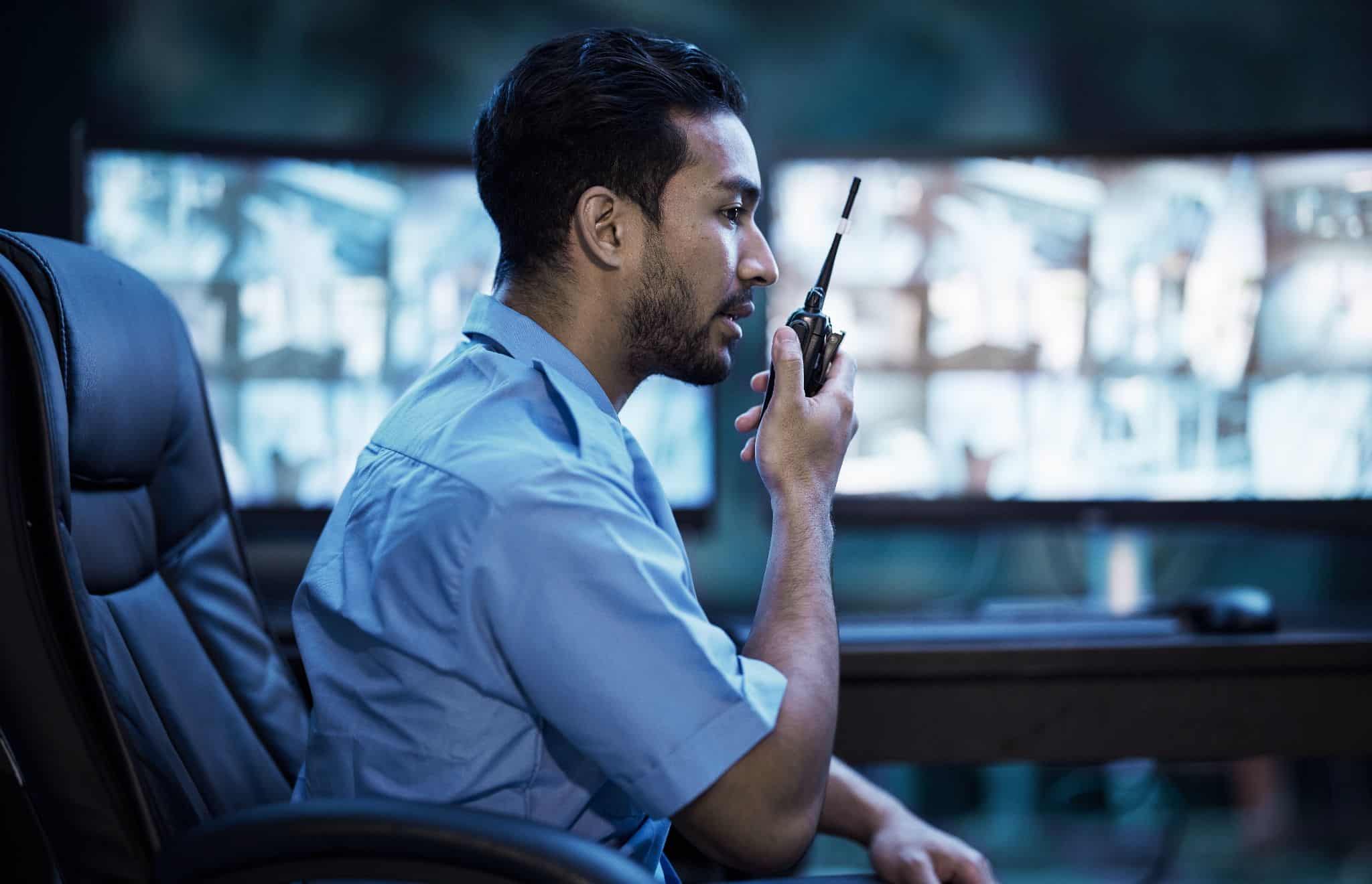
While some companies in the manufacturing sector have security officers on their full-time staff, there are many reasons why it’s better to hire a private, external security service instead.
Here are the key reasons why so many plants hire private security professionals — and why you should, too.
When you hire a private security company, the first thing they will do is conduct a complete risk assessment. The purpose of the risk assessment is to identify any and all potential risks and vulnerabilities.
They will map the entire plant from inside to out, creating a comprehensive security plan that will safeguard your facility.
Your facility may have external doors that need better alarm systems, vulnerable points of entry, or sectors that are hidden from the watchful eye of security cameras. The security company will take the necessary steps to improve security where it’s needed most.
Security teams are also skilled at creating emergency response plans. Once they create the plan, they’ll train employees on how to follow through.
Training your employees in emergency response should be a requirement, not an option. Everyone on site must know the plan in order to improve the response time to potential threats.
A private security company will also run periodic penetration tests. This is the best way to ensure that the safety measures are working as they should. If a penetration test identifies a weakness in your security plan, your security personnel will make the necessary improvements.
Security companies do more than provide internal and external security solutions. They also staff your facility with the visible presence of guards.
Physical guards are some of the best crime deterrents you can have. Most criminals look for opportunities, which means that manufacturing plants without guards are the most vulnerable to opportunistic crimes.
A layered security system is essential to protect your manufacturing plant from potential threats. Hiring a professional security company is the best way to do so.
From perimeter gates and internal doors to data stored on your servers, every aspect of your plant deserves protection. To learn more about manufacturing plant security or to hire a private security team in California, contact Security Explorer now.
Up Next: The Beginner’s Guide to Hiring a Security Guard to Keep You Safe
Read More
Is your home actually safe when you’re not around? According to recent statistics, it may not be as safe as you think.
If you’ve been fortunate enough to never experience a burglary, then you might not be familiar with how often they happen.
For those who have been less fortunate, you may already be asking yourself, “What are the odds that I could be burgled again?”

Everyone deserves to feel safe at home. Many people rely on the technology of home alarm systems and security monitors to provide that peace of mind.
Thankfully, home security monitoring is improving all the time.
One of the newest features that home security companies offer are glass break sensors. These small but powerful devices can instantly detect if someone has broken a window in your home.
You can use glass break sensors to monitor and protect your property around the clock — whether you’re asleep in bed in the middle of the night or traveling far from home.
Ready to learn more about how glass break sensors can protect you, your home, and your loved ones?
Here’s everything you need to know about glass break sensors, including what they do, how they work, and how to install them as part of your current home security setup.
Contents:
How Do Glass Break Sensors Work?
Where to Place Glass Break Sensors
While the number of residential burglaries has declined in recent years, home and business break-ins happen several times a day throughout the country. And when they do, they are often the result of burglars smashing a glass window or door to gain entry.
Glass break sensors can disrupt a burglar before they make it any further.
Small enough to fit in the palm of your hand, these sensors are also easy to install on your doors and windows. They emit a loud alarm if someone (or something) breaks or tampers with the glass.
The noisy alert is usually enough to scare the thief away. It quickly deters criminals from entering and burglarizing your home, threatening the lives of you and your loved ones.
Unlike window and door motion sensor detectors, which most people disarm when they’re at home to prevent false alarms, glass break sensors can stay on at all times. This offers an extra level of protection if someone breaks into your home while you’re on the premises.
Glass break sensors are an important safety measure that you can add to your current home security system. Many of the top home security companies offer them as an added layer of security.
There are two main categories of glass break sensors. The difference is in the type of sensor they use to detect shattered glass.
Both will produce an alarm if the glass suddenly breaks, but one is triggered by shock waves (vibrations) and the other is triggered by acoustic waves (sound).
Shock sensors react to vibrations. Each one contains a tiny electrical wire that attaches directly to the glass. As the glass moves, it transmits vibrations to the sensor and sets off the alarm.
Shock sensors are effective at detecting shattering or breaking glass, but they do have a downside. Because they monitor vibrations, they can sometimes prompt a false alarm even when something as innocent as a slamming door, the loud bark of a dog, thunderstorms, or another high-vibration disturbance causes the glass to tremble.
Also called frequency sensors or audio sensors, acoustic sensors have tiny built-in microphones that monitor the acoustic frequencies of sound. Shattering glass has a high-pitched sound, and these sensors alert when they detect that specific frequency.
Like shock sensors, acoustic sensors are also susceptible to false alarms. If you’re standing near the sensor and drop a plate or a wine glass, for example, it may set off the alarm by accident.
Here are seven tips for preventing false alarms in your home security system.
Acoustic sensors are considered more reliable and less likely to set off false alarms. They also have sensitivity levels that adjust specifically to detect the sound of shattering glass and prevent sounds at lower frequencies from triggering the alarm.
Keep in mind that glass break sensors are not motion detectors. They will not let you know if a door or window is opened. They only alert when the glass vibrates or shatters.
You Might Like: How to Remove an Old Home Security System

Where you place your glass break sensors depends on the type of sensors you buy. Before you decide whether shock sensors or sound sensors are better for your needs, consider how and where you will attach them.
Vibration sensors attach directly to the glass. That means you must place one directly on each door or window that you want to alarm. You can use them on windows of any size, but window contact sensors are best when used on large windows and doors, including sliding glass doors.
Acoustic glass break sensors are typically placed away from the wall that has the window or door, with the sensor’s microphone positioned to face the glass.
All glass break detectors have a limited sensor range. Sometimes one is enough to cover several windows or an entire room. For others, you may need to install one sensor per window.
The number of sensors you need will depend on the size of your windows, the square footage range of the detector, and the type of sensor you choose.
For acoustic sensors in particular, it’s best to measure the exact distances that your sensors will need to cover, such as the range between the glass and the opposite wall. Check the manufacturer’s specs to confirm that the sensor has enough range.
Keep in mind that if you place an acoustic glassbreak sensor near a television set or speaker system, watching a loud movie or television show with shattering glass scenes could set off the security alarm by accident. To minimize false alarms near televisions and stereos, consider adjusting the contact sensor’s sensitivity level so that it’s less likely to respond to everyday noises.
Most sensors are small and wireless. Wireless glass break detectors work by connecting to your wifi, and are easy to install.
Many have sticky adhesive backings, so that all you need to do is remove the adhesive cover from the back and press it against your wall, door, or window. Others have small screw-in mounts where you attach the base of the sensor directly to a ceiling or wall.
Depending on the type of home security system and detectors you use, you can install them yourself or have a security professional install them for you.
Glass break sensors have built-in features and offer added benefits to create an even safer environment for your home or business. Here are some of the additional ways that they can improve the safety and security of your property:
You can set your glass break sensors to send alerts or notifications to your phone every time they sound an alarm. Whether you’re at work, running errands, or away on vacation, real-time phone notifications allow you to quickly respond to threats.
Some glass break sensors can also trigger your security cameras to start recording. If you have interior or exterior cameras focused on the door or window, the glass break alert will trigger the cameras to record, making it easier to see the person or persons attempting to break in.
You can also configure your glass break sensors to alert your security monitoring service as soon as they sound an alarm. Your professional monitoring center can then contact emergency services or ask law enforcement to respond, ensuring that help is on the way whether or not you are on the premises.
Check Out: Securing Your Dog Door: Keeping Unwanted Intruders Out

Ready to protect your home or business with glass break sensors?
Here are some tips on what to look for before adding this new technology to your security system.
If you already have a home security system, buy compatible sensors that will readily integrate with your current alarm system. Homeowners and business owners who use a system with a professional monitoring center, such as ADT or Brinks, will need to purchase compatible window sensors. Otherwise, the sensors may not work with your current alarm system.
Don’t have a home security system yet?
When comparing plans and systems, narrow your options to alarm companies that offer glass break sensors. Many of the top companies offer them, but some do not.
Pay attention to the type of sensors the company offers as well. Be sure to ask if the sensors are shock sensors or acoustic sensors.
The bigger your home, the more windows and doors you have — and the more important it is to install glass break sensors.
Not only will they play a pivotal role in protecting your home, but they’ll also protect you if you’re upstairs or in another room when someone tries to break in on the ground floor.
Most people install glass break sensors on the ground floor, as well as on upper floors that can be easily accessed from the outside. For example, upstairs windows or balconies that are close to trees or other climbable objects.
Unless there is easy outside access to second, third, and upper stories, you don’t need to install one on every window in your home.
And if you rent a small home or apartment, you might not need them at all.
As a tenant, you might not have a say in what security system (if any) is used to monitor your space. Your landlord will typically make that decision. But there is an alternative way to use glass break alarms to protect your home:
Smart home devices.
For example, the Alexa Guard feature on Amazon Echo includes built-in detectors for certain sounds, including the sound of glass shattering.
While Alexa has a limited range, one device is usually enough to cover one floor up to about 1,000 square feet of space.
Place yours in the room that has the most vulnerable windows. You can enjoy the protection of glass break sensors without obtaining your landlord’s permission or attaching anything to your windows or walls.
Residential security is a growing concern for many homeowners, and glass break sensors offer an additional layer of protection that motion detectors and security cameras do not. They’re perfect for anyone who lives alone, occupies a large space, travels often, or wants to take all possible measures to protect their family.
No matter your living situation or location, glass break sensors are an easy and effective security measure that safeguards against break-ins and offers invaluable peace of mind.
If this added measure of security isn’t enough, consider hiring a residential security guard. Contact Security Explorer to find professional, residential security guards in your area now.
Up Next: 43 Shocking US Burglary Statistics
Read More
From vandalism to burglaries to homicides, crime is a reality of life.
Every home, every business, and every event is susceptible to criminal activity. That’s why so many businesses are choosing to hire security guards to protect their assets, as well as to oversee the protection of their employees and guests.
According to the FBI, pre-COVID data from 2019 shows that a violent crime was committed every 26.3 seconds, while property crimes were committed every 4.6 seconds. As of 2022, violent crime rates have dropped to pre-pandemic levels, but some crimes, such as robbery, have increased across the nation.
One of the best preventative measures you can take against crime is to hire a security guard. But first, you’ll have to decide if you need to hire a guard that’s armed or unarmed.
Not sure which type of guard is right for your business?
Here are the pros and cons of hiring armed vs unarmed guards to protect your business or your next event.
Contents:
What Type of Security Guard Do You Need?
What Do Unarmed Security Guards Do?
What Do Armed Security Guards Do?
Unarmed Security Guards: The Pros and Cons
Deciding whether to hire an armed or unarmed guard depends on the type of business you run. It also depends on how much risk is involved. High-risk businesses should consider armed security guard services, while unarmed guards are usually sufficient for businesses that have low-risk security needs.
To decide which type of guard to hire, consider the level of risk that you, your customers, your employees, or your event guests might face.
Examples of businesses that have high security risks include:
Business owners that operate in areas with a high crime rate should consider their businesses at risk, even if the nature of their business wouldn’t be deemed “risky” in an area with a lower crime rate.
For example, high-end retail outlets, jewelry stores, banks, and financial institutions are almost always considered high risk. But in a high-crime area, even convenience stores, gas stations, and restaurants may be susceptible to criminal activity.
Read About: The Ultimate Event Security Checklist
First and foremost, unarmed security officers play a major role in crime prevention. Many would-be criminals will think twice about taking part in criminal activity once they see that there’s a security guard on the premises.
Having said that, security guards do much more than deter vandals and keep thieves at bay. Unarmed guards, in particular, provide a variety of security solutions, such as:
In some situations, unarmed security professionals may also provide one-on-one assistance to customers, guests, and employees. They often escort guests and employees to their cars, provide directions, and staff the reception desk or front door of commercial offices and retail locations.
Armed security guards do everything that unarmed guards do, with one addition:
They carry a firearm.
Armed guards undergo extensive training to prepare them to respond to life-threatening security matters. In fact, many are ex-police and ex-military who have years of experience in handling and discharging weapons. When necessary, they may use deadly force — and they’re permitted and trained to do so.
Like every other business decision you have to make, you’ll want to weigh the pros and cons of hiring an unarmed security professional. Here’s a look at how they can benefit your business, as well as why they may not be the right choice for your needs.
Station an unarmed security pro at your door, and you can instantly provide your employees, customers, and guests with a safer environment. Here’s an in-depth look at why unarmed guards might be the best choice for your business.
The physical presence of security personnel, even when unarmed, is an effective crime deterrent. Many criminals will not commit an unlawful act in a space where security is present, alert, and ready to intervene.
Unarmed guards provide peace of mind. They send the signal to employees, guests, and patrons of your business that someone is on watch to ensure a safe and secure environment at all times. They also send the message that you are a trustworthy business that values the safety of everyone on the premises.
It’s more cost-effective to hire an unarmed guard than an armed guard. Armed guards cost more because they have weapons training and additional skills that unarmed guards do not.
While all guards can provide excellent protection, there is one main drawback to hiring an unarmed pro over an armed guard:
If a significant threat arises, they may not be able to stop it.
Unarmed guards are often equipped with non-lethal weapons, such as pepper spray, tasers, and batons. But depending on the threat, non-lethal weapons may not provide enough protection.
For example, should an armed gunman gain entry into your business or event, your security guard’s only option may be to call for backup from armed law enforcement professionals. An armed guard, on the other hand, may be able to stop the threat in its tracks without having to wait for police officers to arrive on scene.
In a high-risk business, an armed guard may be the only way to provide the level of security your business needs. Here are the pros and cons of adding an armed weapons expert to your security team.
Depending on the nature of your business and its location, an armed guard can be an invaluable asset. Yes, they can add to your payroll expenses — but there are several benefits that more than justify the cost.
Like unarmed guards, armed security experts are a highly effective crime-prevention measure. Many crimes are crimes of opportunity where the criminal strikes because the business appears to be easy to attack. Armed guards make it clear that your business is not an easy target, and most criminals prefer ones that are.
In general, armed guards can make customers, guests, and staff feel more secure. This can improve your clientele’s confidence in your business, as well as their perception of safety. Furthermore, if a dangerous situation arises, these pros have what it takes to eliminate a threat as soon as it presents itself.
Immediate assessment and elimination of a threat is key to maintaining everyone’s safety. Because armed guards have firearms training, they can provide instant protection against a threat without having to wait for law enforcement agencies to arrive on scene.
Before hiring an armed guard, consider the drawbacks of having a firearm visible in your place of business.
Not everyone feels comfortable around firearms. For that reason, having an armed security guard could do more than make potential criminals feel nervous — they could make certain customers feel nervous, too.
In addition to feeling uneasy around guns, some customers, staff, and guests may assume that the presence of an armed guard means that they’re in a dangerous place that needs extreme protection. Even if it is a “dangerous” place, this is not the message that most businesses want to send.
People expect to see armed guards in locations with a high risk of theft, such as banks, courthouses, and luxury retail stores. But placing an armed guard in a restaurant, church, or anywhere that they’re not expected could create anxiety in people who are not comfortable around guns.
Unarmed security guards, who have less training, don’t cost as much as armed guards.
Depending on your budget and the risk level of your business, it may or may not be cost-effective to hire a guard who has a license to carry a firearm.
In addition to firearms training, most armed security professionals undergo other types of training. They learn de-escalation techniques, how to read non-verbal cues and body language, and conflict resolution — all of which can minimize potential dangers and eliminate threats.
When necessary, an armed security officer may use lethal force, which can result in extreme injury or even death. For this reason, you’ll need to purchase additional liability insurance to protect your organization’s assets.
Of course, more liability insurance means higher operating costs for your business.
You Might Like: 7 Reasons to Hire a Bank Security Guard

There are many different types of security companies you can hire. Consider the following factors when interviewing and vetting potential guards.
Always check online reviews and testimonials before hiring a security company.
You can use a security services search directory, such as Security Explorer, to read reviews about the best services in your area. Listening to what other customers and clients have to say about their experiences can help you decide if a particular security company is right for your business.
You can also run background checks and reference checks on security personnel. It’s critical to vet your guards, as you’re putting everyone’s safety and security in their hands.
It goes without saying that you want your security personnel to have experience. What’s more important is that they have the right type of experience.
Some companies are experts in event security, while others specialize in the protection of hospitals, banks, or office buildings.
A guard who has experience working in your particular business or industry will be best prepared for the task at hand. You can trust that they possess an in-depth understanding of the potential threats you could face.
Always compare prices and services to make sure you’re getting a fair deal.
Obtain quotes from two or three different security experts so that you know if you’re paying the right amount for the level and quality of service they offer.
Security guards are experts in situational awareness who can adapt to almost any setting. Still, it’s important that they’re familiar with your geographical region. To fully understand and prepare for the risks that your business may face, they’ll need to be aware of the local demographics, the surrounding businesses, and the neighborhood as a whole.
Security guards offer protection against active threats, and when an active threat isn’t present, they help deter crime and offer peace of mind.
Whether you choose to hire armed or unarmed guards, it’s one of the most effective ways to protect your business while ensuring that your employees, guests, and patrons always feel secure.
Without a guard, your business runs the risk of becoming an easy target that attracts criminals — which can cause significant damage and harm.
Professional security services are available all across the country. If you’re looking to hire a guard in California, connect with Security Explorer now to find experts you can trust and rely on to keep your business safe.
Up Next: 43 Shocking U.S. Burglary Statistics
Read More
As an event planner, you have a lot on your plate.
So many things fall on your shoulders: from reserving the perfect venue to hiring the vendors for catering and entertainment. On top of it all, you still need to decorate the space and plan for where and how your guests will park and check in.
But there’s another crucial element you can’t afford to overlook: security.
Read More
Picture yourself on the deck of a luxurious yacht, surrounded by the sparkling expanse of the open sea. While yachting is a dream come true for many, it’s important to remember that, just like any other high-end possession, a yacht is an investment that requires proper protection.
Here, we’ll explore the world of yacht security, highlighting essential measures and strategies to ensure the safety and security of your prized vessel, its passengers, and your peace of mind.
Contents:
Owning a private yacht is more than just a symbol of prestige; it’s also a substantial financial investment.
Yachts often house valuable equipment, personal belongings, and high-end technology. Furthermore, they are frequently in unfamiliar waters or remote destinations, making them susceptible to a range of security risks, including theft, vandalism, and even piracy.
Yacht security is essential to safeguard your investment and the safety of those on board.
Before embarking on any voyage, conduct a thorough risk assessment of your yacht and its intended routes.
This assessment should consider factors like the cruising area’s security reputation, the prevalence of piracy, and potential weather-related risks, as well as your yacht’s degree of vulnerability to each factor. For example, security risks will vary significantly for one yacht traveling through Florida and another traveling around Africa.
Once risks are identified, create a comprehensive security plan that includes measures for both risk management and response.
Engaging a professional security team can be invaluable in this phase, as they have experience in yacht security and can offer expert guidance on crew training, security systems, and more.
Find a reputable security firm in California today!

For larger yachts, having on-site security personnel will take your ship’s security to the next level. These security officers are trained to handle a variety of situations, from deterring unauthorized access to responding to security breaches.
Their presence alone can often discourage potential threats. They can also provide valuable insights on security measures tailored to your specific vessel and route.
Modern yacht security relies heavily on technology. Install state-of-the-art surveillance systems, including CCTV, motion detectors, and alarm systems, to provide real-time monitoring of the vessel 24/7.
These detection systems can alert you to any suspicious activity, enabling rapid response even when you’re not on board.
Related: The Beginner’s Guide to Hiring a Security Guard
Implement strict access control measures to limit entry to authorized personnel only.
Keycard systems, biometric locks, and secure storage for keys can help ensure that only those with permission can access specific areas of the yacht. This is essential for protecting valuable equipment and personal belongings.
When moored or anchored, your yacht can be vulnerable to theft or intrusion.
Invest in secure anchoring systems and consider using additional locking mechanisms for gangways and boarding points. Sturdy padlocks and reinforced doors can provide an extra layer of security.

A well-trained crew is your first line of defense.
Ensure that your crew members are familiar with security protocols and emergency procedures. Regular drills and training can help them respond effectively to potential threats or emergencies.
Install reliable communication systems onboard, including satellite phones and distress beacons. These devices can be crucial in case of emergencies or when assistance is needed in remote areas.
For those seeking comprehensive yacht security solutions, Security Explorer offers trusted and experienced partners in safeguarding your maritime adventures.
Our team of seasoned security professionals helps connect yacht owners like you to reputable maritime security guards in California so you get the best security in your area to keep your vessel and passengers secure.
By outsourcing security to a specialized maritime security service, you gain access to a wealth of expertise, allowing you to enjoy the beauty of the open sea with the assurance that your yacht is in capable hands, fortified against potential threats.
Owning a yacht is a remarkable experience, but it comes with the responsibility of ensuring the safety and security of your investment, your guests, and your crew.
Yacht security is not just a luxury; it’s a necessity, especially when sailing in unfamiliar or potentially hazardous waters.
By conducting thorough risk assessments, investing in surveillance technology, and implementing access control measures, you can navigate the open seas with confidence, knowing that your yacht is fortified against unwanted intruders and your voyages are filled with moments of pure relaxation and enjoyment.
Read More
As the world evolves, so do the security challenges facing banks and financial institutions.
Those challenges include more than just digital threats. Bank managers must also look out for the safety of their customers and assets.
Despite the rise of online banking, in-person bank security guards are as crucial today as they were in years past — for a number of reasons we’ll cover below.
Keep reading to learn why your bank could benefit from hiring a security guard. We’ll also share several best practices for hiring the right security guard or security firm for your bank’s needs.
Contents:
Technically, bank robberies are on the decline in the United States. This is great news, but it doesn’t change the reality that financial institutions are still at risk.
In fact, it’s not the frequency of bank robberies that’s concerning. It’s the severity of what banks could lose if robbed.
Here’s a closer look at some of the statistics.
According to the most recent data from the FBI, there were a total of 1,964 “Violations of the Federal Bank Robbery and Incidental Crimes Statute” between January 1, 2021 and December 31, 2021.
The vast majority of these crimes took place at commercial banks and credit units. About 85% percent were committed at the bank teller’s counter.
Of those 1,964 bank robberies reported to the FBI in 2021, just under half involved the threat of a weapon, such as a firearm or an explosive.
Most of these incidents did not escalate to actual violence. However, they did result in at least 11 injuries, 3 deaths, and 28 people taken hostage.
Furthermore, a security guard was rarely on duty when a robbery occurred — only for 146 of those incidents.
That’s a good sign that it may not be enough to rely on alarm systems or bank security cameras alone.
Note that according to the FBI, not all bank robberies are reported to them. The FBI has stated that their statistics may not be a complete representation of the current state of bank robberies within the US.
As stated above, bank security officers were on duty during fewer than 10% of all bank robberies that occurred in 2021. Less than half of those guards were armed.
It’s well known that every bank uses some form of security, even if they don’t employ security guards. The most common bank security practices include ATM cameras, CCTV surveillance systems, alarm systems, door locks, and emergency response procedures.
Having said that, nearly all recent bank robberies happened at financial institutions that use security cameras and alarm systems. Very few robberies occurred at banks that regularly employ security guards.
Alarm systems and surveillance cameras can go a long way to maintaining the security of your bank. But the intuition of a well-trained and experienced security guard will always take that one step further.
Most criminals don’t want to rob a bank that has active, in-person private security guards on the premises. Although we can’t say for certain, that may be one reason why so many recent bank robberies have occurred at banks without an on-duty guard.
The mere presence of a security guard is often enough to deter or prevent a crime. Security guards are better than alarm and camera systems when it comes to protecting customers, employees, and the banking institution as a whole.
That’s because humans are more attuned to notice red flags and unusual behavior, which busy bank employees may otherwise overlook.
In addition, there’s some really interesting science about how human intuition can help us identify criminals. As it turns out, humans are quite skilled at it.
Case in point: even the most sophisticated technological solutions can be bypassed without proper human oversight.
Statistics show that employee theft and crime are believed to be one of the greatest risks posed to banks and other types of financial firms.
In particular, access control is a major issue for financial institutions.
Insider risks for banks may include, but are not limited to:
Hiring for more bank security guard jobs can play a key preventative role in helping financial institutions to monitor and mitigate risks from disgruntled employees.
That’s because the physical presence of an on-duty bank security guard makes the working environment of a bank feel more monitored and secure.
It also demonstrates the banking institution’s commitment to security and oversight, which can make employees think twice before acting on an impulse.
Use security guard services to deter employees from taking criminal action.
Related: The Beginner’s Guide to Hiring a Security Guard to Keep You Safe
Bank security guards do more than simply deter people from committing crimes. They also have the potential to make customers feel more confident when using your bank.
Studies have shown that when people are in situations that they perceive as unsafe, they feel safer when they see law enforcement and professional security guards patrolling on foot.
In other words, bank customers can feel confident knowing that your financial institution has more than one security measure in place in the event of a sudden robbery or heist. Customers are likely to feel safer using a bank that has security guards on regular patrol than a bank that has no security guards at all.
Visible, full-time bank security guard services can boost customer trust and confidence. It also gives customers peace of mind.
Hopefully, your bank or financial institution will never need to rely on security services in an actual emergency situation.
The good news is that in the unlikely event of criminal activity or another emergency situation, a bank security guard can immediately jump into action and intervene. This applies whether you’re using unarmed or armed security guards.
Having one or more security guards on bank property can reduce emergency response time by several critical minutes or more. Using security guard services can empower your institution to better protect its staff and customers until law enforcement or emergency services have arrived — often saving lives in the process.
This is also why it’s important to hire security specialists who have CPR, first aid, or first responder certifications and training.
There are several bank security needs that overlap with regulatory and compliance requirements.
At some financial institutions, security guards are responsible for more than just physically monitoring the property. They’re also expected to design the security systems, strategies, and procedures that not only protect customers, but also protect customer data. Protecting customer data is a key responsibility of Data Loss Prevention (DLP) solutions, which are necessary to comply with banking laws.
In other words, a sophisticated and well-trained bank security service can play a major role in helping banks comply with security and privacy regulations.
Likewise, security guards can assist with records maintenance and reporting suspicious activities.
Read About: 43 Shocking U.S. Burglary Stats
If you’re like most bank managers, you probably run a cost-benefit analysis before making most of your decisions. So, let’s crunch a few numbers.
An average of $7,500 is stolen in each bank robbery in the United States. The cost of occupational or “insider” thefts can be even greater.
This may sound like a drop in the bucket, but that’s because it doesn’t factor the associated risks to customer and employee safety, data, and privacy.
These risks can be even more costly for your financial institution. Not to mention that if your bank becomes the target of a robbery, the fallout can result in mountains of paperwork and countless hours spent on public relations.
These risks put a great deal of money at stake. They can also deter potential customers from opening a new account with your bank.
The more you invest in your bank’s security and prevention, the more losses you can prevent — financial or otherwise.
Now that you’re more familiar with the benefits of hiring a security guard for your bank, it’s time to hire one.
Below, we provide some basic tips to help you get started. You can find even more tips by reading our guide to hiring security guards.
When hiring a security guard, make sure your job post includes a comprehensive job description of the security role you’re looking to fill.
Specify basic requirements. These may include a high school diploma or GED. It could also include a minimum number of preferred years of experience in fields like security solutions, law enforcement, private investigative work, or the military.
Most financial institutions hire a security firm rather than a single security guard. Use the above qualifications when interviewing potential firms about their own hiring practices. This will also give you a better idea of their security guards’ knowledge, experience, and abilities.
Determine whether you’re looking for part-time or full-time security guards.
You may need a combination of both. For example, save money by hiring part-time guards to supervise your bank’s parking lot or provide special event security. These are also roles that may not require as many years of on-the-job experience.
There are various platforms where you can post jobs for security personnel or browse listings for different security companies. Security Explorer is one of the best and easiest to use, and can help you find the right service for your budget and needs.
Companies like Allied Universal specialize in providing trained security personnel. Their security officer job alert options can notify you when suitable candidates become available.
Different banks and financial institutions will have different needs.
Some may prefer to hire skilled security specialists who have direct experience with handling high-stakes legal and regulatory issues. Other banks may want their security officers to be trained in certain skills, such as first aid or firearms training.
Tailor your job post accordingly. Look for candidates who not only meet the basic requirements, but who also have specialized training or multiple years of experience in the type of security you need.
When you’re ready to make a hiring decision, invite potential candidates to tour your facility. This will give them an opportunity to see your security needs up close and write an accurate estimate. Make sure the estimate is itemized and factors in any labor, supplies, or overhead expenses.
You can also use this time to conduct an informal interview and get a better feel for the firm’s services and professionalism.
Note that several states enforce different training and certification requirements for security officers. Ask the prospective security firm how their guards are meeting those requirements.
Hiring a security guard to protect your financial institution’s customer and property is more essential than ever.
If you are a bank owner or manager, it’s encouraged that you regularly evaluate your current security systems and procedures to ensure they’re still meeting the bank’s needs. Consider hiring a security guard or a professional security firm that can oversee this work on your behalf.
At Security Explorer, financial institutions in California can visit our bank security services page to the best professional security services in your area.
Read More
Society has found many ways to keep our homes, communities, schools, businesses, and cities as safe as possible. We have everything from law enforcement agencies to CCTV technology and neighborhood watch programs.
That doesn’t change the fact that paying for a little extra security can buy you peace of mind.